About this artwork
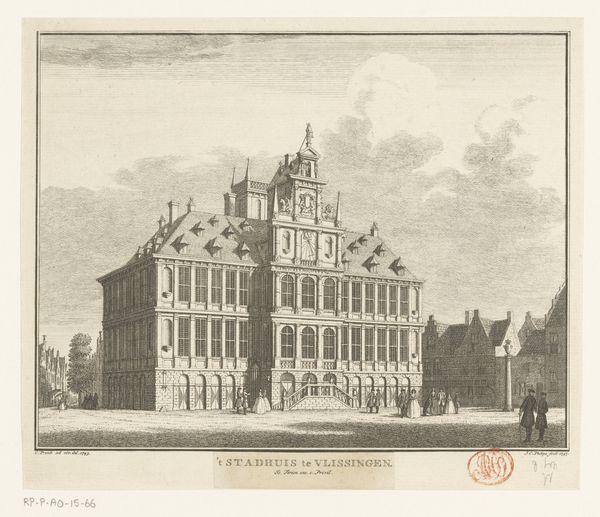
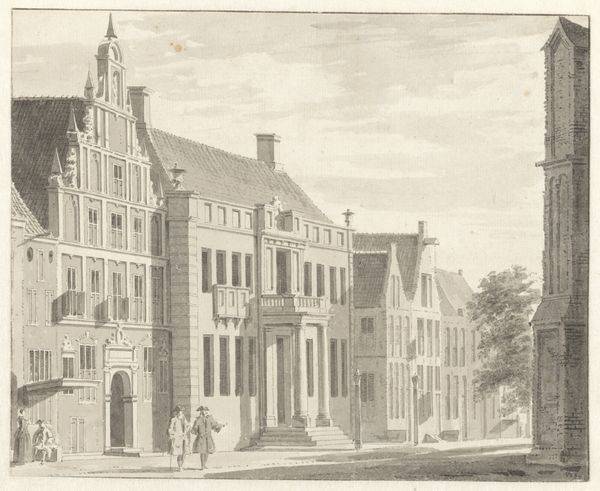
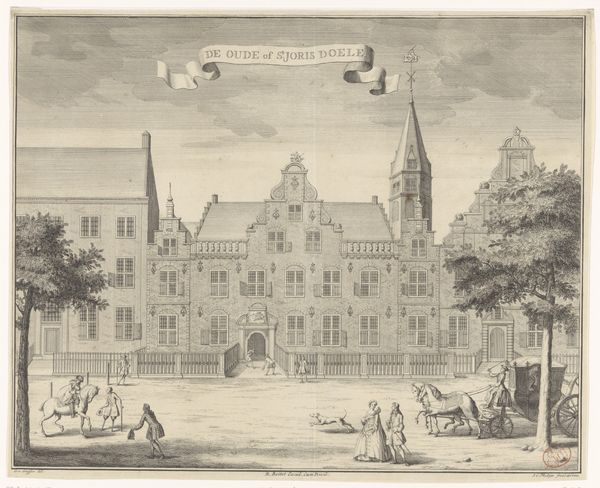
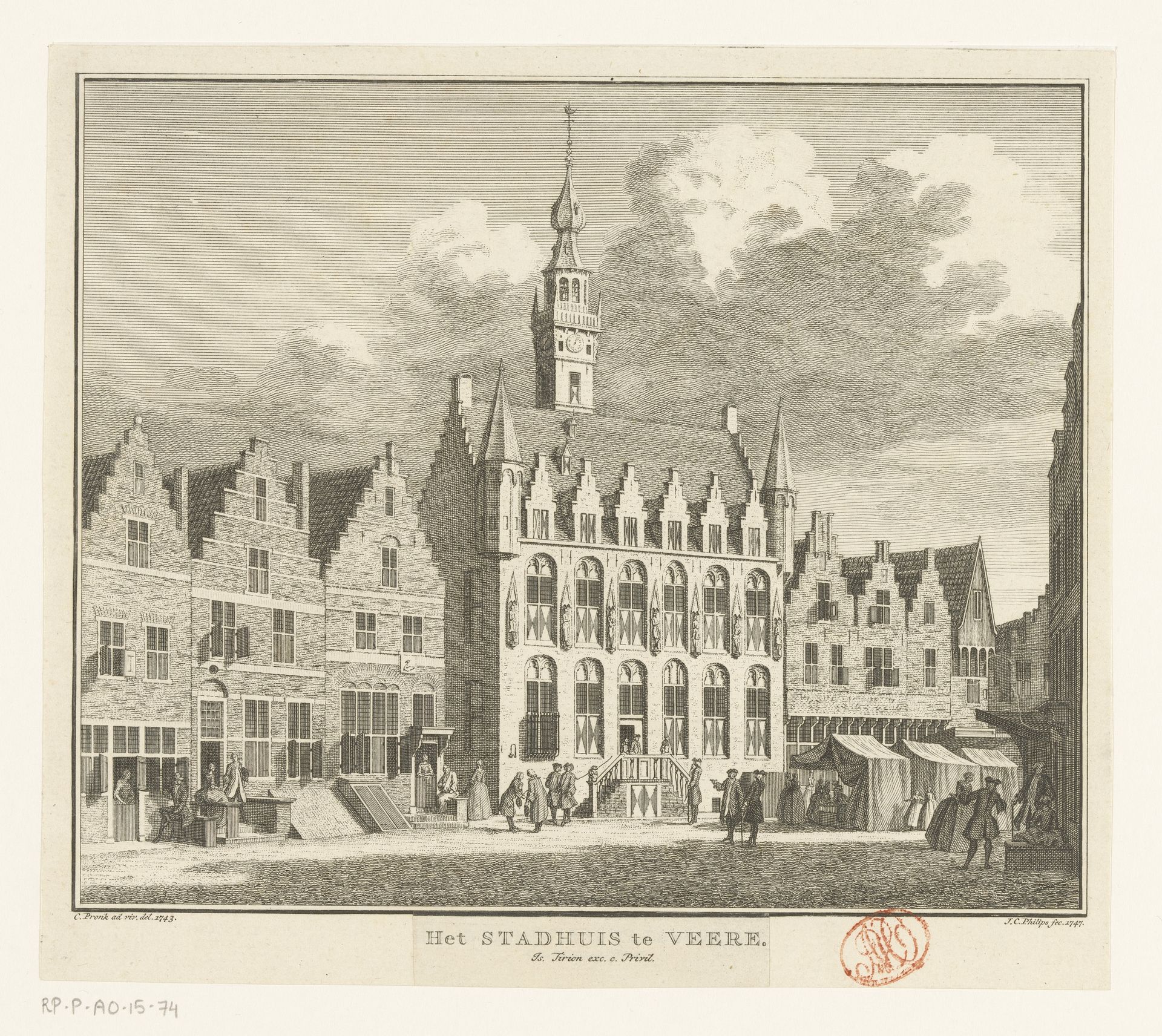
Editor: So, this is "Gezicht op het stadhuis van Veere, 1743" by Jan Caspar Philips, created sometime between 1747 and 1760. It's an engraving, a cityscape capturing the Dutch Golden Age, currently residing at the Rijksmuseum. There is a real formality to the building’s symmetry that's softened by the daily life depicted in the foreground. What do you make of this piece? Curator: The symmetry certainly speaks to a desire for order, a visual representation of societal structure, but look closer at the town hall itself. Notice the figures integrated into its facade? They're not mere decoration. Can you identify what the town hall symbolizes, and perhaps even what the sculptor meant by depicting various scenes on the front of this formidable building? Editor: Well, a town hall is, like, the center of governance and decision-making for the community. But what stories do you think the facade figures might be telling? Curator: Exactly! These choices encode civic identity; the images act as a cultural touchstone, shaping the community's sense of itself, its values, its shared history. The images operate on multiple levels of cultural memory. The building not only houses but *performs* authority through recognizable, reassuring, perhaps even idealised, symbols of civic life and justice. Can you imagine its power and presence in shaping perceptions of those viewing it then, and even today? Editor: So it’s not just a pretty picture, but a representation of values and an invitation for ongoing dialogue with its citizens through symbolic imagery! That’s fascinating. I will never look at civic buildings the same way. Curator: Indeed. It shows us how powerful and embedded images become. Consider what civic structures in our time intentionally represent through their construction or decoration!
Gezicht op het stadhuis van Veere, 1743
1747 - 1760

Jan Caspar Philips
1700 - 1775Location
RijksmuseumArtwork details
- Medium
- drawing, engraving
- Dimensions
- height 175 mm, width 200 mm
- Location
- Rijksmuseum
- Copyright
- Rijks Museum: Open Domain
Tags
Comments
Share your thoughts
About this artwork
Editor: So, this is "Gezicht op het stadhuis van Veere, 1743" by Jan Caspar Philips, created sometime between 1747 and 1760. It's an engraving, a cityscape capturing the Dutch Golden Age, currently residing at the Rijksmuseum. There is a real formality to the building’s symmetry that's softened by the daily life depicted in the foreground. What do you make of this piece? Curator: The symmetry certainly speaks to a desire for order, a visual representation of societal structure, but look closer at the town hall itself. Notice the figures integrated into its facade? They're not mere decoration. Can you identify what the town hall symbolizes, and perhaps even what the sculptor meant by depicting various scenes on the front of this formidable building? Editor: Well, a town hall is, like, the center of governance and decision-making for the community. But what stories do you think the facade figures might be telling? Curator: Exactly! These choices encode civic identity; the images act as a cultural touchstone, shaping the community's sense of itself, its values, its shared history. The images operate on multiple levels of cultural memory. The building not only houses but *performs* authority through recognizable, reassuring, perhaps even idealised, symbols of civic life and justice. Can you imagine its power and presence in shaping perceptions of those viewing it then, and even today? Editor: So it’s not just a pretty picture, but a representation of values and an invitation for ongoing dialogue with its citizens through symbolic imagery! That’s fascinating. I will never look at civic buildings the same way. Curator: Indeed. It shows us how powerful and embedded images become. Consider what civic structures in our time intentionally represent through their construction or decoration!
Comments
Share your thoughts