

About this artwork
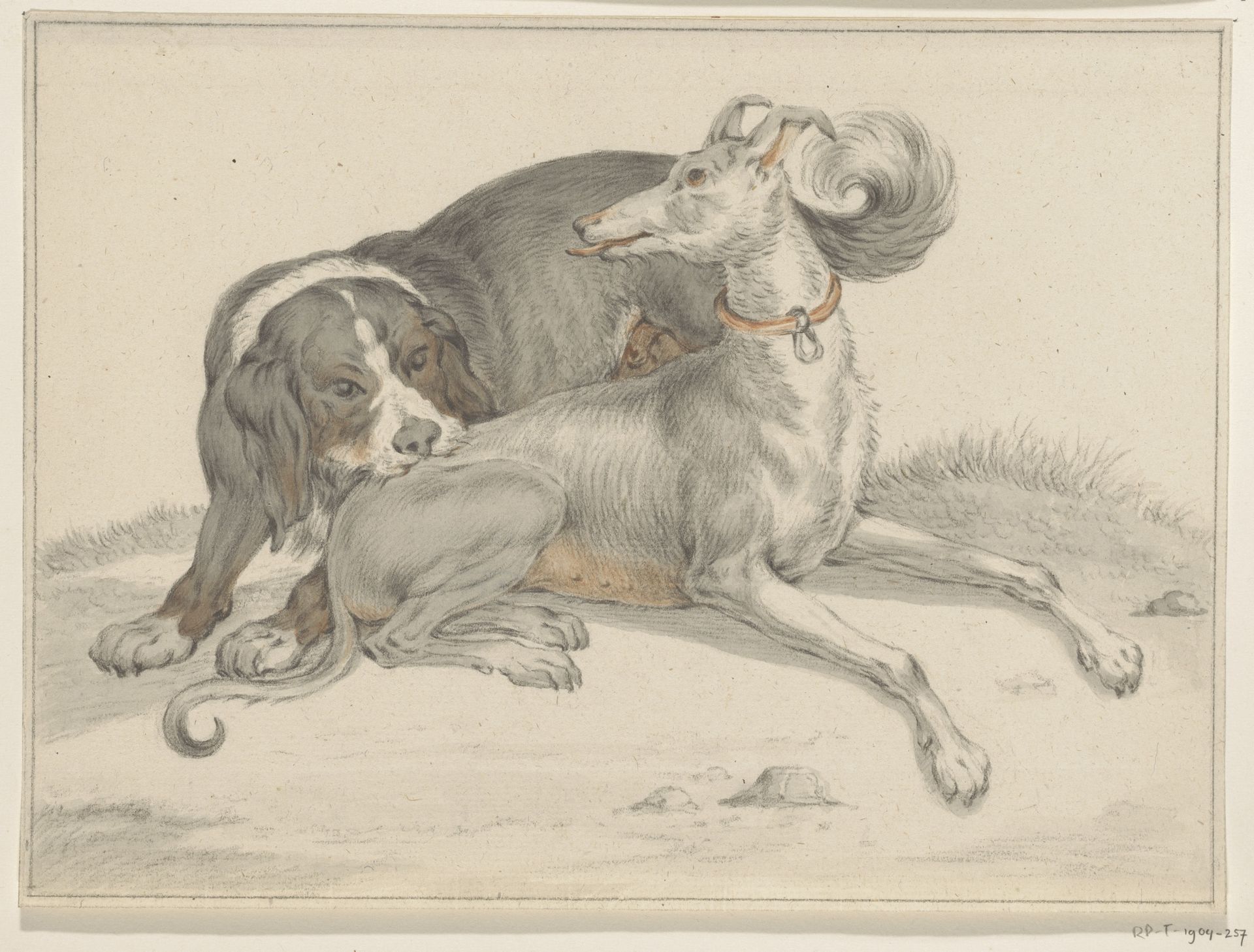
Jean Bernard made this drawing of a dog biting another seated dog in the back using pen, brush, and watercolor, sometime around the late 18th or early 19th century. It is currently located in the Rijksmuseum. This artwork can be seen within the context of shifting social and cultural attitudes toward animals, particularly dogs, during the Enlightenment era. As the bourgeoisie began to rise in prominence, so did the concept of companion animals as symbols of status and sentimentality. The dog-bite image, produced in the Netherlands, could be commenting on the emerging dominance of certain breeds within upper-class circles. It's worth exploring visual codes and symbolic meanings attributed to different breeds in the 18th and 19th centuries. To understand the drawing better, one could consider the influence of Natural History illustration on the period, as well as social histories of the Netherlands. Art is always tied to its time.
Een hond bijt een andere zittende hond in de rug
1775 - 1833

Jean Bernard
1765 - 1833Location
RijksmuseumArtwork details
- Medium
- drawing, watercolor, pencil
- Dimensions
- height 200 mm, width 270 mm
- Location
- Rijksmuseum
- Copyright
- Rijks Museum: Open Domain
Tags
Comments
Share your thoughts
About this artwork
Jean Bernard made this drawing of a dog biting another seated dog in the back using pen, brush, and watercolor, sometime around the late 18th or early 19th century. It is currently located in the Rijksmuseum. This artwork can be seen within the context of shifting social and cultural attitudes toward animals, particularly dogs, during the Enlightenment era. As the bourgeoisie began to rise in prominence, so did the concept of companion animals as symbols of status and sentimentality. The dog-bite image, produced in the Netherlands, could be commenting on the emerging dominance of certain breeds within upper-class circles. It's worth exploring visual codes and symbolic meanings attributed to different breeds in the 18th and 19th centuries. To understand the drawing better, one could consider the influence of Natural History illustration on the period, as well as social histories of the Netherlands. Art is always tied to its time.
Comments
Share your thoughts