About this artwork
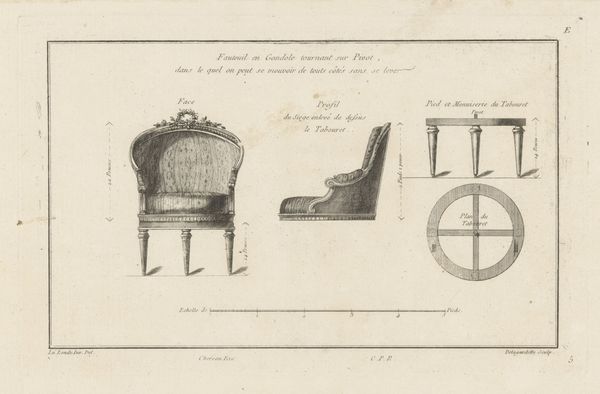
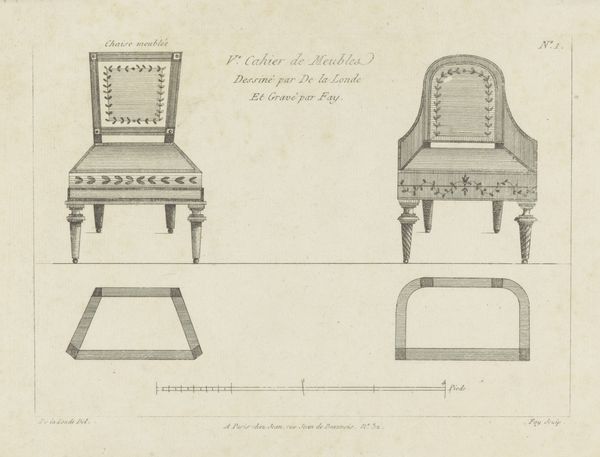
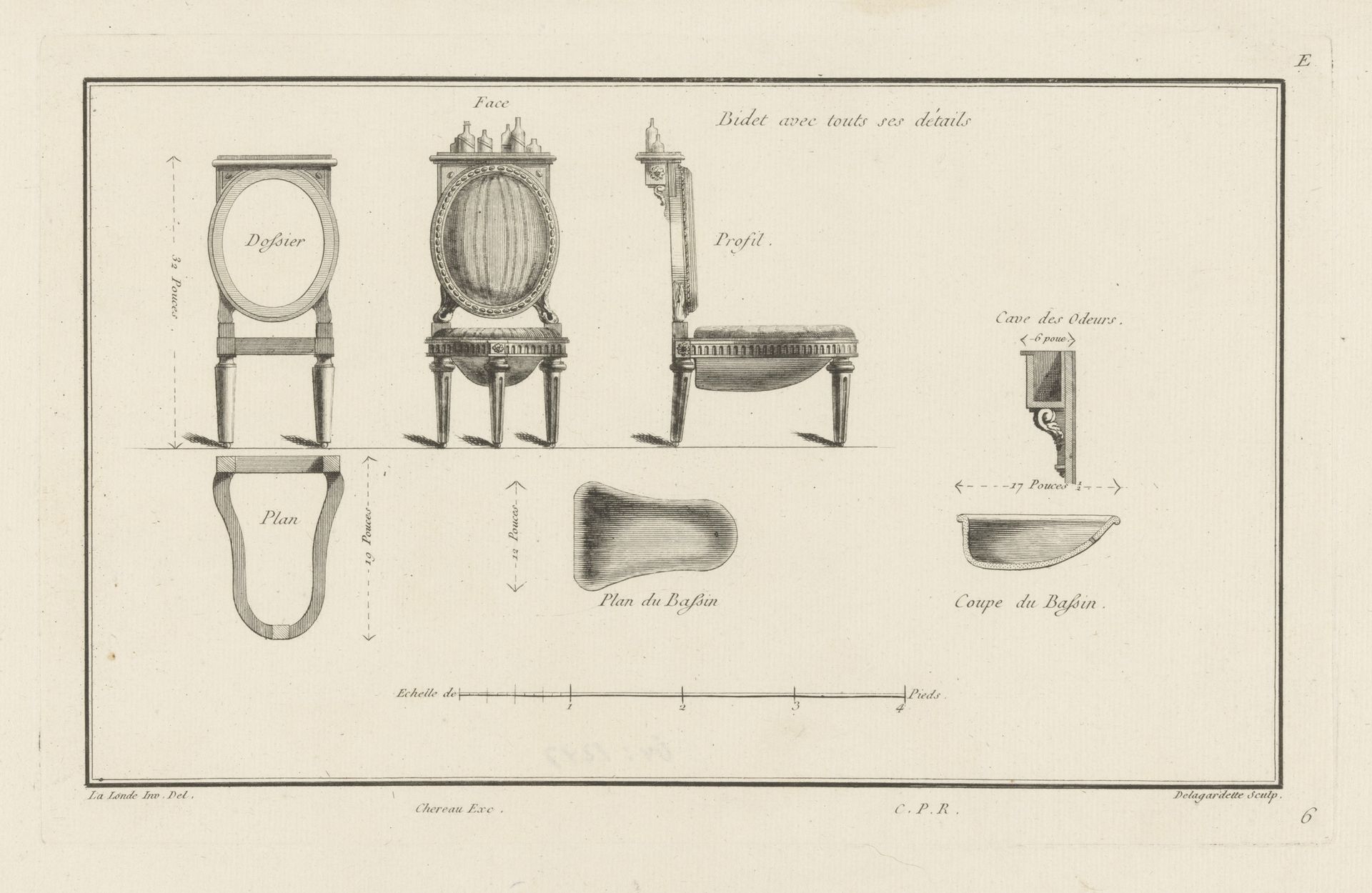
Pierre Claude Delagardette rendered this drawing, titled 'Bidet', in pen and grey ink. Notice how the linear precision and stark presentation reduce the object to its fundamental forms. The arrangement of multiple perspectives – face, profile, plan – destabilizes our conventional understanding of space. Delagardette dissected and reassembled the bidet, fragmenting the object across the page. These views deny a singular, fixed viewpoint, challenging the viewer to reconstruct the object mentally. The strategic use of empty space isolates each view, emphasizing its distinct character. The subtle tonal gradations in the wash hint at the object’s volume, adding depth to the otherwise flat plane. The measured scale and orthographic projections place this work within the era's burgeoning architectural and design culture. While seemingly technical, the drawing’s clarity and precision transform a utilitarian object into an exercise in abstract composition. It invites us to contemplate the interplay between function and form.

Artwork details
- Medium
- drawing, paper, engraving
- Dimensions
- height 188 mm, width 300 mm
- Location
- Rijksmuseum
- Copyright
- Rijks Museum: Open Domain
Tags
drawing
neoclacissism
old engraving style
paper
history-painting
engraving
Comments
Be the first to share your thoughts about this work.
About this artwork
Pierre Claude Delagardette rendered this drawing, titled 'Bidet', in pen and grey ink. Notice how the linear precision and stark presentation reduce the object to its fundamental forms. The arrangement of multiple perspectives – face, profile, plan – destabilizes our conventional understanding of space. Delagardette dissected and reassembled the bidet, fragmenting the object across the page. These views deny a singular, fixed viewpoint, challenging the viewer to reconstruct the object mentally. The strategic use of empty space isolates each view, emphasizing its distinct character. The subtle tonal gradations in the wash hint at the object’s volume, adding depth to the otherwise flat plane. The measured scale and orthographic projections place this work within the era's burgeoning architectural and design culture. While seemingly technical, the drawing’s clarity and precision transform a utilitarian object into an exercise in abstract composition. It invites us to contemplate the interplay between function and form.
Comments
Be the first to share your thoughts about this work.