About this artwork
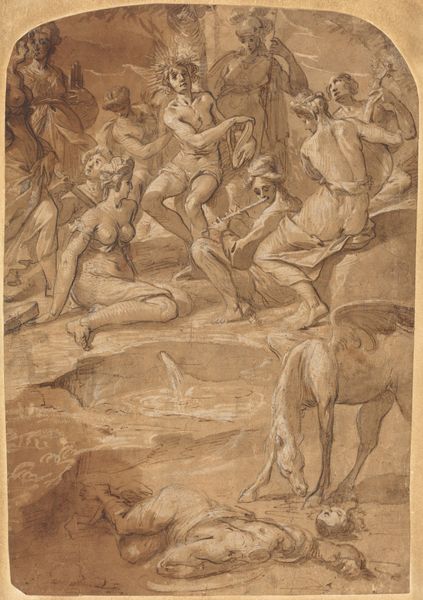
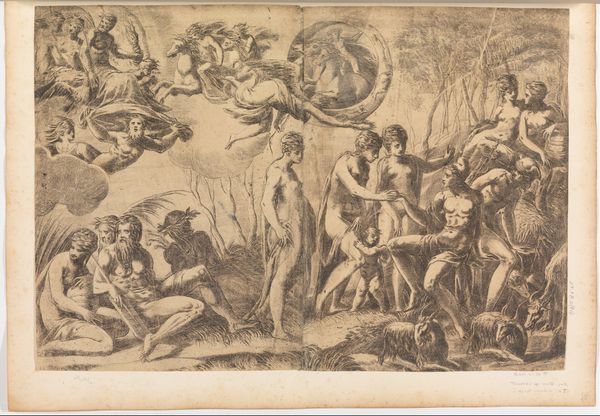
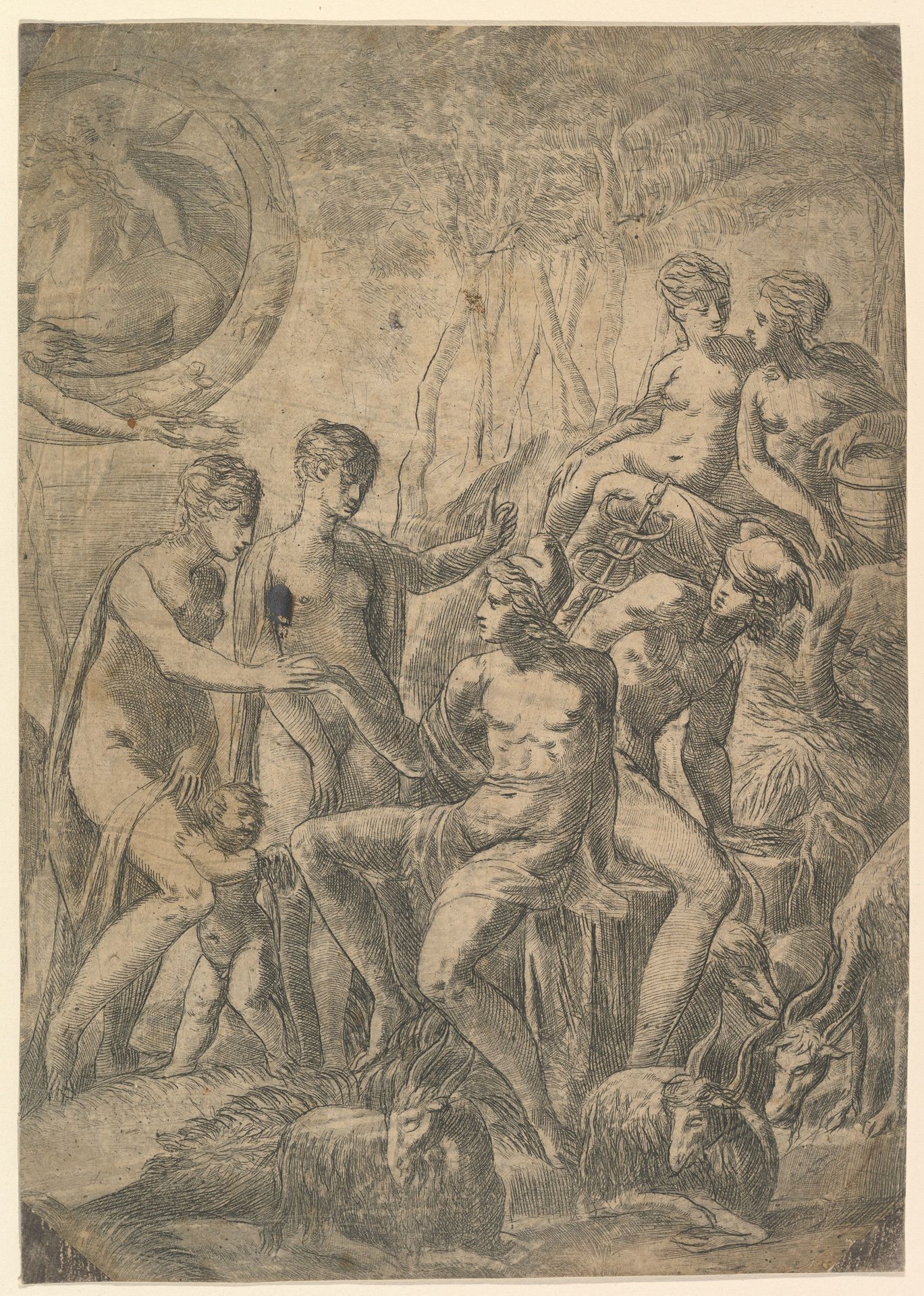
Andrea Schiavone created this print, The Judgement of Paris, sometime in the 16th century. Schiavone was working in Venice, a city-state that had become very wealthy through trade, so it's no surprise that mythological subjects like this one were popular, as they showed off a patron's classical learning and sophisticated taste. The image shows Paris, a Trojan prince, judging which of three goddesses is the most beautiful. We see Minerva, Venus, and Juno vying for his attention. What's interesting here is the way Schiavone uses the conventions of art to comment on his own society. The loose, sketchy lines give the print a sense of immediacy, as if we're witnessing a live event. The nudity is also striking, and it speaks to the Venetian Republic's relative social freedom. As historians, we can look at prints like this one to understand the values and beliefs of the people who made and collected them. By studying period documents we start to understand better the role of art in shaping social identities.
The Judgment of Paris
1538 - 1548

Andrea Schiavone (Andrea Meldola)
1510 - 1563
The Metropolitan Museum of Art
Metropolitan Museum of Art, New York, NYArtwork details
- Medium
- drawing, print, etching, engraving
- Dimensions
- sheet: 11 5/8 x 8 1/4 in. (29.5 x 21 cm)
- Location
- Metropolitan Museum of Art, New York, NY
- Copyright
- Public Domain
Tags
Comments
Share your thoughts
About this artwork
Andrea Schiavone created this print, The Judgement of Paris, sometime in the 16th century. Schiavone was working in Venice, a city-state that had become very wealthy through trade, so it's no surprise that mythological subjects like this one were popular, as they showed off a patron's classical learning and sophisticated taste. The image shows Paris, a Trojan prince, judging which of three goddesses is the most beautiful. We see Minerva, Venus, and Juno vying for his attention. What's interesting here is the way Schiavone uses the conventions of art to comment on his own society. The loose, sketchy lines give the print a sense of immediacy, as if we're witnessing a live event. The nudity is also striking, and it speaks to the Venetian Republic's relative social freedom. As historians, we can look at prints like this one to understand the values and beliefs of the people who made and collected them. By studying period documents we start to understand better the role of art in shaping social identities.
Comments
Share your thoughts