About this artwork
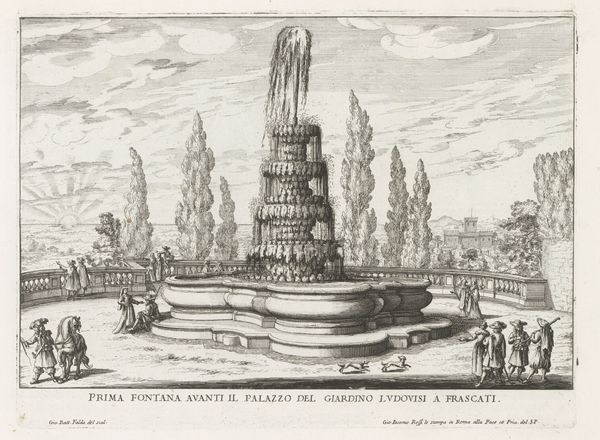
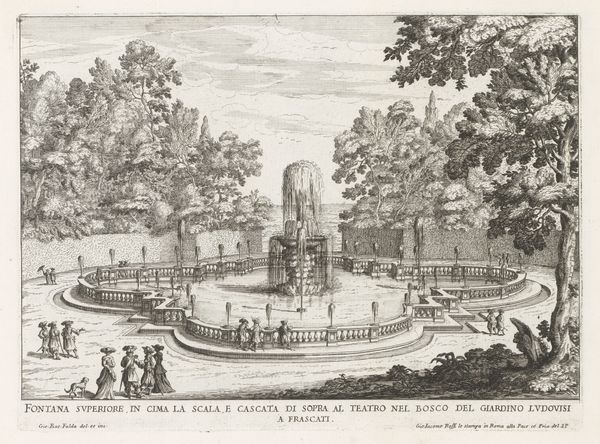
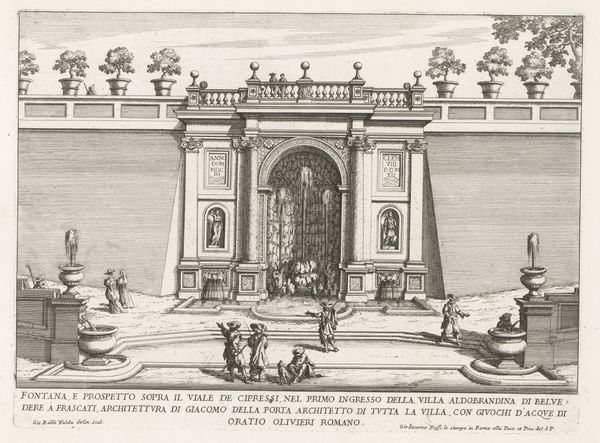
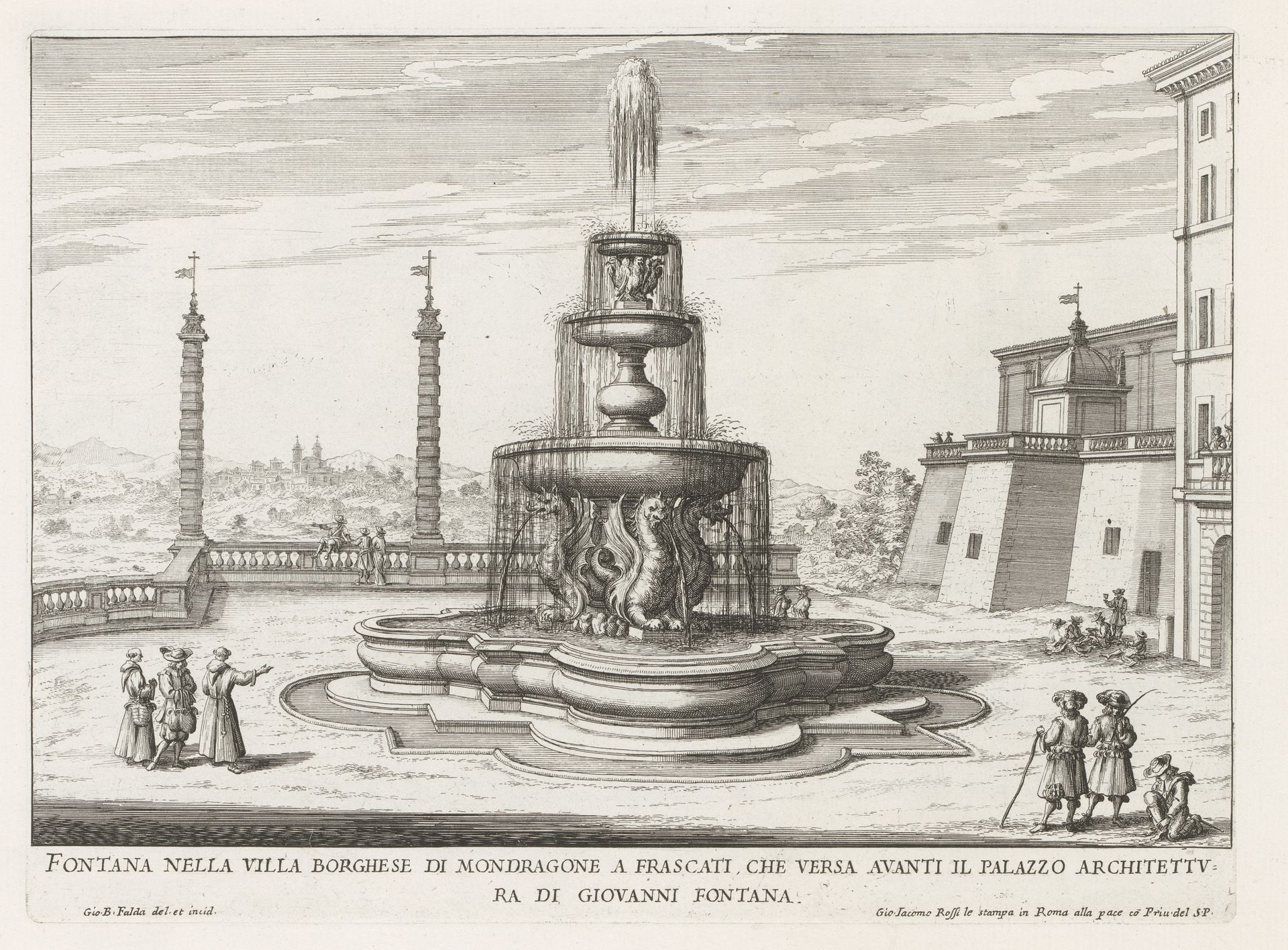
This print of a fountain in the Villa Mondragone was made by Giovanni Battista Falda in the late 17th century. Its fine lines, achieved through the process of etching, record the ornateness of this hydraulic marvel. The fountain, built of stone, would have demanded great skill to realize. From quarrying the raw material to carving the dragons at its base, this project was a testament to the stonemason's art. But prints like this one were also important to the fountain’s success, serving to broadcast the patron’s wealth and taste. Note how Falda also depicts figures in the lower left corner of the print. By showing these people admiring the structure, he emphasizes the fountain's social function as a meeting place, and a monument to its owner’s status. It's a reminder that even seemingly simple materials like stone can be imbued with social and cultural meaning.
Fontein in de tuinen van de Villa Mondragone te Frascati 1653 - 1691

Giovanni Battista Falda
1643 - 1678Location
RijksmuseumArtwork details
- Medium
- print, engraving, architecture
- Dimensions
- height 213 mm, width 288 mm
- Location
- Rijksmuseum
- Copyright
- Rijks Museum: Open Domain
Tags
baroque
pencil sketch
old engraving style
landscape
engraving
architecture
Comments
No comments
About this artwork
This print of a fountain in the Villa Mondragone was made by Giovanni Battista Falda in the late 17th century. Its fine lines, achieved through the process of etching, record the ornateness of this hydraulic marvel. The fountain, built of stone, would have demanded great skill to realize. From quarrying the raw material to carving the dragons at its base, this project was a testament to the stonemason's art. But prints like this one were also important to the fountain’s success, serving to broadcast the patron’s wealth and taste. Note how Falda also depicts figures in the lower left corner of the print. By showing these people admiring the structure, he emphasizes the fountain's social function as a meeting place, and a monument to its owner’s status. It's a reminder that even seemingly simple materials like stone can be imbued with social and cultural meaning.
Comments
No comments