About this artwork
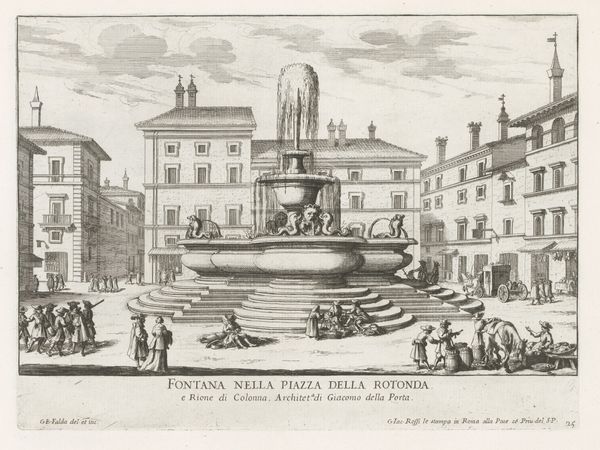
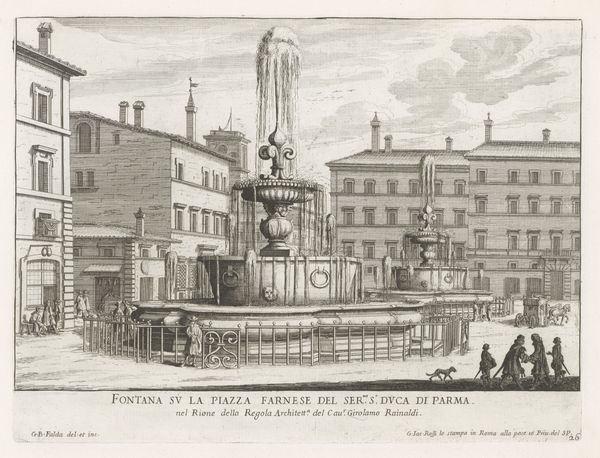
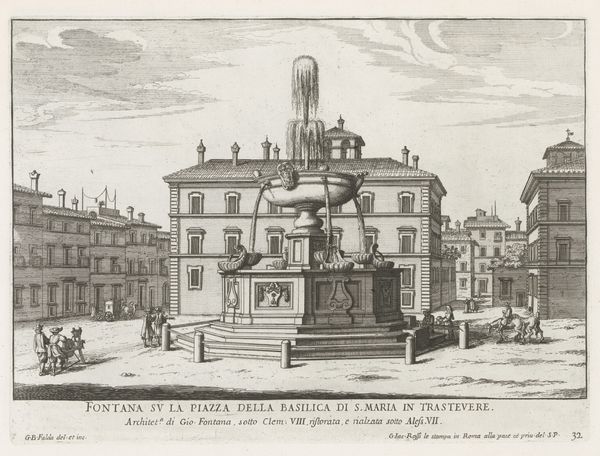
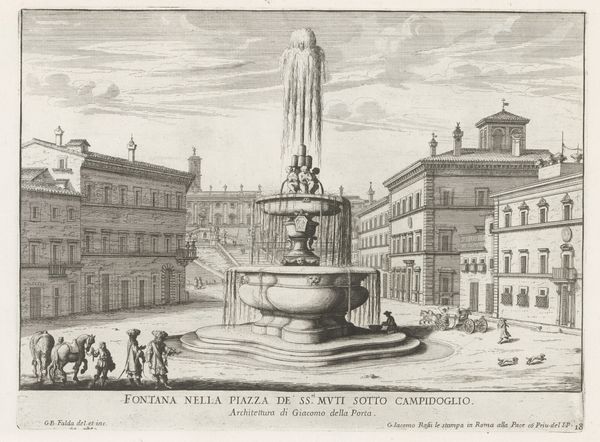
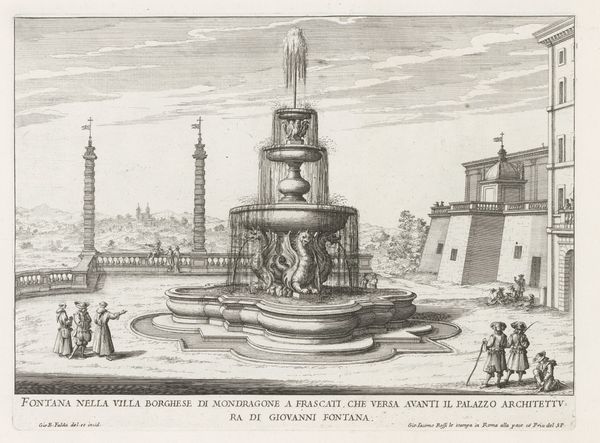
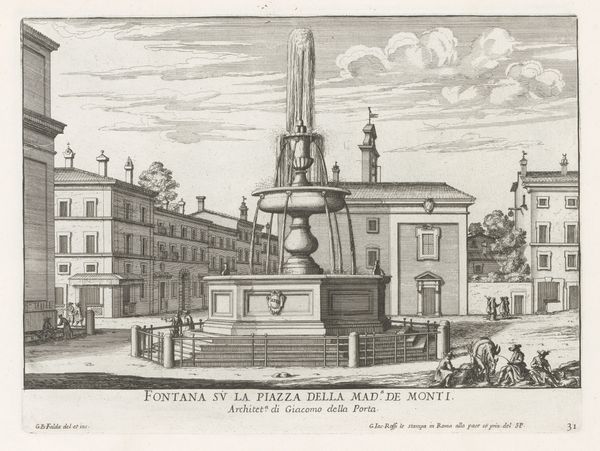
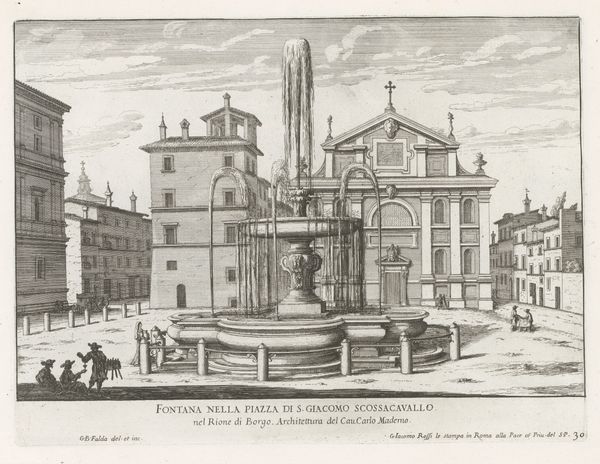
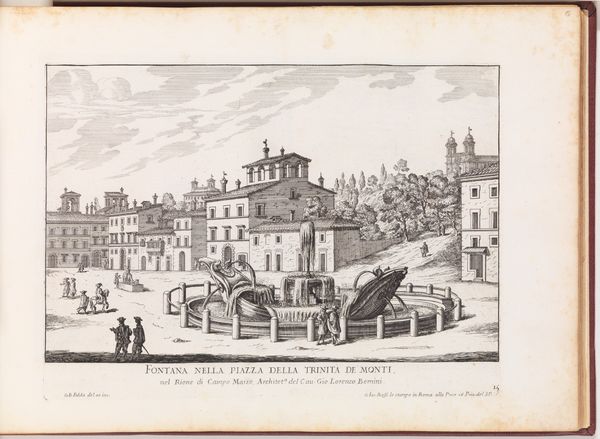
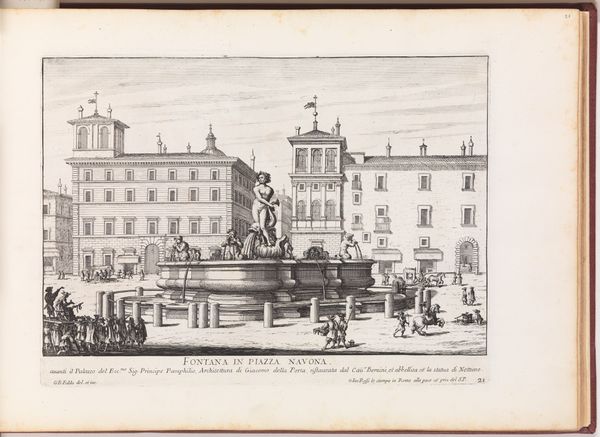
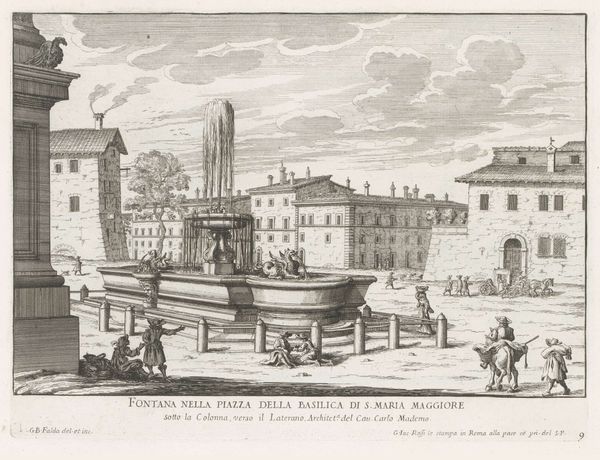
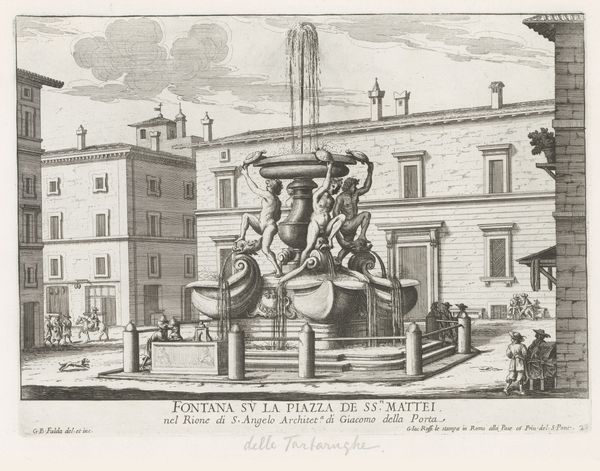
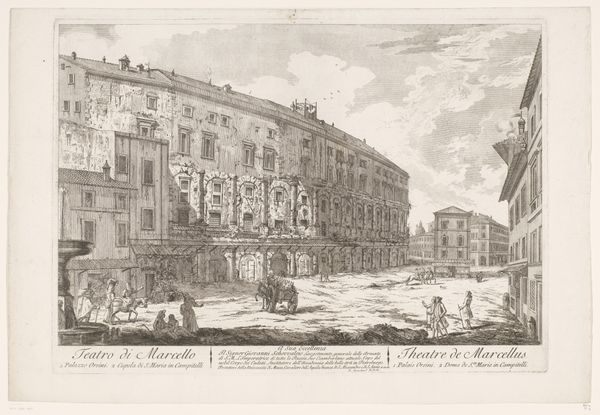
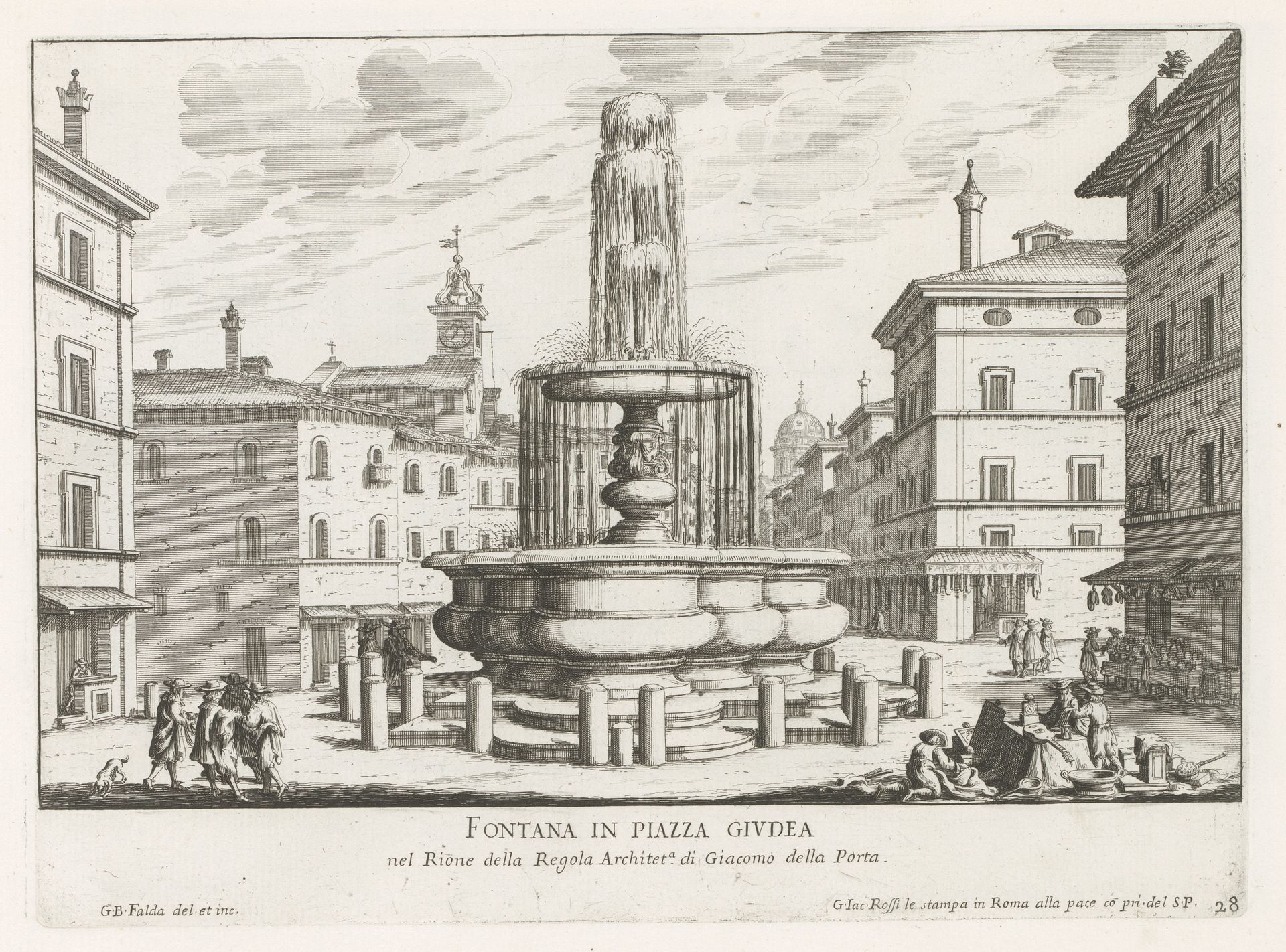
Giovanni Battista Falda created this print of a fountain in Piazza Giudia in Rome using etching and engraving techniques. The artwork offers us insights into the social and urban landscape of 17th-century Rome, particularly the Jewish Ghetto. Falda meticulously captures the architectural details of the fountain and surrounding buildings, providing a visual record of the area. Commissioned by wealthy patrons or the Church, these fountains transformed Rome, signaling the city's renewed power and influence. The 'Piazza Giudia', or Jewish Square, was the heart of the Roman Ghetto, established in 1555. By depicting the fountain within this specific location, Falda’s image becomes a commentary on the social structure of the time. Public works such as the fountain stood in stark contrast to the forced segregation of the Jewish population. Historical maps, census records, and archival documents from the period can reveal more about the work’s intersection with the social history of Rome and the institution of the Ghetto.
Fontein op Piazza Giudia te Rome
1653 - 1691

Giovanni Battista Falda
1643 - 1678Location
RijksmuseumArtwork details
- Medium
- print, etching, engraving, architecture
- Dimensions
- height 213 mm, width 289 mm
- Location
- Rijksmuseum
- Copyright
- Rijks Museum: Open Domain
Tags
Comments
Share your thoughts
About this artwork
Giovanni Battista Falda created this print of a fountain in Piazza Giudia in Rome using etching and engraving techniques. The artwork offers us insights into the social and urban landscape of 17th-century Rome, particularly the Jewish Ghetto. Falda meticulously captures the architectural details of the fountain and surrounding buildings, providing a visual record of the area. Commissioned by wealthy patrons or the Church, these fountains transformed Rome, signaling the city's renewed power and influence. The 'Piazza Giudia', or Jewish Square, was the heart of the Roman Ghetto, established in 1555. By depicting the fountain within this specific location, Falda’s image becomes a commentary on the social structure of the time. Public works such as the fountain stood in stark contrast to the forced segregation of the Jewish population. Historical maps, census records, and archival documents from the period can reveal more about the work’s intersection with the social history of Rome and the institution of the Ghetto.
Comments
Share your thoughts