About this artwork
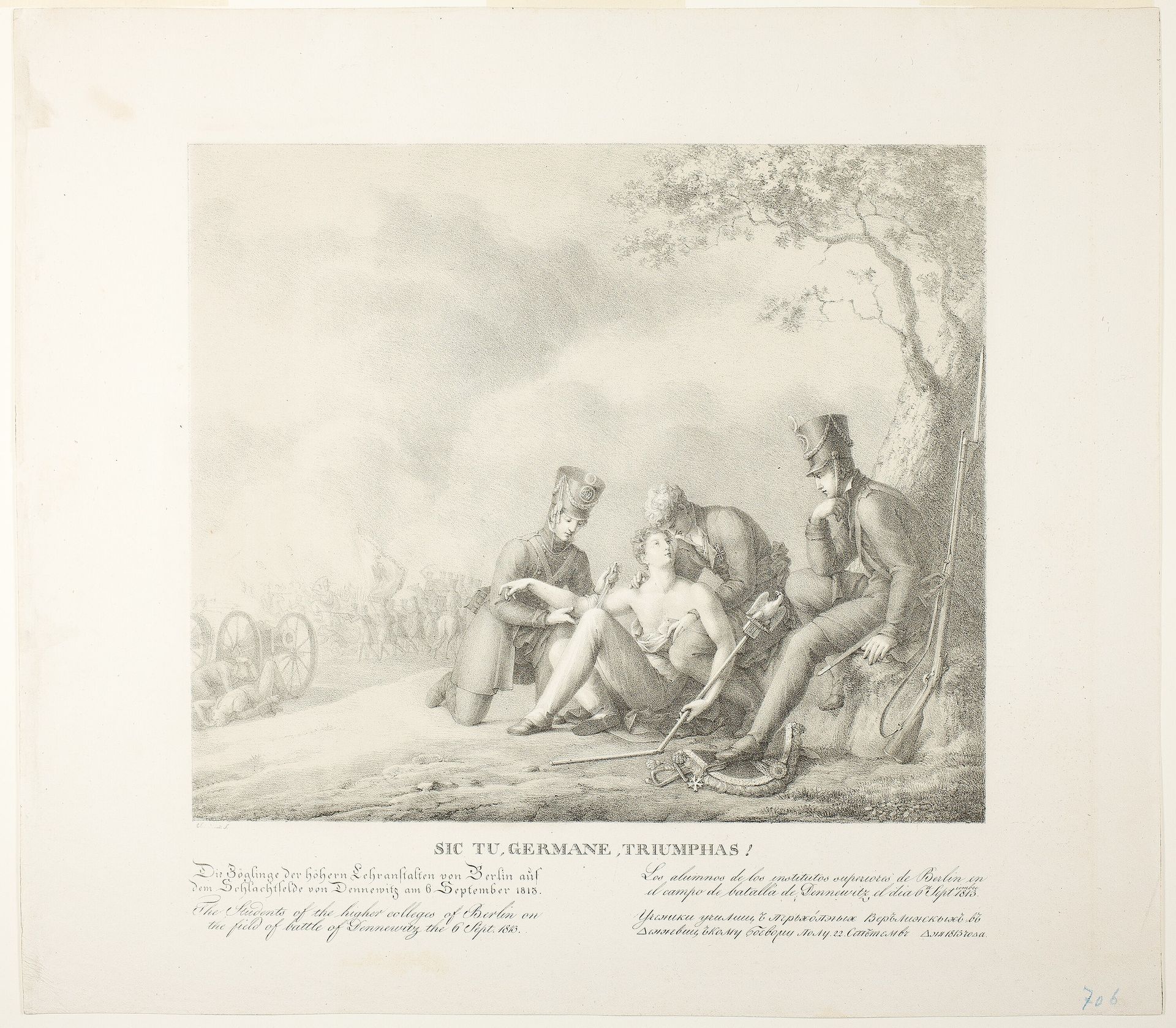
Marie Electrine Stuntz created this print, "So you, German, Triumph!" using etching, a process known for its fine lines and detailed textures. Note the striking contrast between the delicate figures in the foreground and the chaotic battle scene receding into the distance. The composition is carefully structured, staging a moment of somber reflection amidst the theater of war. Three soldiers are attending to a wounded nude figure who is in the centre of the work. The arrangement of figures creates a poignant tableau, framed by the natural elements of the tree on the right and the distant conflict on the left. Consider how Stuntz uses line and form to destabilize conventional heroic narratives. Instead of glorifying victory, she focuses on the human cost, challenging viewers to confront the complex realities of conflict. This work functions not just as a historical record but also as a meditation on German national identity after the Napoleonic Wars.
So you, German, Triumph!
c. 1814


Artwork details
- Medium
- drawing, lithograph, print, paper
- Dimensions
- 279 × 328 mm (image); 415 × 473 mm (sheet)
- Location
- The Art Institute of Chicago
- Copyright
- Public Domain
Tags
Comments
Share your thoughts
About this artwork
Marie Electrine Stuntz created this print, "So you, German, Triumph!" using etching, a process known for its fine lines and detailed textures. Note the striking contrast between the delicate figures in the foreground and the chaotic battle scene receding into the distance. The composition is carefully structured, staging a moment of somber reflection amidst the theater of war. Three soldiers are attending to a wounded nude figure who is in the centre of the work. The arrangement of figures creates a poignant tableau, framed by the natural elements of the tree on the right and the distant conflict on the left. Consider how Stuntz uses line and form to destabilize conventional heroic narratives. Instead of glorifying victory, she focuses on the human cost, challenging viewers to confront the complex realities of conflict. This work functions not just as a historical record but also as a meditation on German national identity after the Napoleonic Wars.
Comments
Share your thoughts