About this artwork
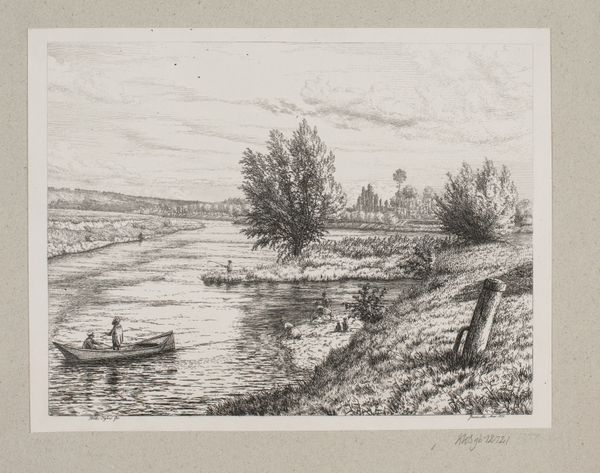
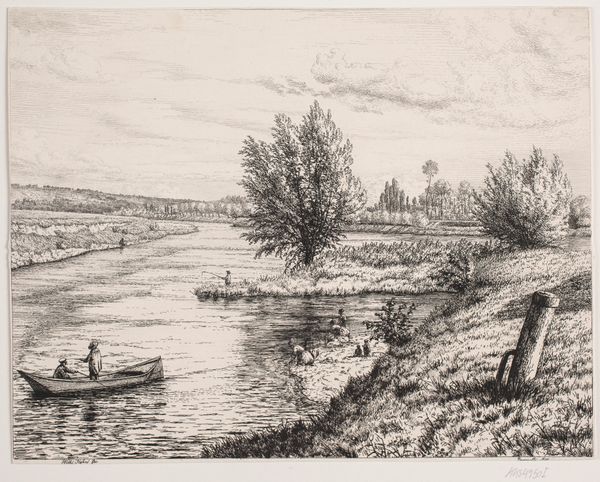
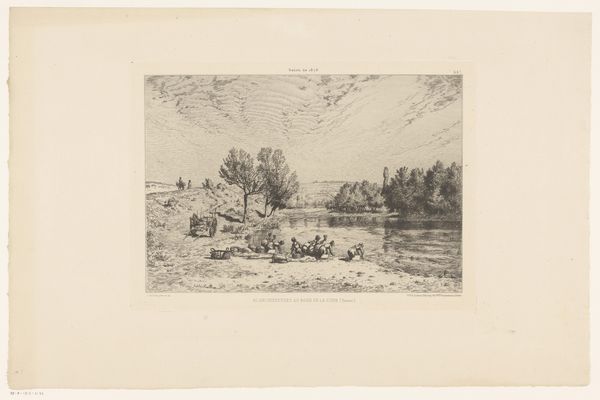
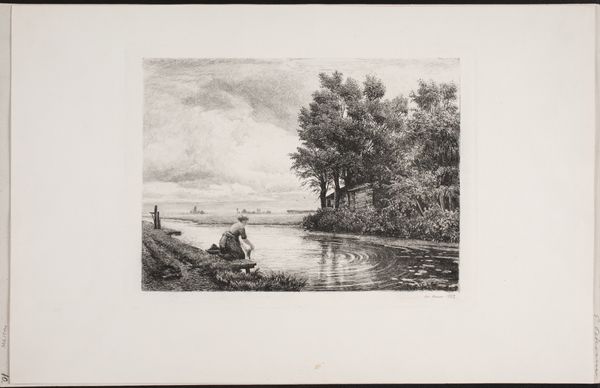
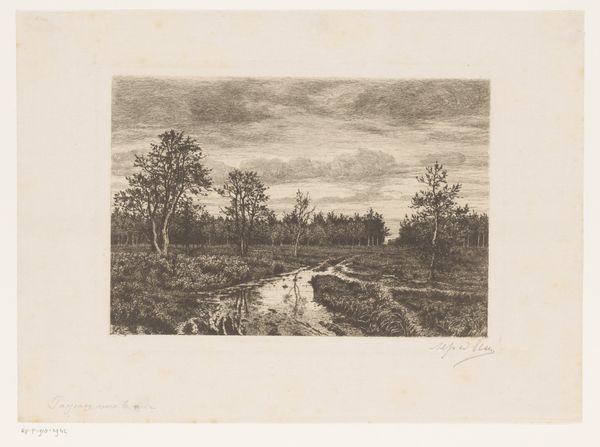
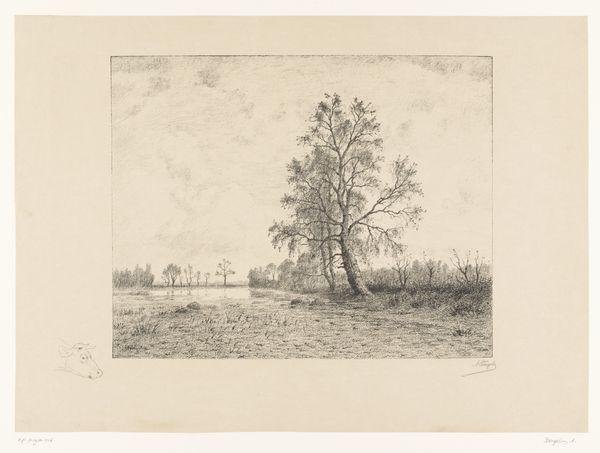
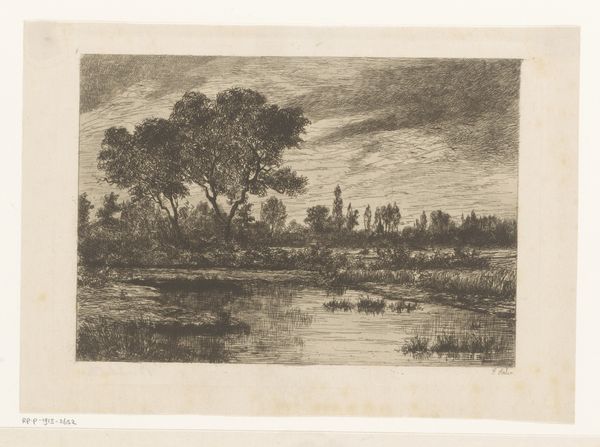
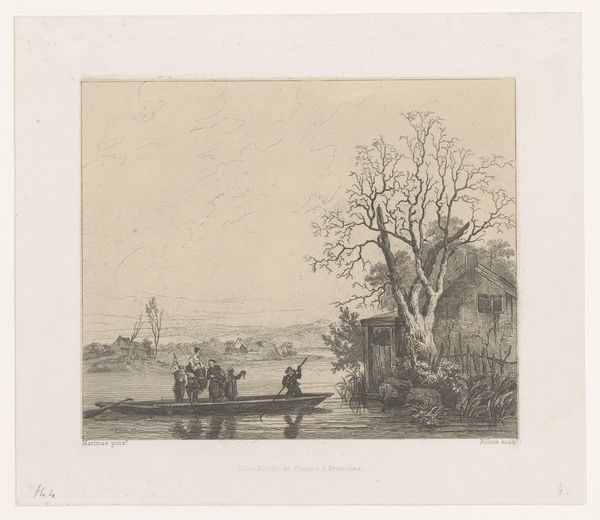
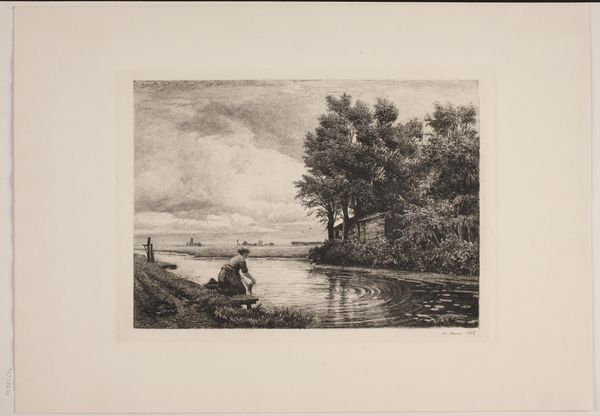
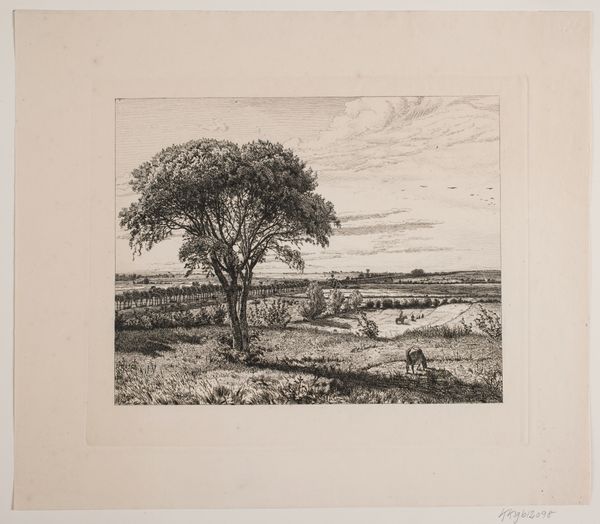
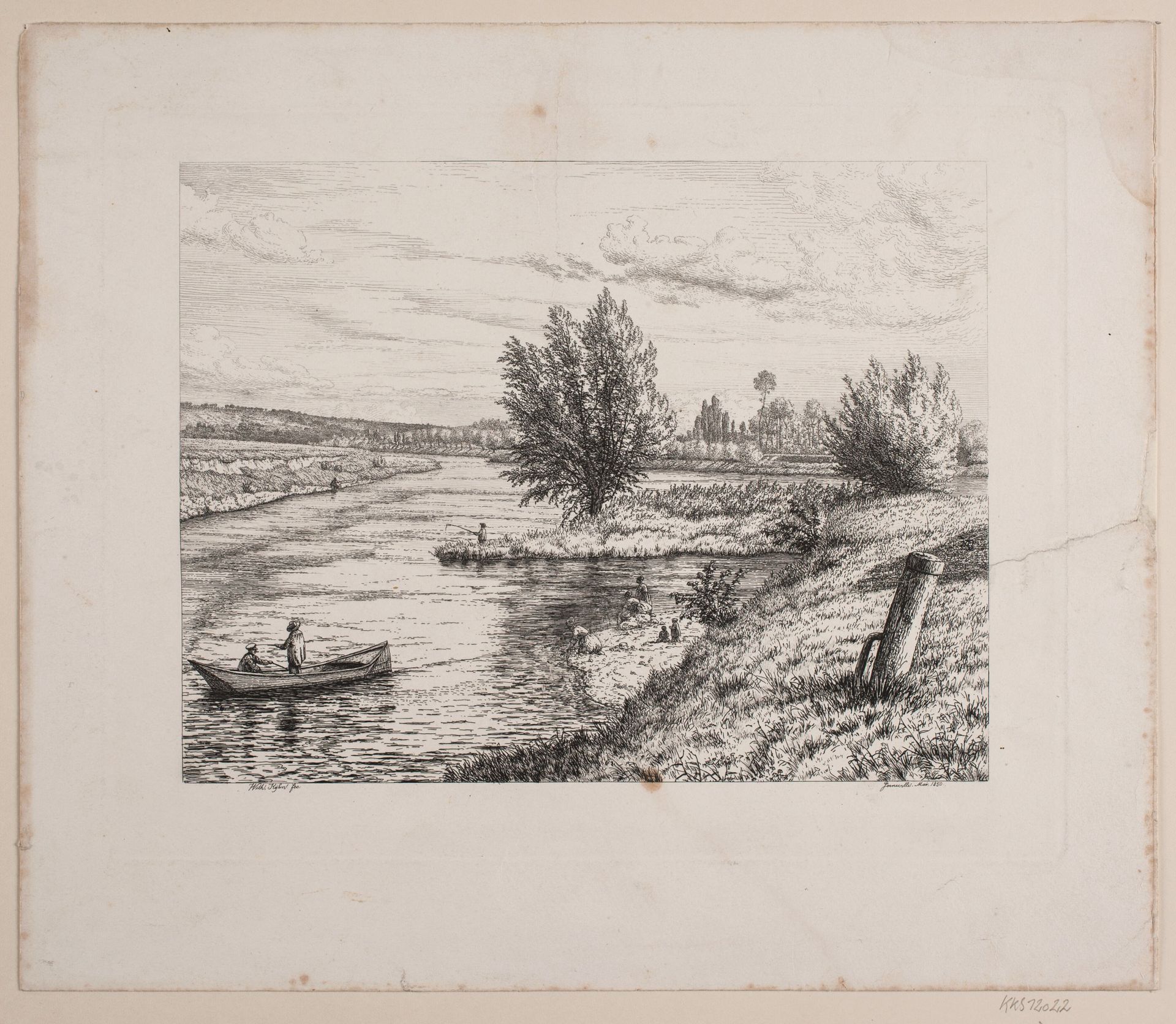
Vilhelm Kyhn captured this scene, "Parti ved Marnefloden," using etching, a printmaking technique, sometime in the 19th century. Kyhn was a Danish artist, deeply invested in depicting the natural landscapes of his homeland. This particular print, however, transports us to the Marne River, likely in France. Consider the implications of a Danish artist turning his gaze elsewhere. Was this simply a personal sojourn, or did it reflect a broader cultural engagement with continental Europe? The scene itself is pastoral. Figures dot the landscape: boating, fishing, and relaxing by the river. Such imagery speaks to a rising middle class with the leisure time to enjoy nature. But remember, these images are never neutral. They reflect the artist’s choices, the market’s demands, and the cultural values of the time. To understand this print fully, we might consult travelogues, exhibition reviews, and even economic data to trace the flow of artistic influence and the rise of landscape painting in 19th-century Europe. These resources help us to see art not as isolated creations, but as products of a specific social and institutional moment.
Parti ved Marnefloden 1850


Artwork details
- Medium
- print, etching
- Dimensions
- 213 mm (height) x 273 mm (width) (plademaal)
- Location
- SMK - Statens Museum for Kunst
Tags
etching
landscape
genre-painting
realism
Comments
No comments
About this artwork
Vilhelm Kyhn captured this scene, "Parti ved Marnefloden," using etching, a printmaking technique, sometime in the 19th century. Kyhn was a Danish artist, deeply invested in depicting the natural landscapes of his homeland. This particular print, however, transports us to the Marne River, likely in France. Consider the implications of a Danish artist turning his gaze elsewhere. Was this simply a personal sojourn, or did it reflect a broader cultural engagement with continental Europe? The scene itself is pastoral. Figures dot the landscape: boating, fishing, and relaxing by the river. Such imagery speaks to a rising middle class with the leisure time to enjoy nature. But remember, these images are never neutral. They reflect the artist’s choices, the market’s demands, and the cultural values of the time. To understand this print fully, we might consult travelogues, exhibition reviews, and even economic data to trace the flow of artistic influence and the rise of landscape painting in 19th-century Europe. These resources help us to see art not as isolated creations, but as products of a specific social and institutional moment.
Comments
No comments