About this artwork
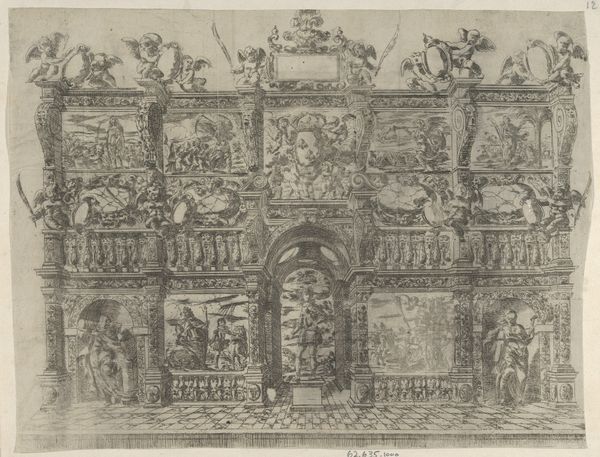
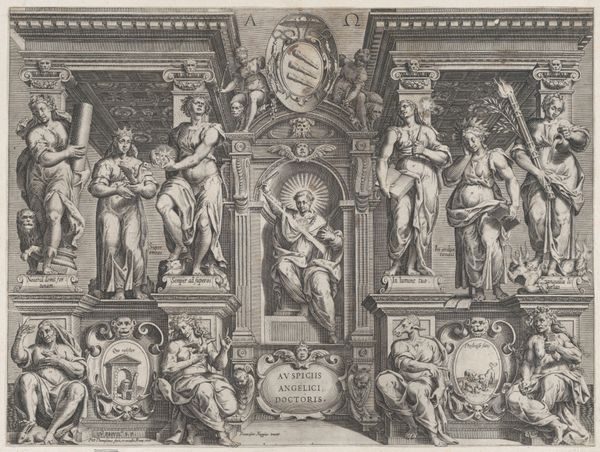
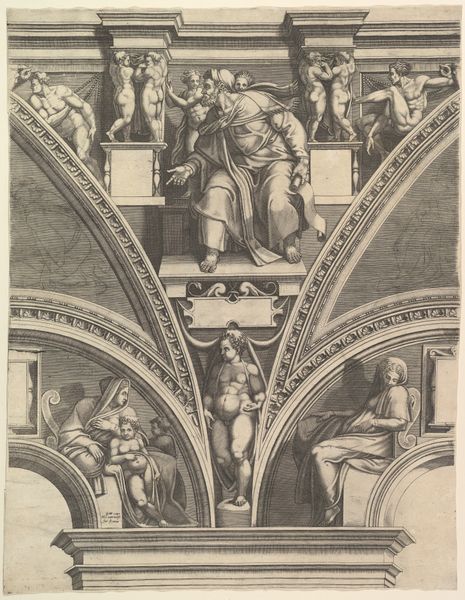
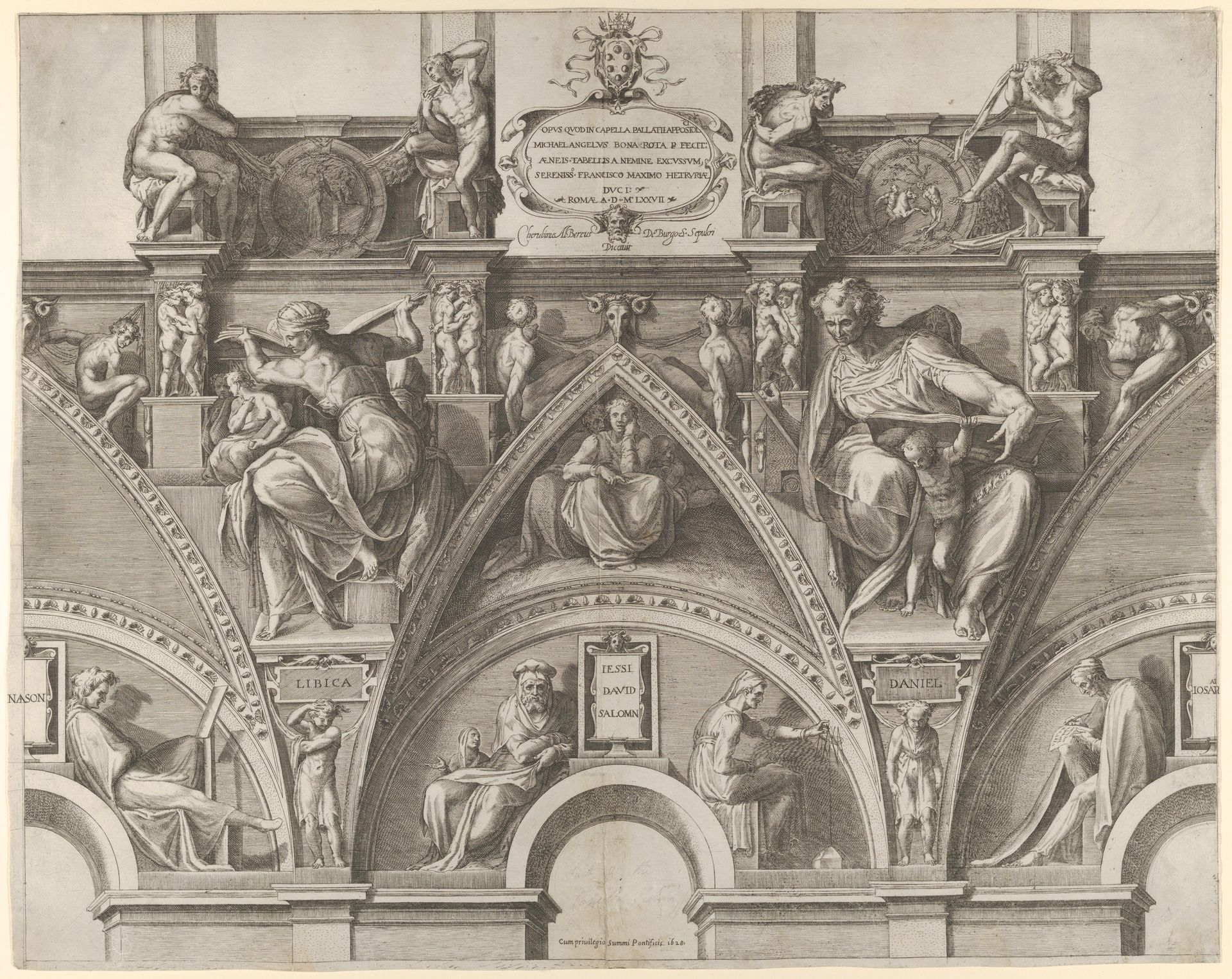
This is a print made by Cherubino Alberti around 1600, depicting a portion of Michelangelo's ceiling in the Sistine Chapel. It’s created using the etching process, where lines are incised into a metal plate with acid, then inked and pressed onto paper. The material qualities are intriguing. Unlike Michelangelo’s vibrant frescoes, Alberti's print reduces the scene to a network of lines, playing with light and shadow. The linear quality emphasizes the incredible labor involved in both Michelangelo’s painting, and Alberti's printmaking. Consider the skill required to translate the dynamic, colorful figures into a monochrome, two-dimensional format! The print serves as a kind of document, recording and disseminating Michelangelo’s masterpiece. It makes the Sistine Chapel accessible to a wider audience through the reproductive power of printmaking. In this way, Alberti's work blurs the lines between original artwork and reproduction, fine art and craft, highlighting the value and complexity of both.
Portion of the Ceiling of the Sistine Chapel with the Libyan Sibyl, Prophet Daniel, Jesse, David, and Solomon, from Sibyls and Prophets from the Sistine Chapel Vaults
1577


Artwork details
- Medium
- drawing, print, engraving
- Dimensions
- Sheet: 17 1/8 × 21 5/8 in. (43.5 × 54.9 cm)
- Location
- Metropolitan Museum of Art, New York, NY
- Copyright
- Public Domain
Tags
drawing
pen drawing
mannerism
figuration
history-painting
italian-renaissance
engraving
Comments
Be the first to share your thoughts about this work.
About this artwork
This is a print made by Cherubino Alberti around 1600, depicting a portion of Michelangelo's ceiling in the Sistine Chapel. It’s created using the etching process, where lines are incised into a metal plate with acid, then inked and pressed onto paper. The material qualities are intriguing. Unlike Michelangelo’s vibrant frescoes, Alberti's print reduces the scene to a network of lines, playing with light and shadow. The linear quality emphasizes the incredible labor involved in both Michelangelo’s painting, and Alberti's printmaking. Consider the skill required to translate the dynamic, colorful figures into a monochrome, two-dimensional format! The print serves as a kind of document, recording and disseminating Michelangelo’s masterpiece. It makes the Sistine Chapel accessible to a wider audience through the reproductive power of printmaking. In this way, Alberti's work blurs the lines between original artwork and reproduction, fine art and craft, highlighting the value and complexity of both.
Comments
Be the first to share your thoughts about this work.