About this artwork
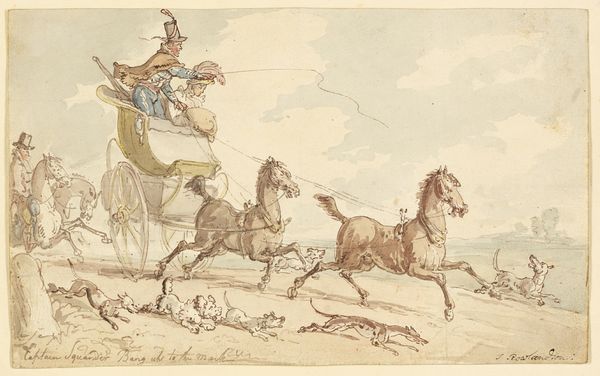
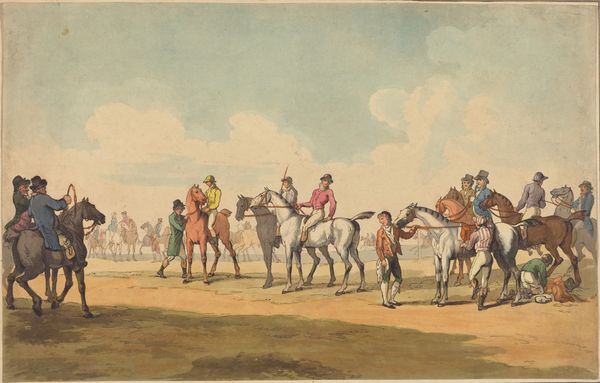
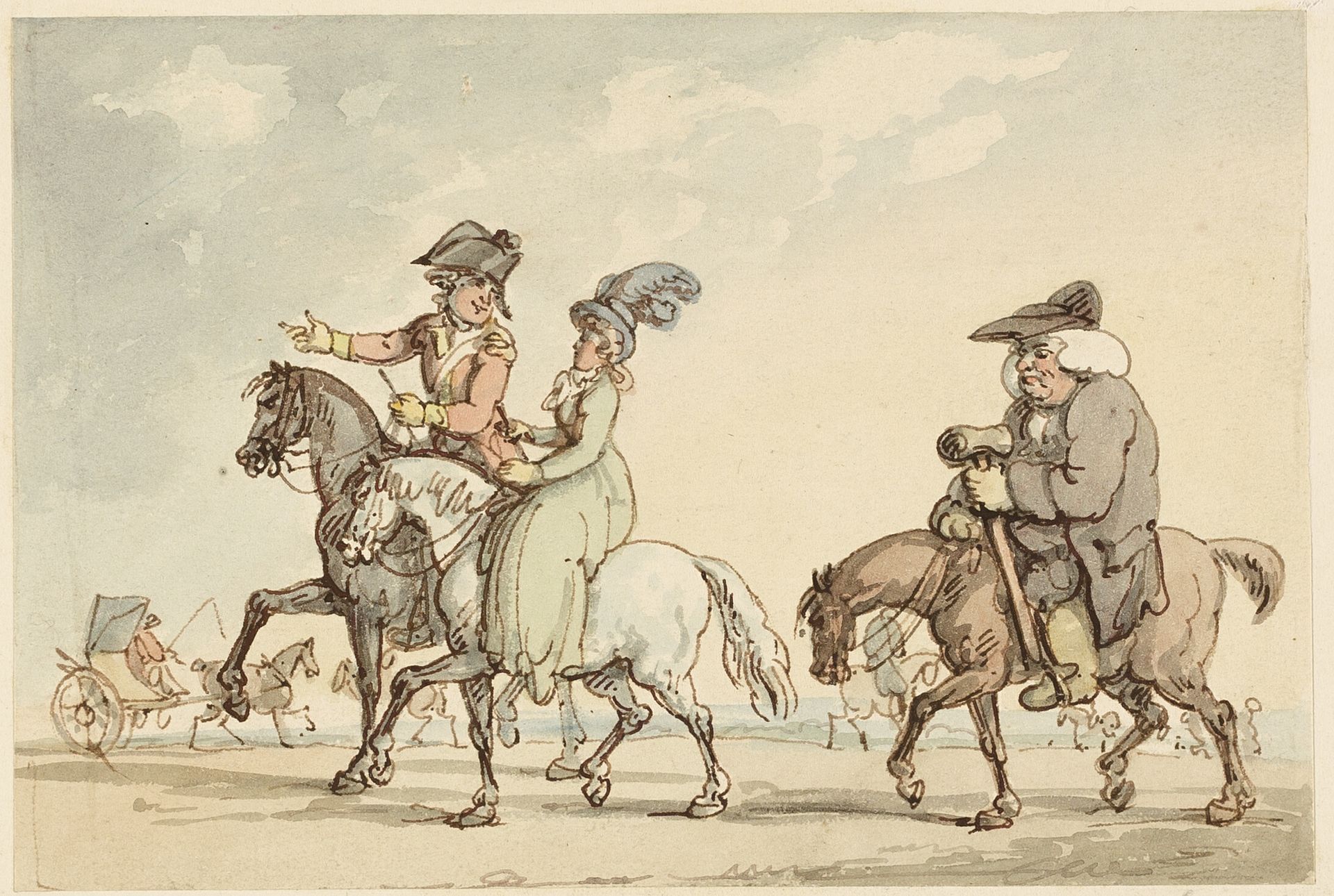
Thomas Rowlandson made this watercolor study in England, likely in the late 1700s, as part of preparations for a print satirizing leisure and health tourism in the city of Bath. Rowlandson’s scene gains meaning from the visual codes that would have been instantly recognizable to his audience. Military men, fashionable women, and corpulent bourgeois are rendered with a grotesque exaggeration that pokes fun at their pretensions. The comforts of Bath, as offered to the wealthy, are shown to be slightly ridiculous. Here, the artist provides a critique of the institutions that made leisure and luxury available only to a privileged class. As historians, we can learn more about this image and its social context by studying the prints Rowlandson produced for commercial sale, and by researching the history of leisure and tourism in Britain. Art is never made in a vacuum. Its meaning is always contingent on social and institutional forces.
Study for Comforts of Bath
c. 1798


Artwork details
- Medium
- drawing, print, paper, watercolor
- Dimensions
- 130 × 192 mm
- Location
- The Art Institute of Chicago
- Copyright
- Public Domain
Tags
Comments
Share your thoughts
About this artwork
Thomas Rowlandson made this watercolor study in England, likely in the late 1700s, as part of preparations for a print satirizing leisure and health tourism in the city of Bath. Rowlandson’s scene gains meaning from the visual codes that would have been instantly recognizable to his audience. Military men, fashionable women, and corpulent bourgeois are rendered with a grotesque exaggeration that pokes fun at their pretensions. The comforts of Bath, as offered to the wealthy, are shown to be slightly ridiculous. Here, the artist provides a critique of the institutions that made leisure and luxury available only to a privileged class. As historians, we can learn more about this image and its social context by studying the prints Rowlandson produced for commercial sale, and by researching the history of leisure and tourism in Britain. Art is never made in a vacuum. Its meaning is always contingent on social and institutional forces.
Comments
Share your thoughts