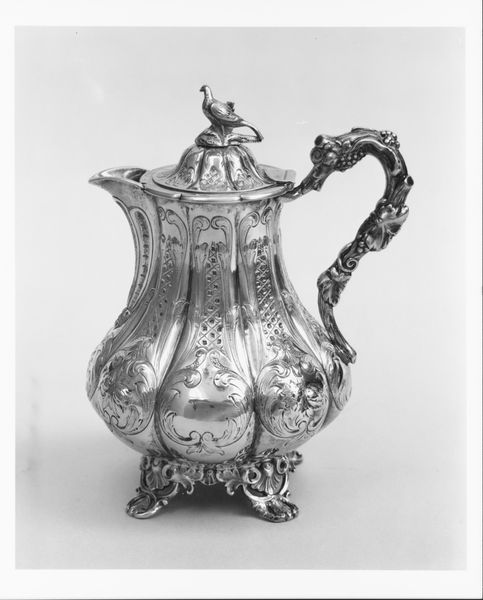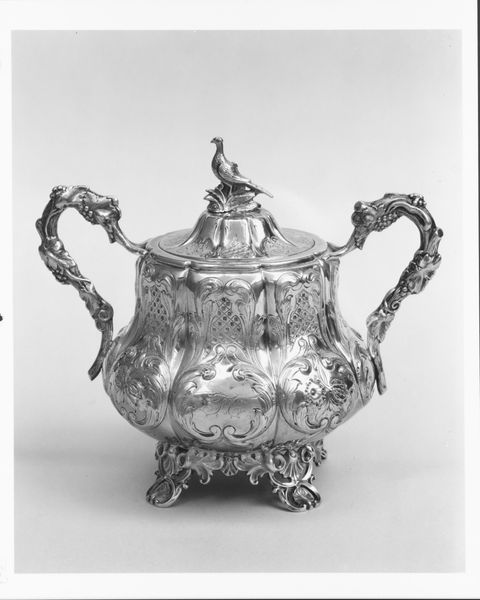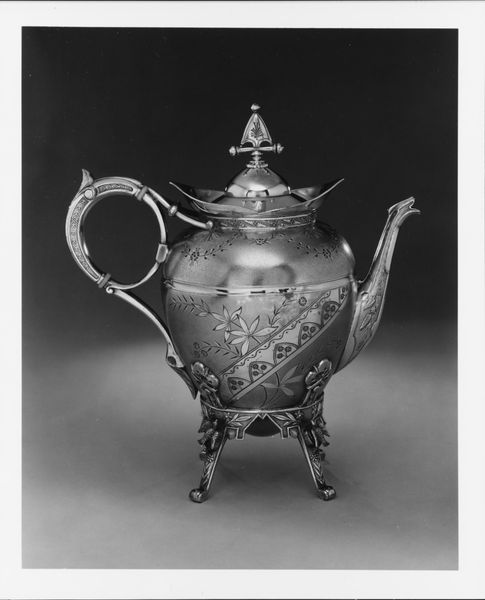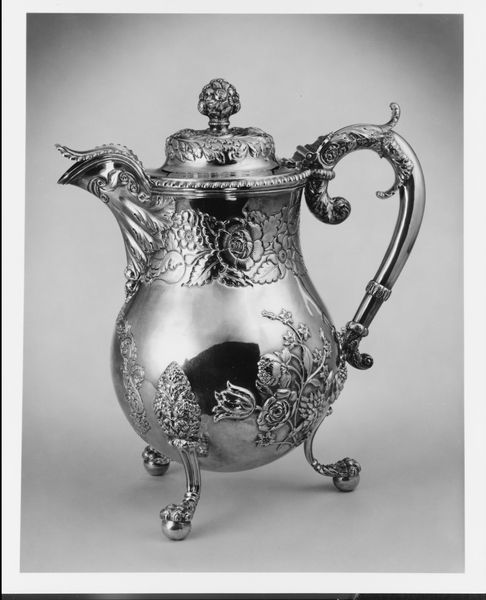
1848 - 1851
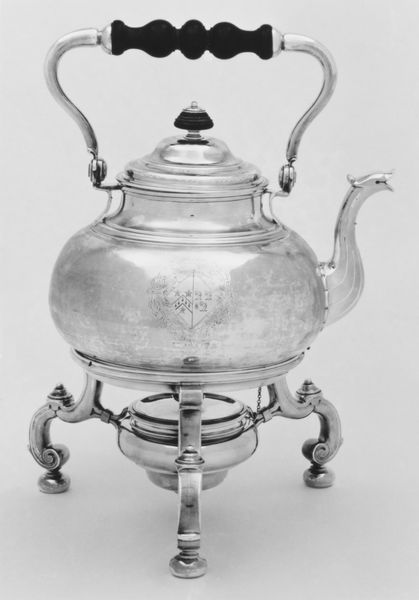
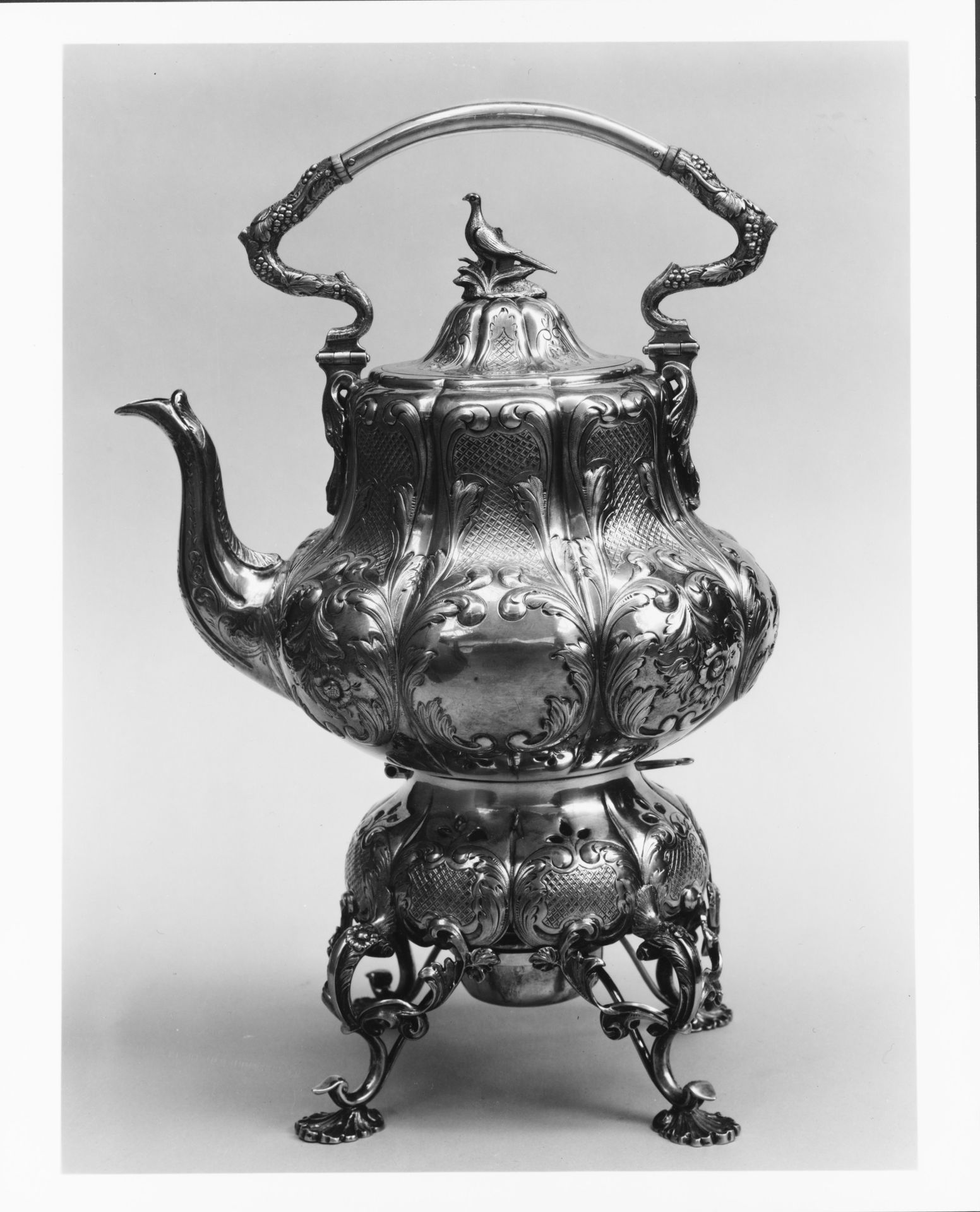
Teakettle, Burner, and Stand

Ball, Tompkins and Black
1839 - 1851
The Metropolitan Museum of Art
Metropolitan Museum of Art, New York, NYListen to curator's interpretation
Curatorial notes
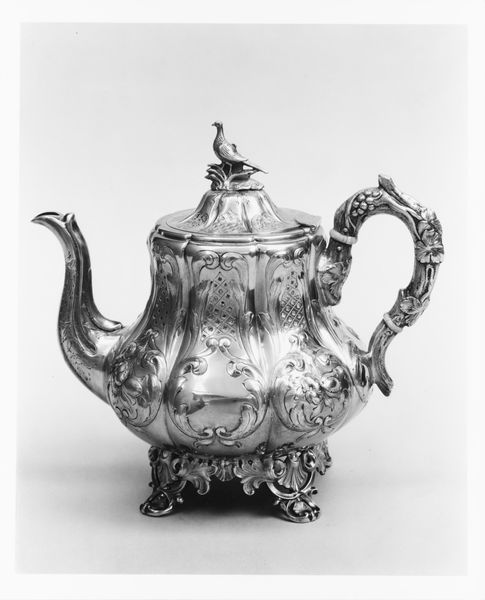
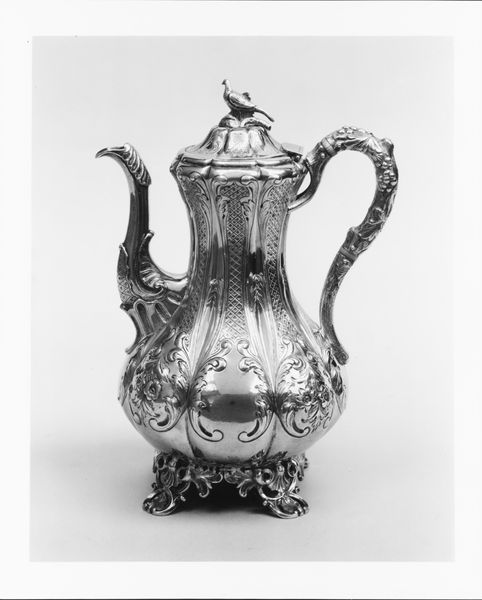
Curator: This elaborate "Teakettle, Burner, and Stand" was crafted by Ball, Tompkins and Black between 1848 and 1851. It's silver, and it just looks so...ornate! I mean, how would you even begin to clean all of that detail? What strikes you about it? Editor: For me, it’s the sheer extravagance of it all. Knowing that this was made during the mid-19th century, I'm wondering, what kind of social and economic structures enabled such elaborate metalwork to be produced? Curator: Exactly. Let's consider the labor involved. Silversmithing of this caliber wasn't just about artistic skill; it was about access to resources, division of labor, and a consumer base that valued such intricate designs. What does the realism style tell you about its intended audience? Editor: It seems to reflect a desire for accurate representation and status. Is it implying a burgeoning wealthy merchant class wanting to emulate aristocratic styles, but through a distinctly American lens? Curator: Precisely! This piece straddles the line between art and commodity, intended for practical use but elevated through artistic skill. Silver itself became a symbol of wealth and taste, shaping social relations through its very presence. Now, does knowing it involves intense handwork alter your view? Editor: Definitely. Thinking about the unseen hands that shaped each curve makes me appreciate the artistry in a completely new way. The social conditions inherent to this work suddenly are visible within it, making it far more interesting to consider than just a pretty, antique teapot. Curator: Absolutely. Understanding the materials and their production processes enriches our understanding, challenging traditional distinctions of decorative art. The consumption becomes something other than what it seems when initially observing it. Editor: I hadn't considered the labor involved initially, but now I see how the materials, means of production, and the consumer all contributed to the status of the piece and its value beyond just monetary means.