1890
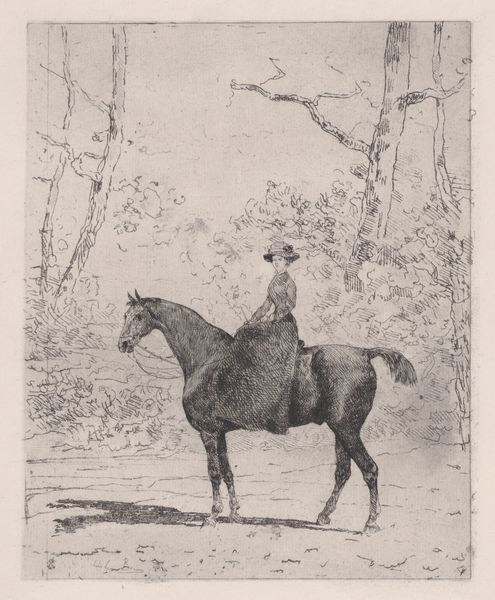
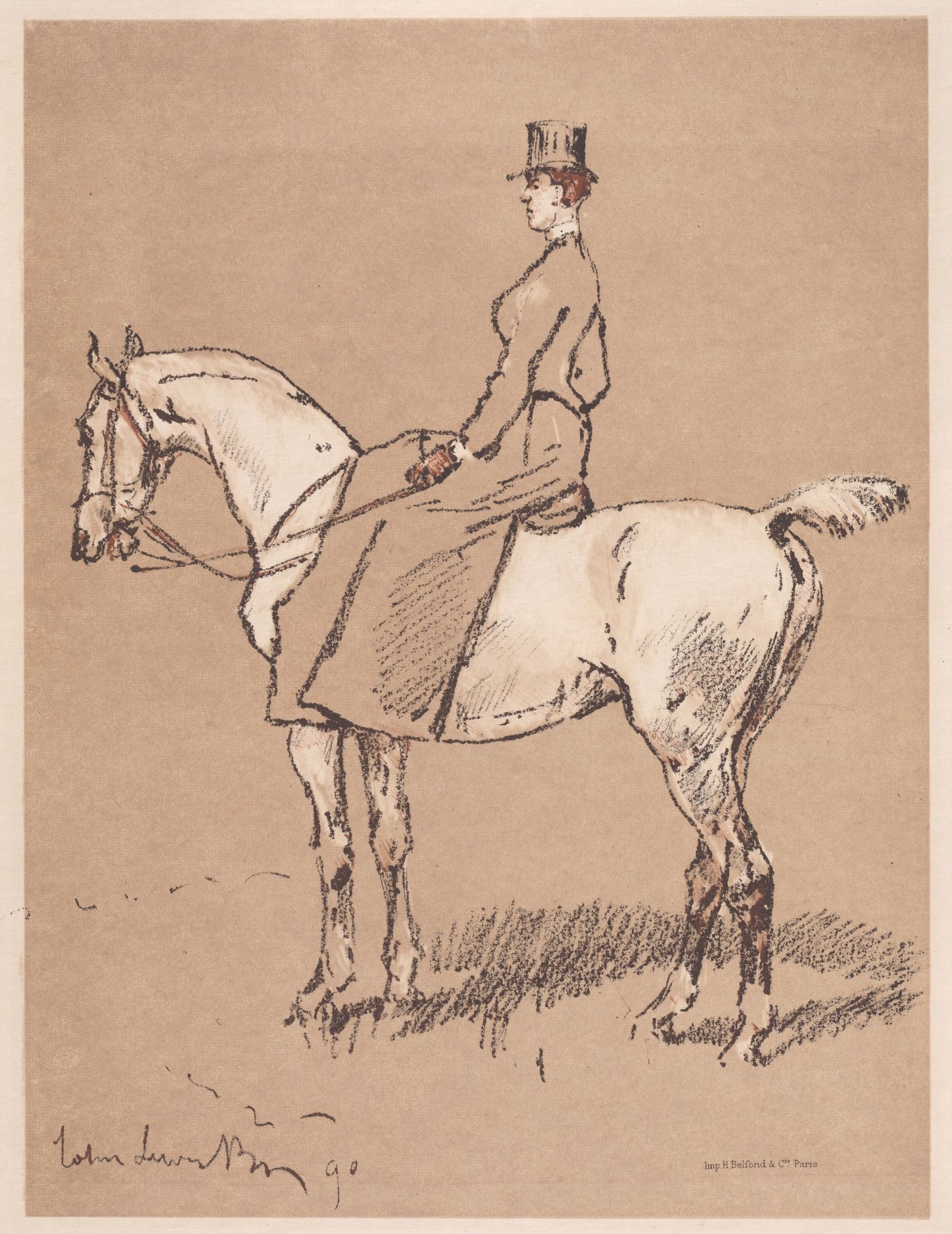
Amazone


Listen to curator's interpretation
Curatorial notes
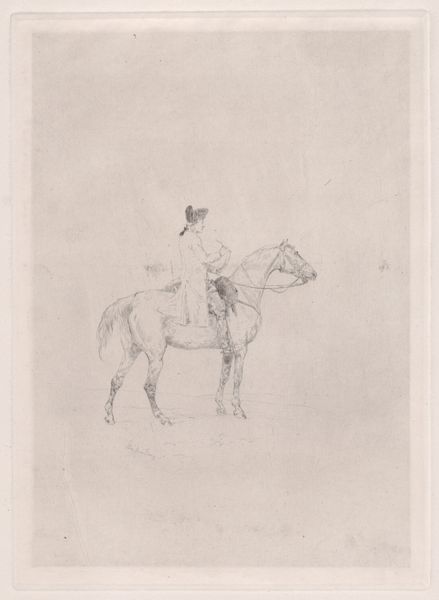
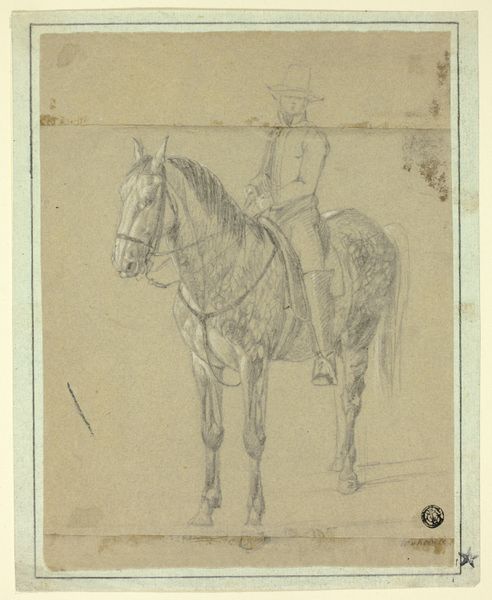
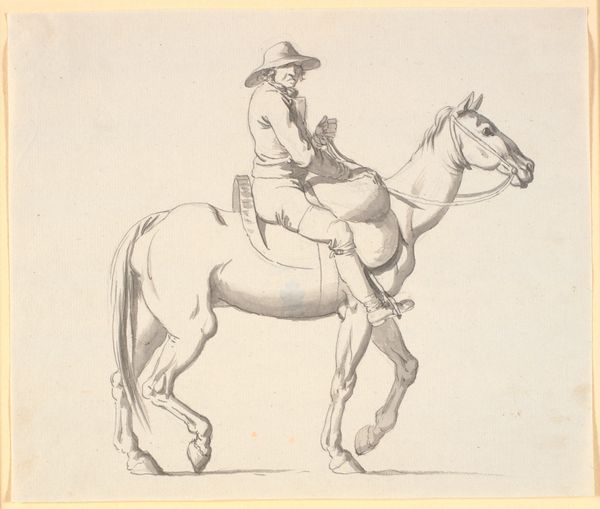
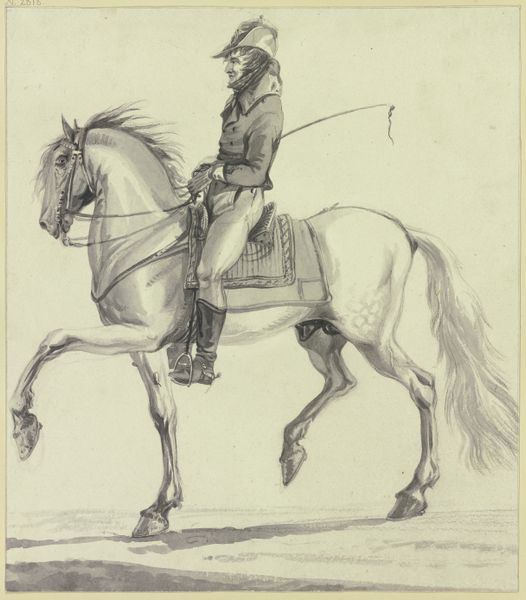
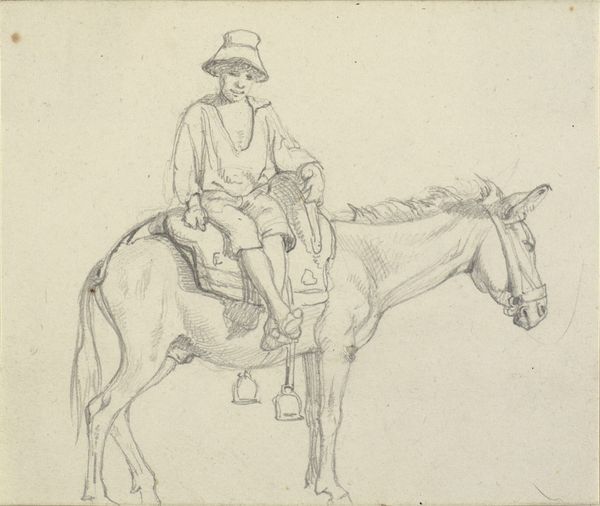
Editor: So, here we have John-Lewis Brown's "Amazone," from 1890, currently residing at The Met. It's a print, I believe, capturing a woman on horseback. There’s a subdued, almost somber feel to it, despite the active subject matter. What stands out to you about it? Curator: The subdued palette indeed draws me in. It almost renders the figures as spectral, belonging not quite to our present reality. Note how the woman is portrayed with a stoic reserve. It evokes classical equestrian statues of conquering heroes, doesn’t it? Editor: I see what you mean! So, is Brown playing with the symbolism of power? Curator: Consider what it meant for a woman to be seen riding astride at this time. It’s more than just a portrait; it’s a statement. Look at the precision of line combined with the suggestive sketchiness elsewhere. The horse, usually a symbol of virility and power, here seems almost secondary, docile. Who truly holds the reins, here? Editor: That’s fascinating! I hadn't considered how subversive it might have been. Curator: Exactly! The hat, the riding crop, the very act itself… they accumulate to signify autonomy. Each element builds an iconography of self-possession. It invites us to contemplate the changing roles and perceptions of women in that era. Do you see other ways Brown signals this intent? Editor: The almost severe angle of her jawline...and the direct gaze, despite her face being in profile. There’s defiance, maybe even confidence, that challenges the viewer. I see now how powerful that one simple sketch can be! Curator: And there, in that interplay of symbols, a larger truth about cultural shifts emerges. Editor: That's given me a lot to think about! I'll definitely look at equestrian art differently now.