About this artwork
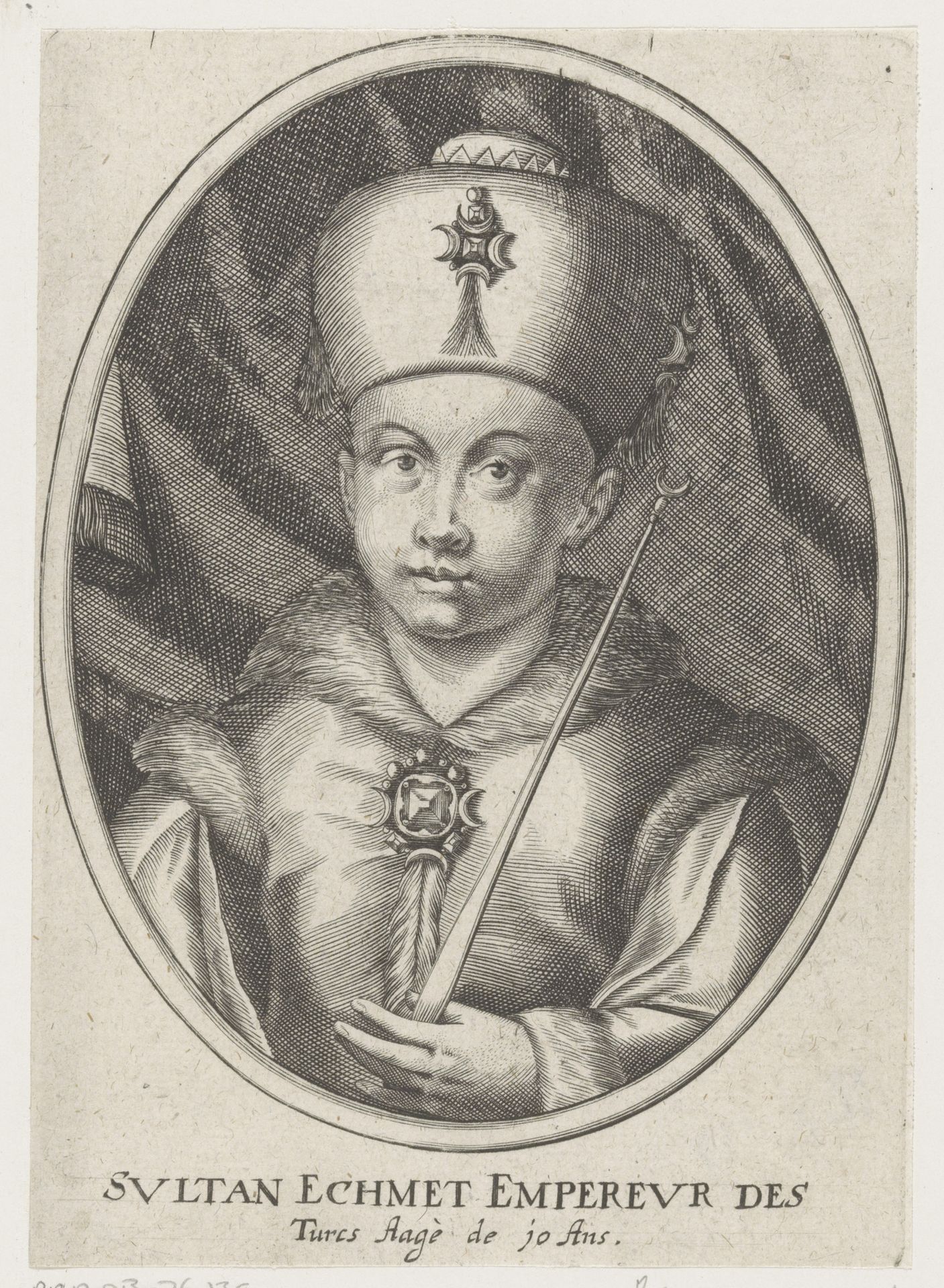
This portrait of Ahmed I, possibly made during his lifetime, is an engraving. The artist used a technique where lines are incised into a metal plate, ink is applied to the plate, and then the image is transferred to paper under high pressure. The engraver would have needed a keen eye and a steady hand to capture the fine details of the Sultan's garments and features. Note how the varying densities of lines create a sense of depth and texture, from the soft fur trim to the smooth, polished surfaces of the jewelry. Engraving emerged in lockstep with the rise of print culture, and the desire to disseminate images widely. This portrait would have circulated amongst the European elite, providing a glimpse into the world of the Ottoman court. It represents a skilled form of image-making that sits at the intersection of art, craft, and social communication. We can appreciate the way in which the material and process used have shaped its meaning.
Portret van Ahmed I, II of IV, sultan van het Ottomaanse Rijk, op 10-jarige leeftijd
17th - 18th century

Artwork details
- Medium
- print, engraving
- Dimensions
- height 158 mm, width 112 mm
- Copyright
- Rijks Museum: Open Domain
Tags
Comments
Share your thoughts
About this artwork
This portrait of Ahmed I, possibly made during his lifetime, is an engraving. The artist used a technique where lines are incised into a metal plate, ink is applied to the plate, and then the image is transferred to paper under high pressure. The engraver would have needed a keen eye and a steady hand to capture the fine details of the Sultan's garments and features. Note how the varying densities of lines create a sense of depth and texture, from the soft fur trim to the smooth, polished surfaces of the jewelry. Engraving emerged in lockstep with the rise of print culture, and the desire to disseminate images widely. This portrait would have circulated amongst the European elite, providing a glimpse into the world of the Ottoman court. It represents a skilled form of image-making that sits at the intersection of art, craft, and social communication. We can appreciate the way in which the material and process used have shaped its meaning.
Comments
Share your thoughts