About this artwork
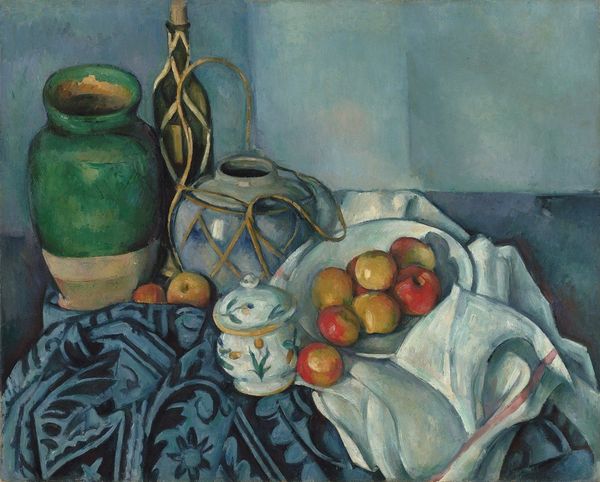
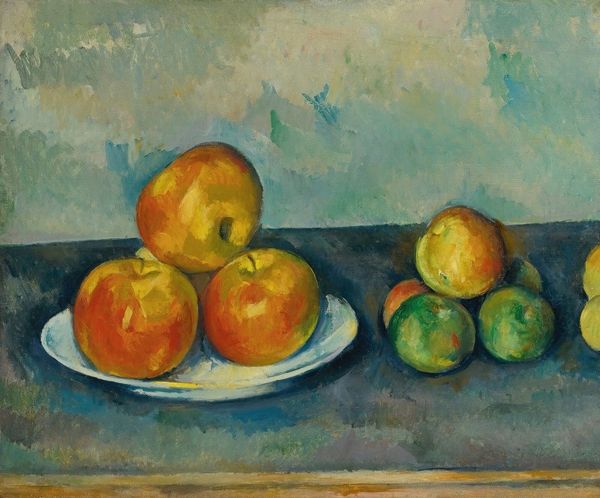
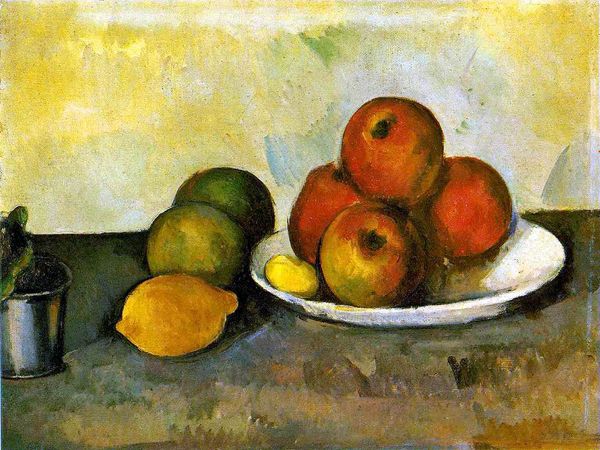
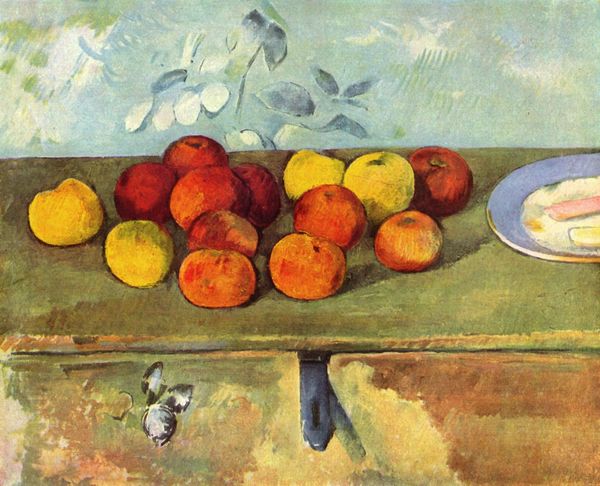
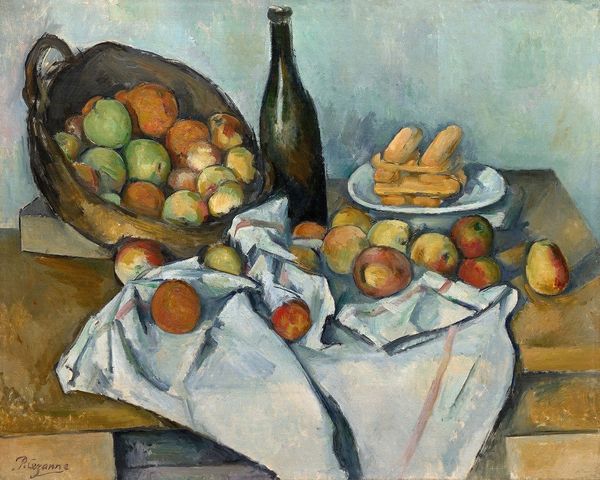
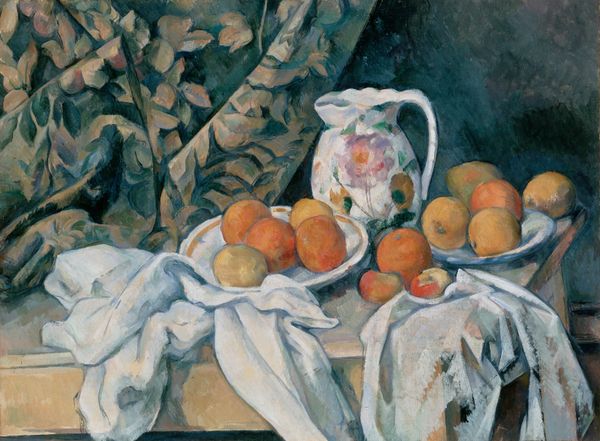
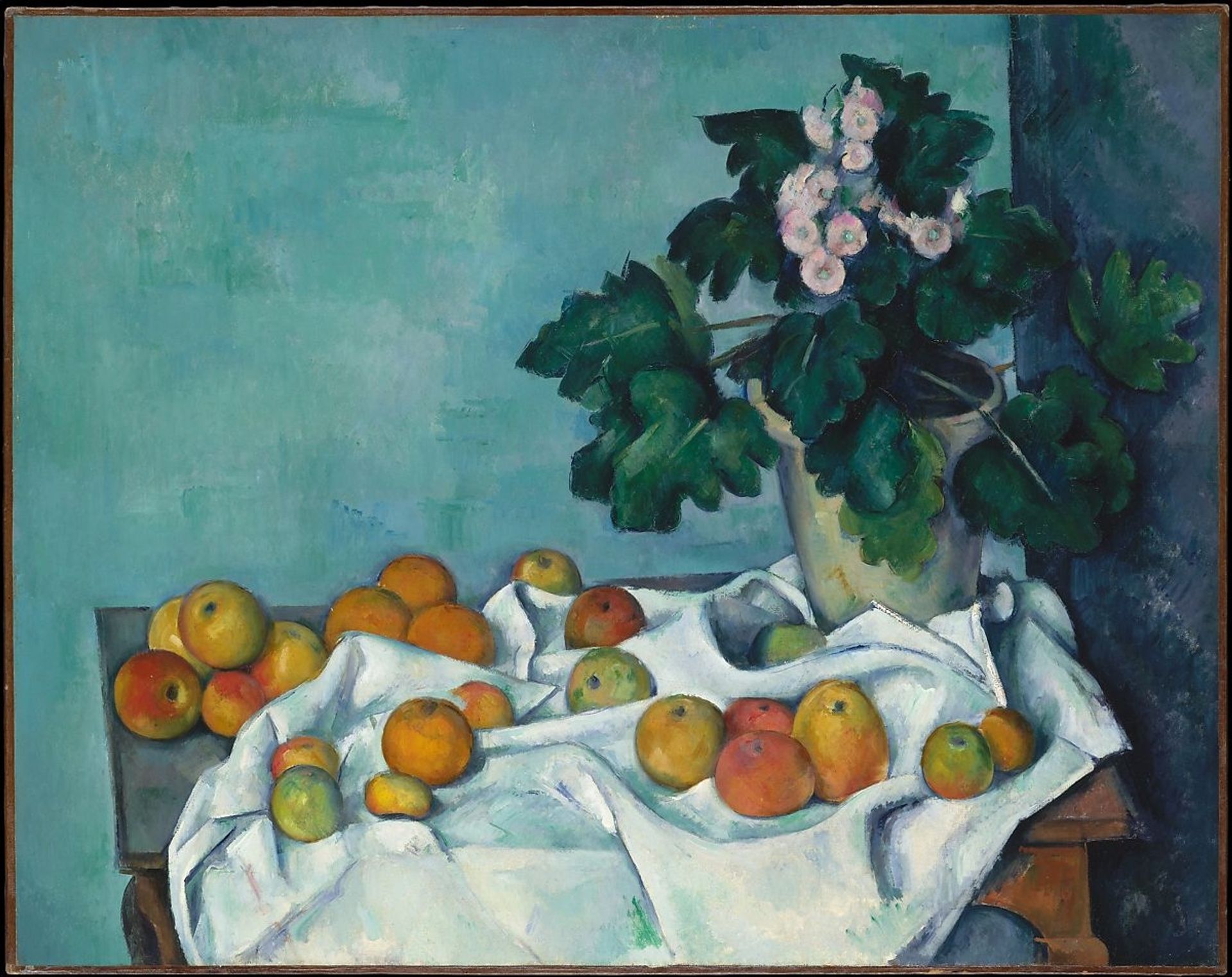
Paul Cézanne made this still life of apples and primroses with oil on canvas at an unknown date. He was working in France during a period of rapid social and economic change, with the rise of industrial capitalism and a growing divide between the wealthy and the working class. Cézanne's still life seems simple but he was deliberately challenging the artistic conventions of his time. In academic art, still life was seen as the lowest in the hierarchy of genres because it didn't depict heroic or moral subject matter. Cézanne elevated the genre by using innovative techniques, flattening perspective and distorting form. His paintings are deeply embedded in the social and institutional context of the late 19th century, particularly in relation to the development of modernism. To fully understand his project, we might look into the art criticism of his time, the records of the galleries that exhibited his work, and the writings of the artists who were influenced by him. Ultimately, Cézanne's legacy highlights how art can challenge norms.
Still Life with Apples and a Pot of Primroses 1890

Paul Cézanne
1839 - 1906
The Metropolitan Museum of Art
Metropolitan Museum of Art (Met), New York City, NY, USArtwork details
- Medium
- oil-paint
- Dimensions
- 58 x 91 cm
- Location
- Metropolitan Museum of Art (Met), New York City, NY, US
- Copyright
- Public domain
Tags
oil-paint
landscape
oil painting
intimism
geometric
post-impressionism
modernism
Comments
No comments
About this artwork
Paul Cézanne made this still life of apples and primroses with oil on canvas at an unknown date. He was working in France during a period of rapid social and economic change, with the rise of industrial capitalism and a growing divide between the wealthy and the working class. Cézanne's still life seems simple but he was deliberately challenging the artistic conventions of his time. In academic art, still life was seen as the lowest in the hierarchy of genres because it didn't depict heroic or moral subject matter. Cézanne elevated the genre by using innovative techniques, flattening perspective and distorting form. His paintings are deeply embedded in the social and institutional context of the late 19th century, particularly in relation to the development of modernism. To fully understand his project, we might look into the art criticism of his time, the records of the galleries that exhibited his work, and the writings of the artists who were influenced by him. Ultimately, Cézanne's legacy highlights how art can challenge norms.
Comments
No comments