About this artwork
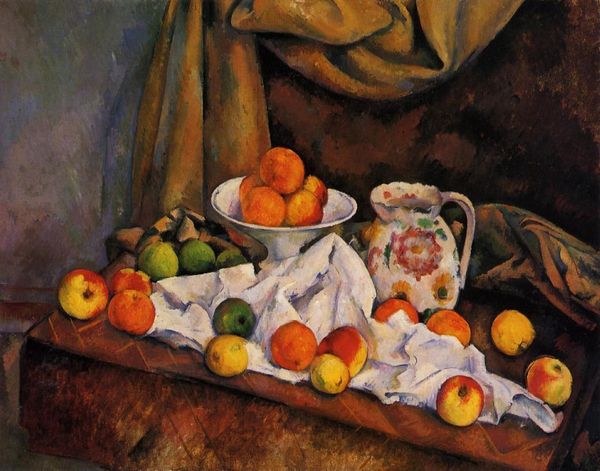
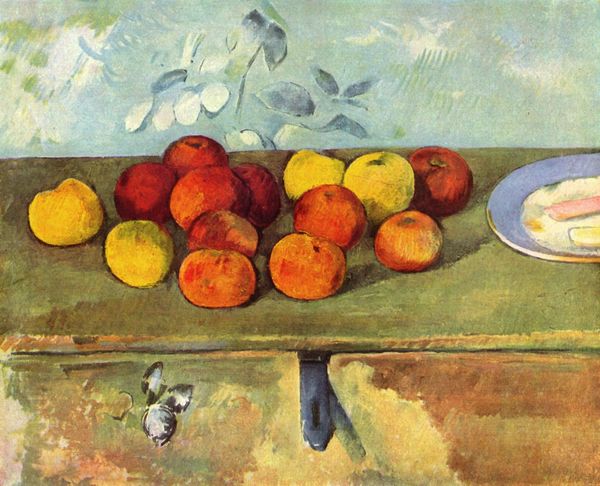
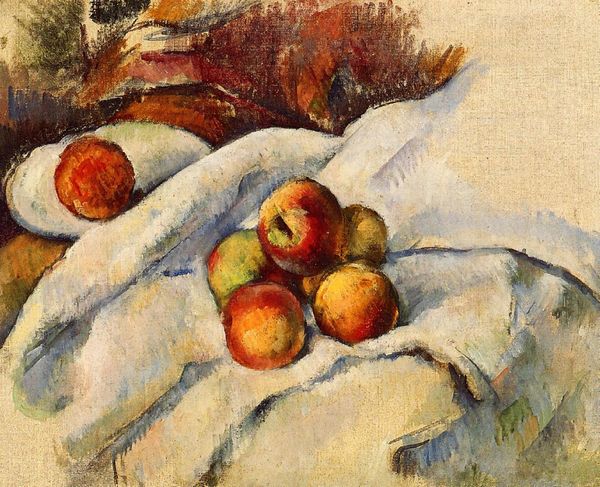
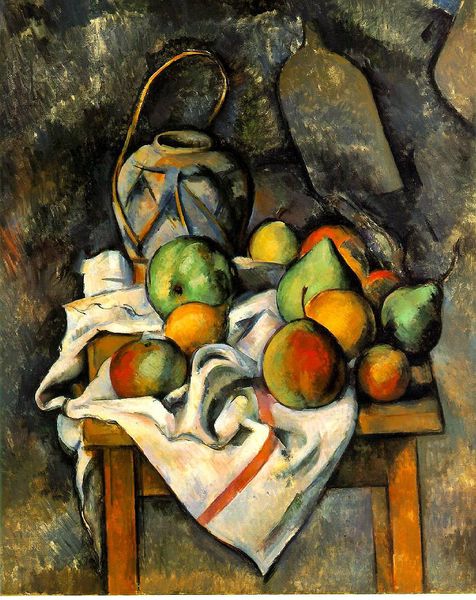
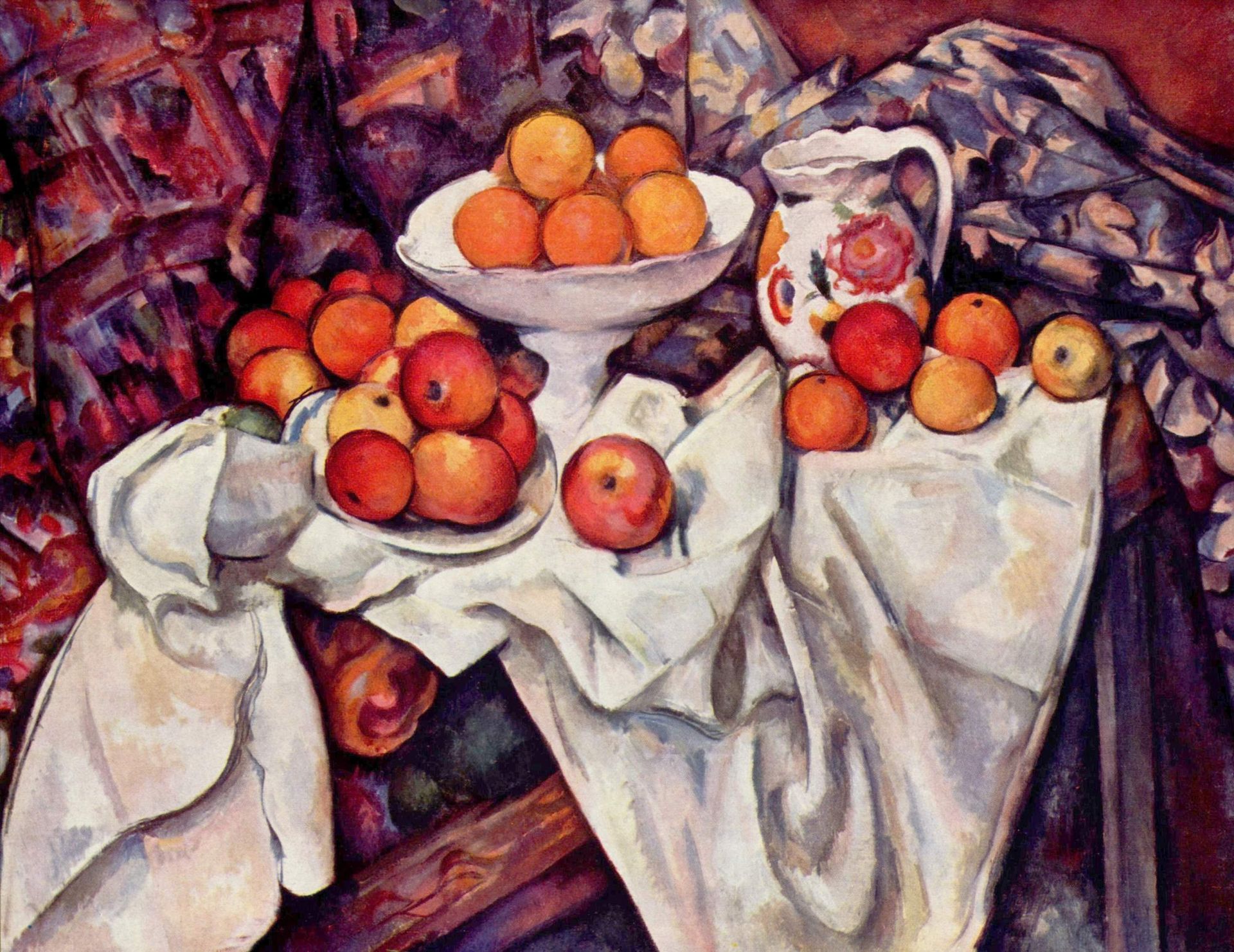
Paul Cézanne made "Apples and Oranges" with oil on canvas. This isn't just a painting, it's a record of labor, not only of Cézanne’s brushstrokes, but of the cultivation, transportation, and market exchange that brought these fruits and vessels together. Look closely, and you'll notice how the texture of the paint creates a palpable sense of volume and weight. Cézanne’s technique of layering paint creates depth, building the forms with individual touches of pigment. He wasn't just representing the objects, he was building them. Notice the folds in the tablecloth. With each brushstroke, Cézanne considers how objects relate to each other, and how they occupy space. This approach elevates the everyday, finding beauty in the mundane. It suggests the value of observing closely, and considering the material realities of our world. Cézanne asks us to see the significance in ordinary objects, bridging the gap between fine art and the rich context of everyday life.
Apples and Oranges
1900


Artwork details
- Medium
- painting, oil-paint
- Dimensions
- 74 x 93 cm
- Location
- Musée d'Orsay, Paris, France
- Copyright
- Public domain
Tags
Comments
Share your thoughts
About this artwork
Paul Cézanne made "Apples and Oranges" with oil on canvas. This isn't just a painting, it's a record of labor, not only of Cézanne’s brushstrokes, but of the cultivation, transportation, and market exchange that brought these fruits and vessels together. Look closely, and you'll notice how the texture of the paint creates a palpable sense of volume and weight. Cézanne’s technique of layering paint creates depth, building the forms with individual touches of pigment. He wasn't just representing the objects, he was building them. Notice the folds in the tablecloth. With each brushstroke, Cézanne considers how objects relate to each other, and how they occupy space. This approach elevates the everyday, finding beauty in the mundane. It suggests the value of observing closely, and considering the material realities of our world. Cézanne asks us to see the significance in ordinary objects, bridging the gap between fine art and the rich context of everyday life.
Comments
Share your thoughts