About this artwork
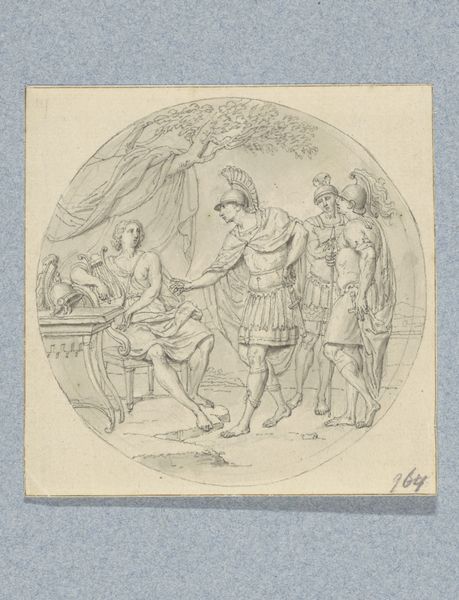
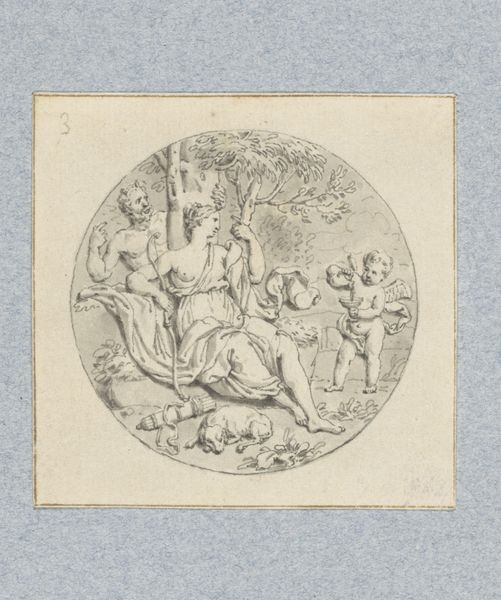
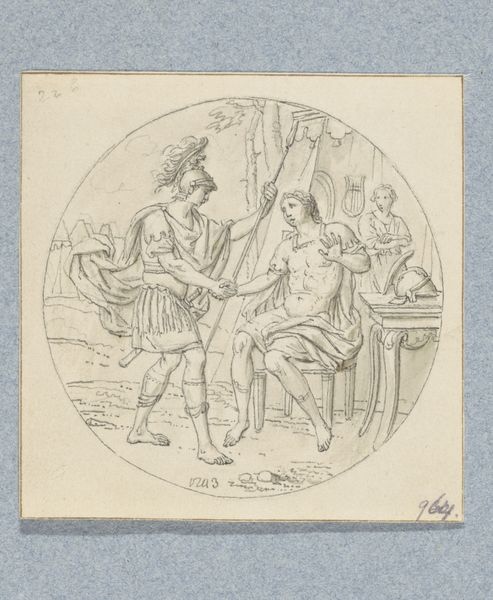
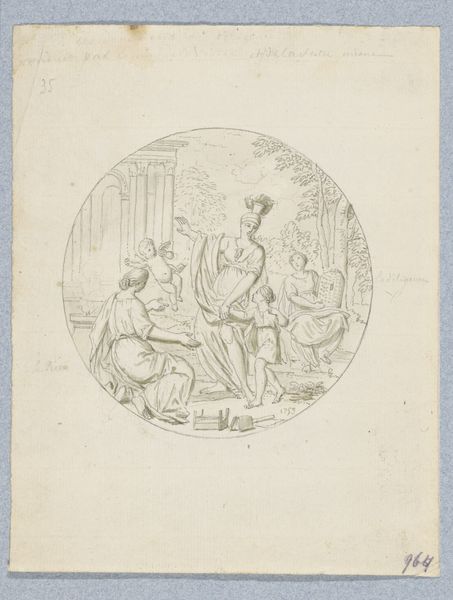
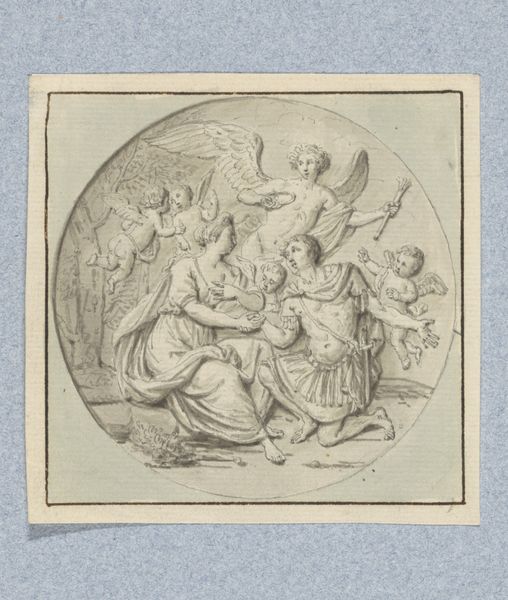
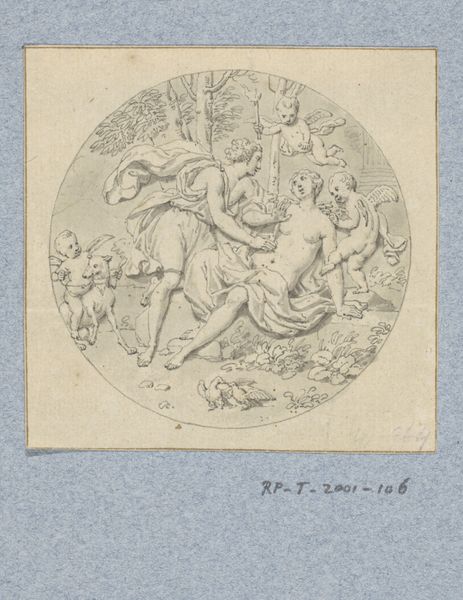
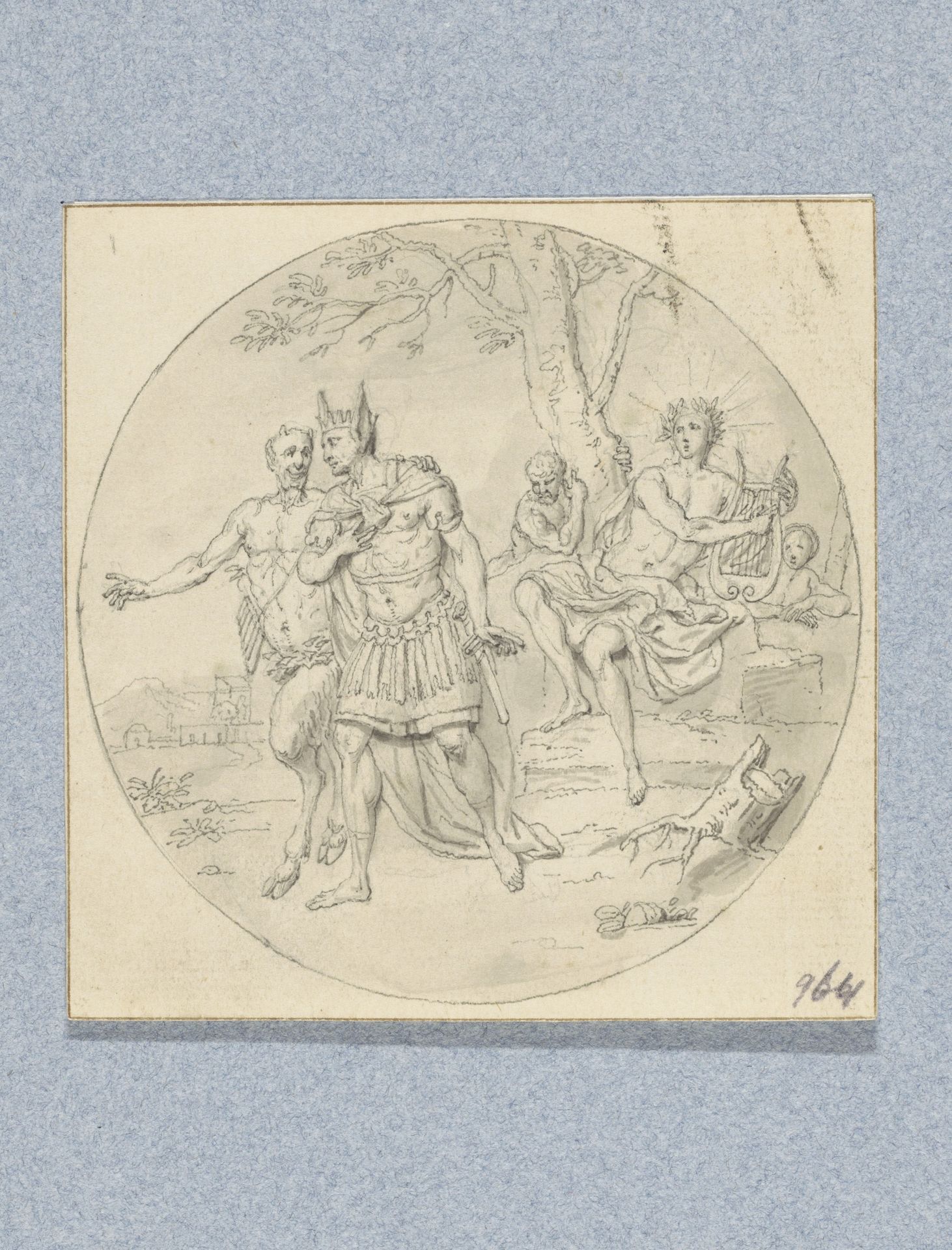
This drawing of Apollo and King Midas with donkey ears was made by Louis Fabritius Dubourg, likely in the mid-18th century, using graphite on paper. The circular composition is reminiscent of a decorative medallion, yet the medium is far from the usual bronze or carved stone. Graphite is a comparatively humble material, known for its use in preliminary sketches and studies. The texture is smooth, and the varying pressure of the artist’s hand creates a range of tones that model the figures and landscape. The level of detail suggests a high degree of skill, particularly in the rendering of the figures' garments and facial expressions. Dubourg seems to be playing with hierarchies here. Graphite is often a means to an end, a means to produce more elaborate works, not an end in itself. By focusing on the quality of the line and the tonal range achievable with graphite, Dubourg elevates a common material to fine art, blurring the lines between the sketch and the finished product. In doing so, the artist invites us to reconsider the value we place on different materials and processes, recognizing the artistry inherent in even the simplest of means.
Apollo en koning Midas met ezelsoren (in doos met 43 tekeningen)
1703 - 1775

Louis Fabritius Dubourg
1693 - 1775Location
RijksmuseumArtwork details
- Medium
- drawing, pen
- Dimensions
- height 95 mm, width 94 mm
- Location
- Rijksmuseum
- Copyright
- Rijks Museum: Open Domain
Tags
Comments
Share your thoughts
About this artwork
This drawing of Apollo and King Midas with donkey ears was made by Louis Fabritius Dubourg, likely in the mid-18th century, using graphite on paper. The circular composition is reminiscent of a decorative medallion, yet the medium is far from the usual bronze or carved stone. Graphite is a comparatively humble material, known for its use in preliminary sketches and studies. The texture is smooth, and the varying pressure of the artist’s hand creates a range of tones that model the figures and landscape. The level of detail suggests a high degree of skill, particularly in the rendering of the figures' garments and facial expressions. Dubourg seems to be playing with hierarchies here. Graphite is often a means to an end, a means to produce more elaborate works, not an end in itself. By focusing on the quality of the line and the tonal range achievable with graphite, Dubourg elevates a common material to fine art, blurring the lines between the sketch and the finished product. In doing so, the artist invites us to reconsider the value we place on different materials and processes, recognizing the artistry inherent in even the simplest of means.
Comments
Share your thoughts