About this artwork
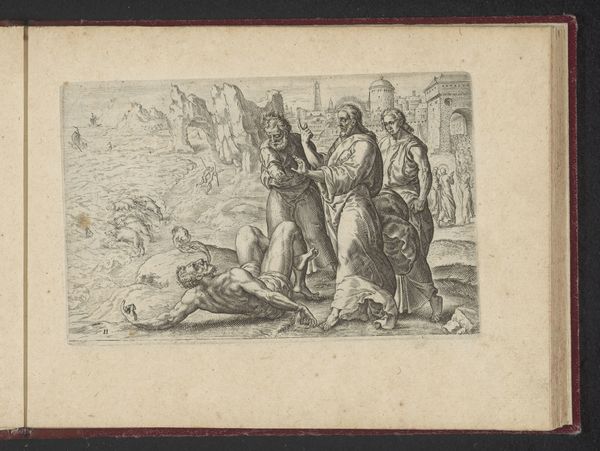
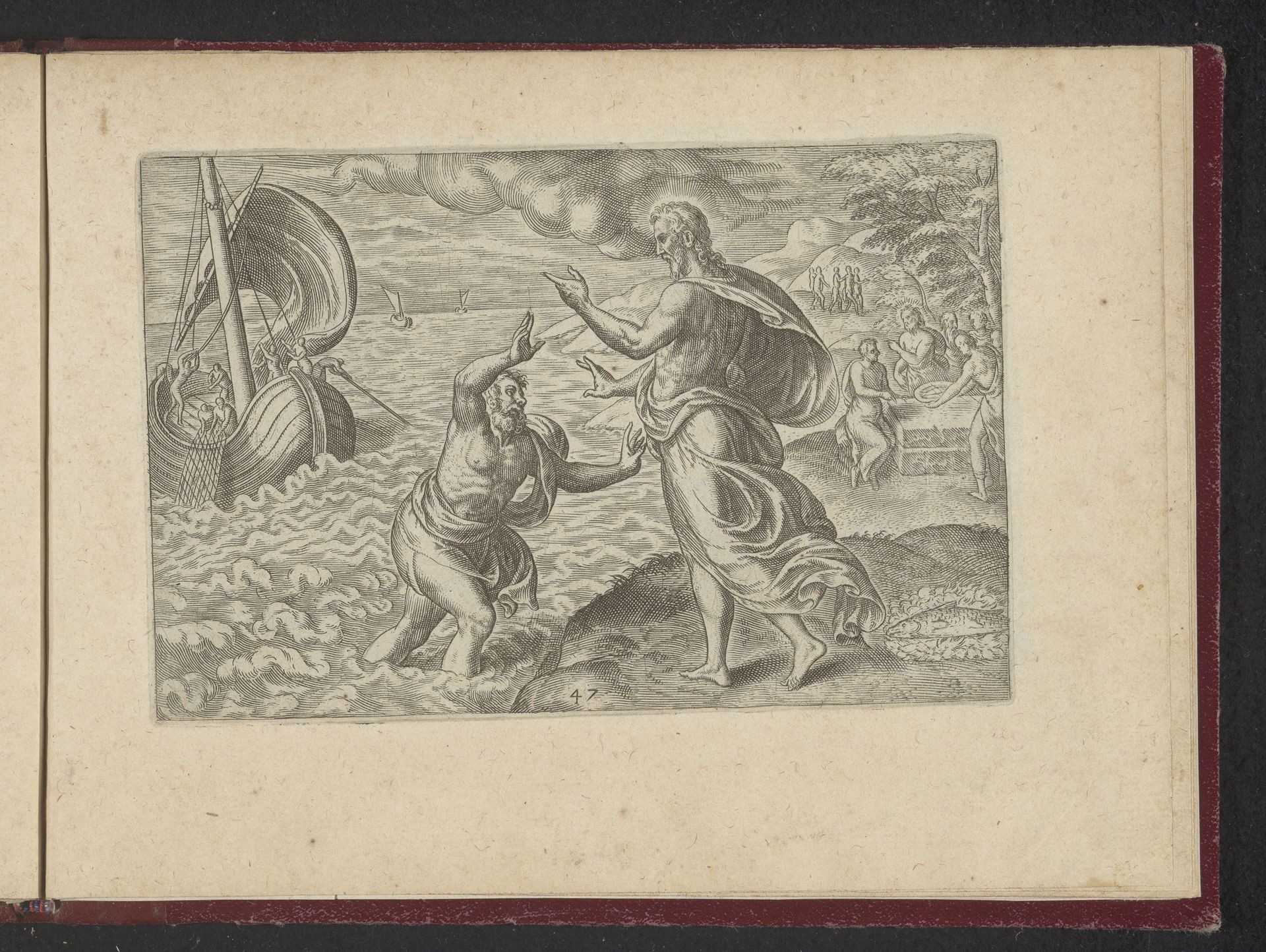
This is Philips Galle's engraving, "Petrus probeert over het water te lopen naar Christus," now at the Rijksmuseum. It is a black and white image that captures a moment of intense drama and spiritual questioning. Notice the dynamic composition, split between the turbulent sea on the left and the calmer, gathered figures on the right. The swirling lines of the water create a sense of chaos, contrasting sharply with the more ordered lines that define the figures of Christ and his followers. The figures on the boat are sketched to illustrate the emotional intensity of the scene, and the dramatic expressions etched on their faces. Galle masterfully employs line and form to convey not just a narrative, but an exploration into themes of faith, doubt, and the miraculous. Consider how the structured composition invites a semiotic reading. The left side—the sea and Peter's struggle—represents the chaos of the human condition, while the right side—Christ and the apostles—symbolizes divine order and salvation. Galle’s composition, therefore, isn’t just aesthetically pleasing, but also functions as a structured argument about the nature of belief.
Petrus probeert over het water te lopen naar Christus
1573

Philips Galle
1537 - 1612Location
RijksmuseumArtwork details
- Medium
- print, engraving
- Dimensions
- height 92 mm, width 139 mm, height 137 mm, width 183 mm
- Location
- Rijksmuseum
- Copyright
- Rijks Museum: Open Domain
Tags
Comments
Share your thoughts
About this artwork
This is Philips Galle's engraving, "Petrus probeert over het water te lopen naar Christus," now at the Rijksmuseum. It is a black and white image that captures a moment of intense drama and spiritual questioning. Notice the dynamic composition, split between the turbulent sea on the left and the calmer, gathered figures on the right. The swirling lines of the water create a sense of chaos, contrasting sharply with the more ordered lines that define the figures of Christ and his followers. The figures on the boat are sketched to illustrate the emotional intensity of the scene, and the dramatic expressions etched on their faces. Galle masterfully employs line and form to convey not just a narrative, but an exploration into themes of faith, doubt, and the miraculous. Consider how the structured composition invites a semiotic reading. The left side—the sea and Peter's struggle—represents the chaos of the human condition, while the right side—Christ and the apostles—symbolizes divine order and salvation. Galle’s composition, therefore, isn’t just aesthetically pleasing, but also functions as a structured argument about the nature of belief.
Comments
Share your thoughts