About this artwork
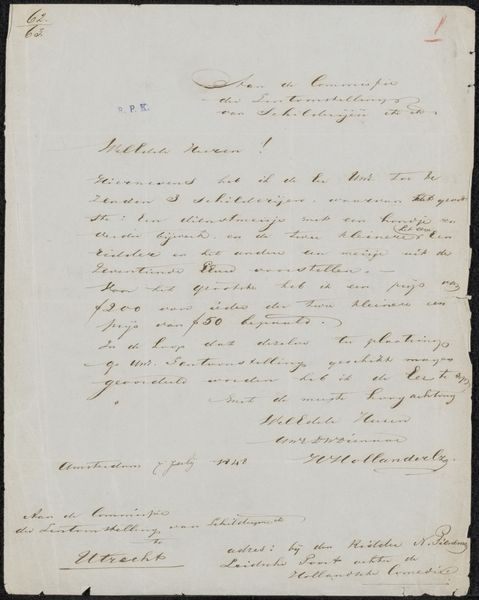
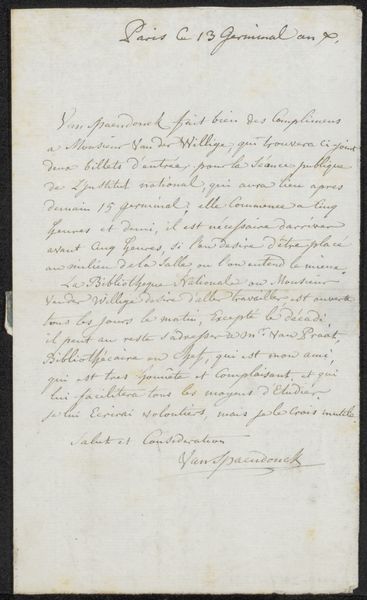
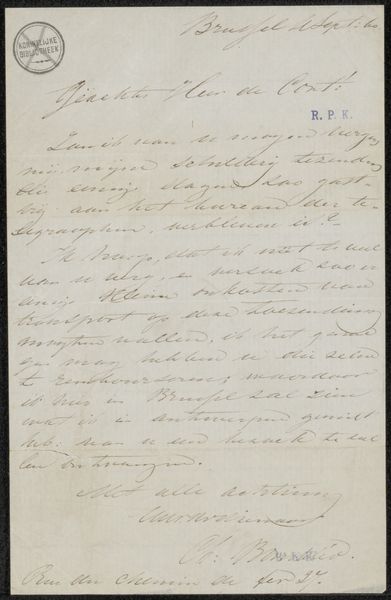
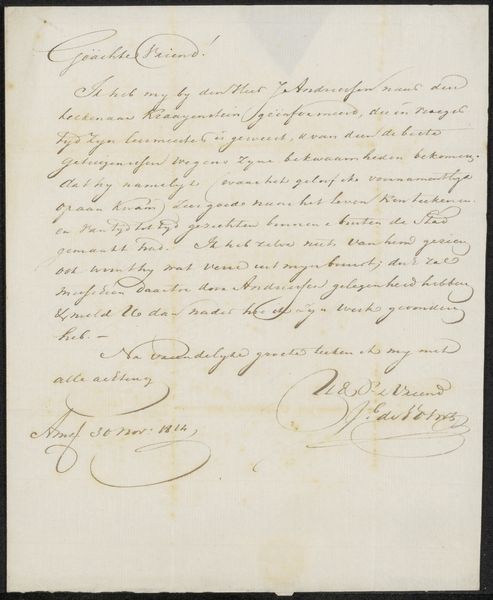
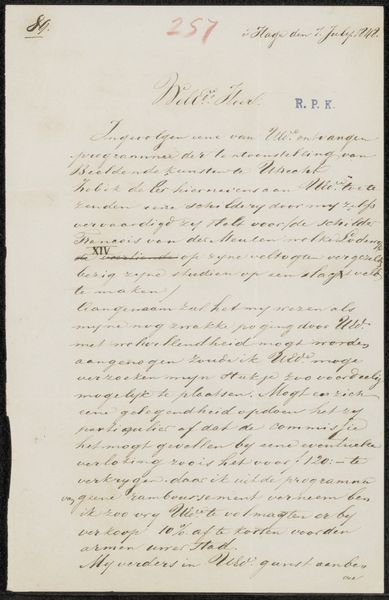
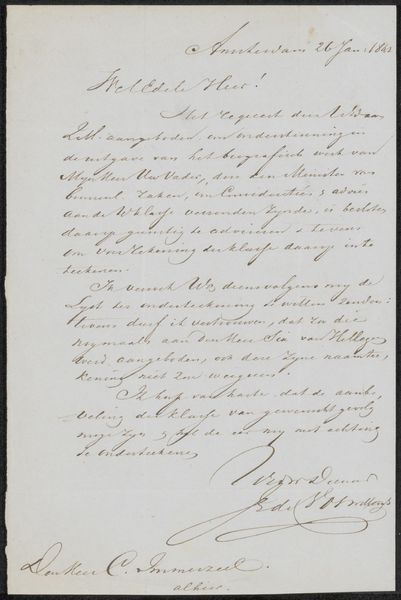
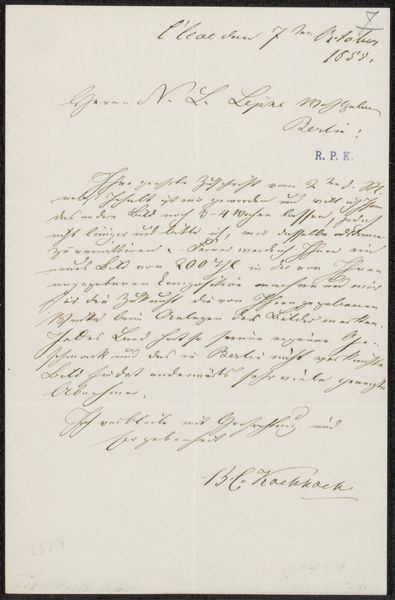
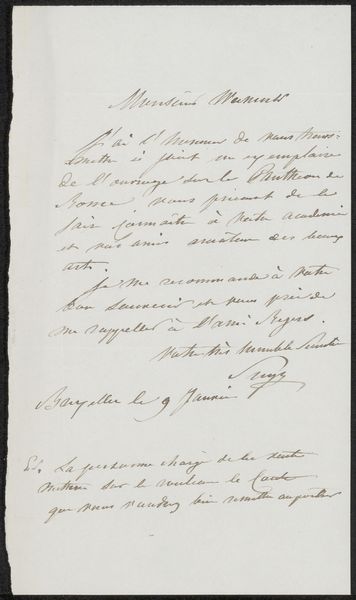
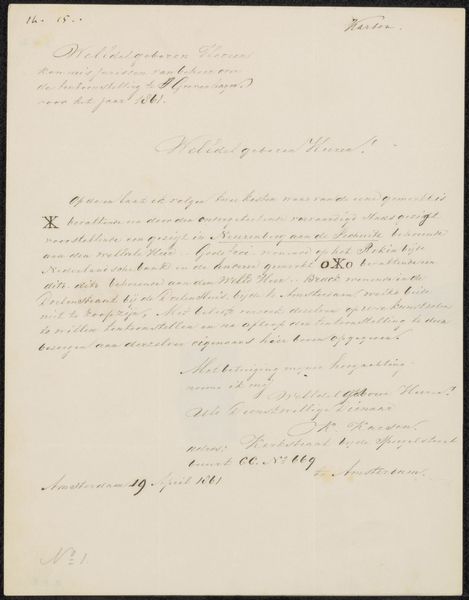
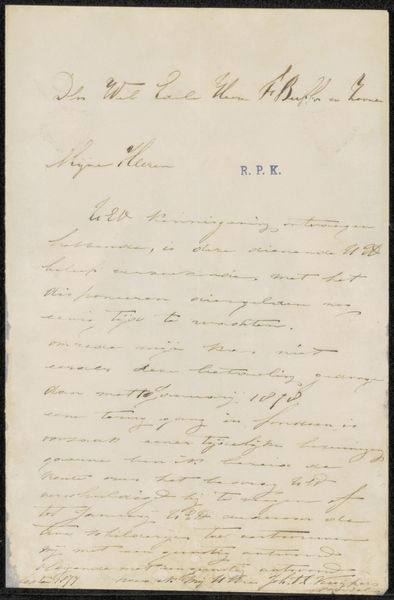
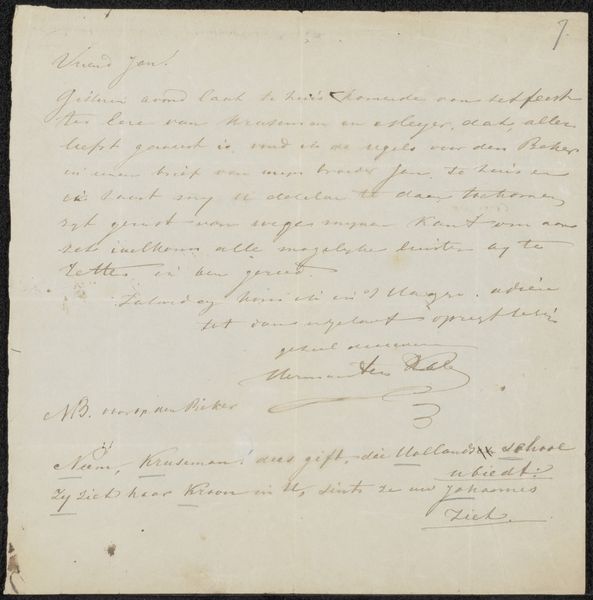
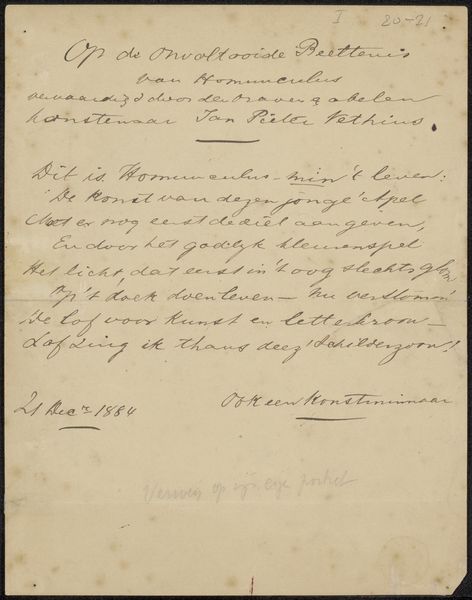
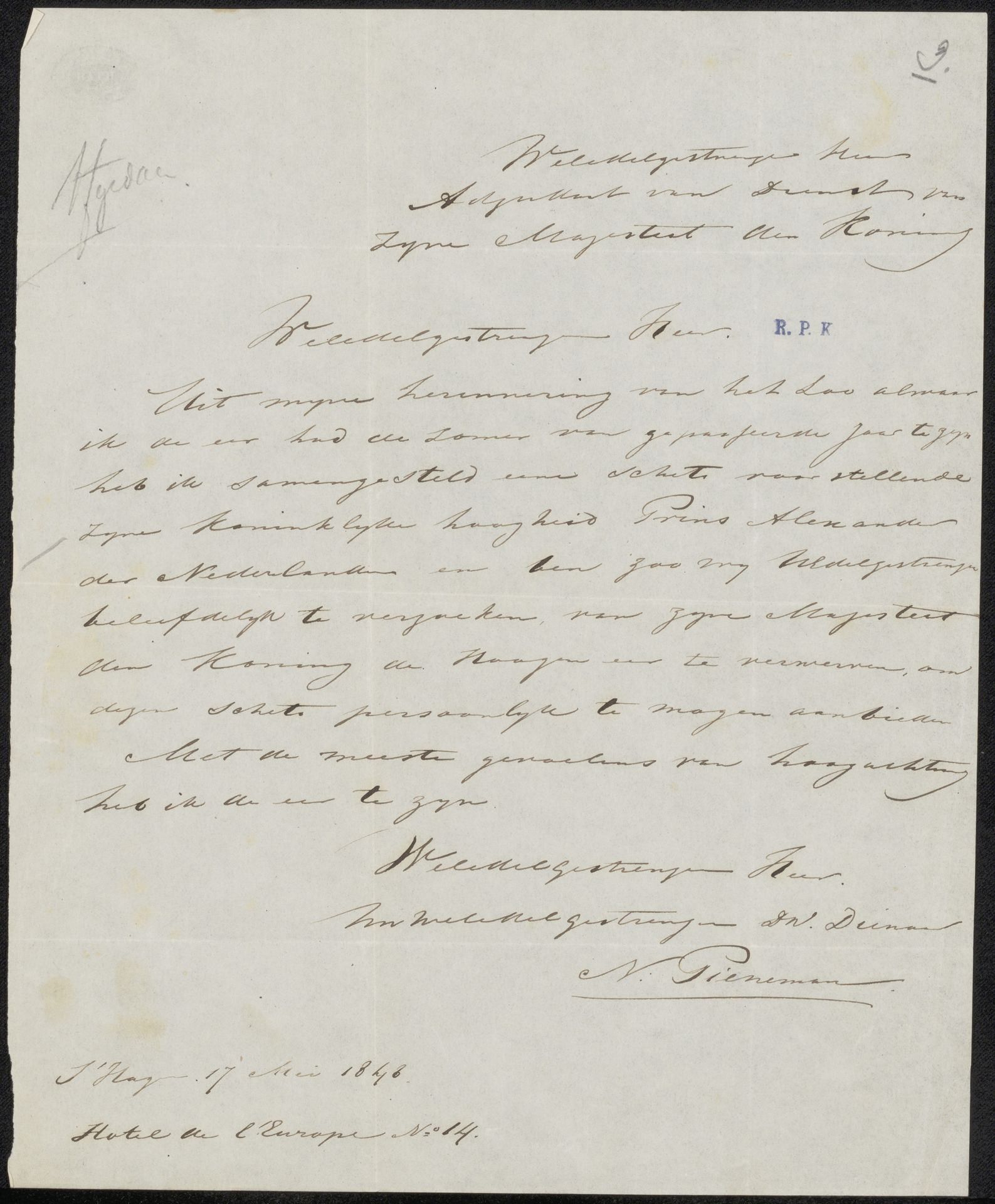
This letter was written in 1848 by Nicolaas Pieneman. The materials are simple: paper, ink, and a nib pen. Yet, these elements speak volumes about social context. Paper itself, while commonplace today, was once a precious commodity, reflecting the wealth and status of both the writer and the recipient, King Willem II’s adjutant. Handwriting, too, was a skill honed through rigorous education, marking a clear distinction from the largely illiterate working class. Consider the act of writing itself, each stroke of the pen a deliberate act of communication. This contrasts sharply with the mechanization of the printing press. We get the sense of one individual directly addressing another. In a world rapidly transforming through industrialization, the letter represents a specific type of labor – skilled, intellectual, and deeply personal. In our digital age, this tangible connection to the past serves as a poignant reminder of human interaction before mass production and instant communication.
Brief aan de adjundant van dienst van koning der Nederlanden Willem II Possibly 1848

Nicolaas Pieneman
1809 - 1860Location
RijksmuseumArtwork details
- Medium
- drawing, paper, ink, pen
- Location
- Rijksmuseum
- Copyright
- Rijks Museum: Open Domain
Tags
portrait
drawing
toned paper
ink paper printed
sketch book
incomplete sketchy
paper
personal sketchbook
ink
ink drawing experimentation
pen-ink sketch
ink colored
sketchbook drawing
pen
academic-art
sketchbook art
Comments
No comments
About this artwork
This letter was written in 1848 by Nicolaas Pieneman. The materials are simple: paper, ink, and a nib pen. Yet, these elements speak volumes about social context. Paper itself, while commonplace today, was once a precious commodity, reflecting the wealth and status of both the writer and the recipient, King Willem II’s adjutant. Handwriting, too, was a skill honed through rigorous education, marking a clear distinction from the largely illiterate working class. Consider the act of writing itself, each stroke of the pen a deliberate act of communication. This contrasts sharply with the mechanization of the printing press. We get the sense of one individual directly addressing another. In a world rapidly transforming through industrialization, the letter represents a specific type of labor – skilled, intellectual, and deeply personal. In our digital age, this tangible connection to the past serves as a poignant reminder of human interaction before mass production and instant communication.
Comments
No comments