About this artwork
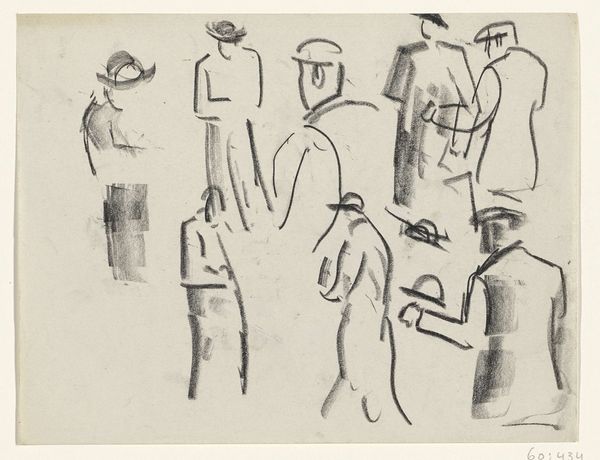
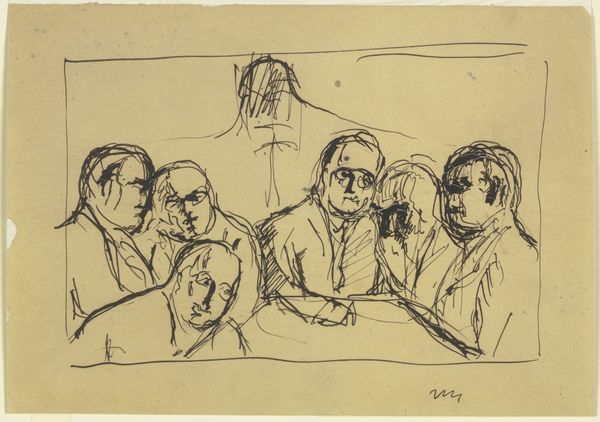
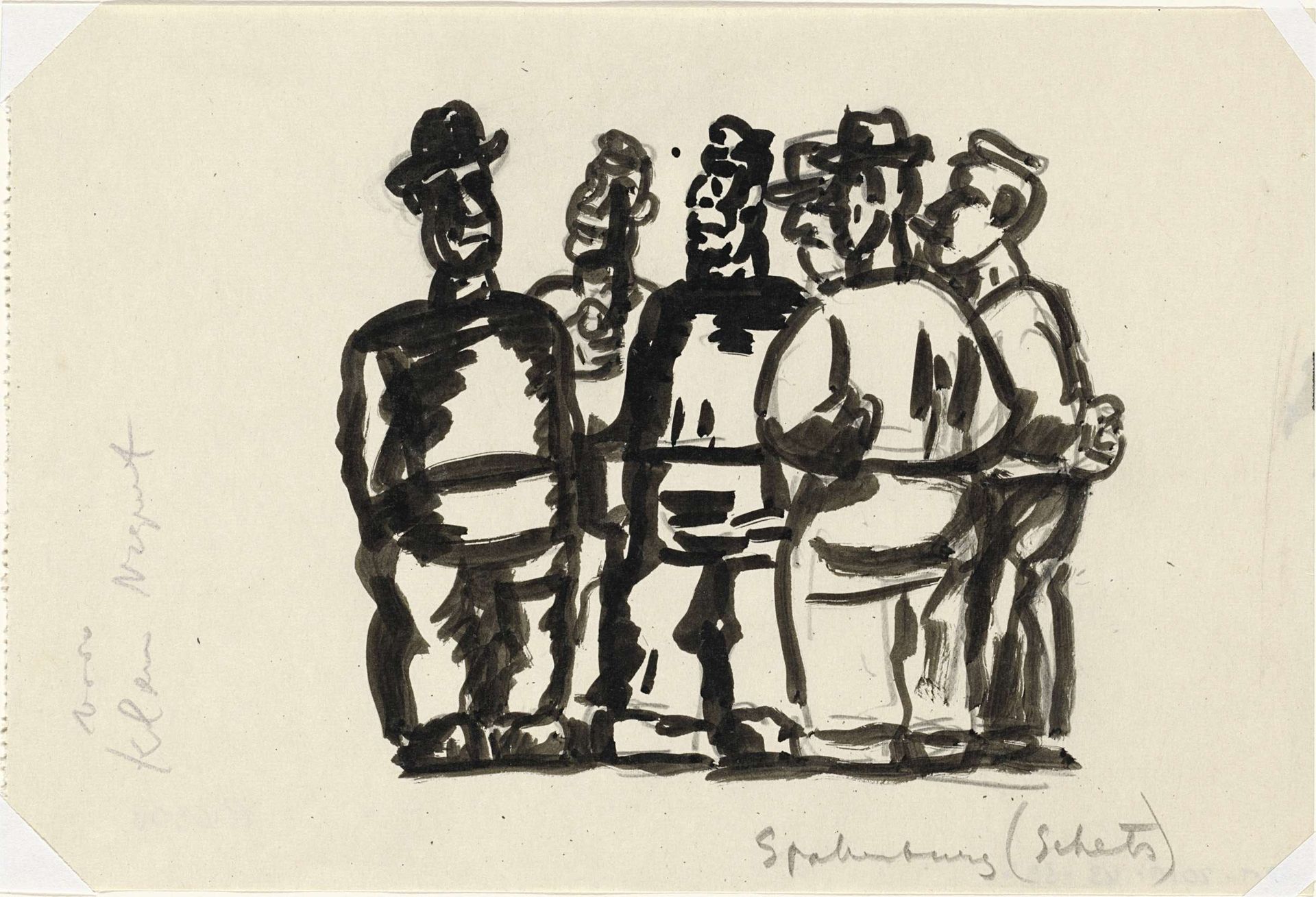
Curator: Before us is "Sketch of Six Spakenburg Fishermen," created by Leo Gestel around 1935 or 1936. It's a pen and ink drawing, a striking example of modernist portraiture. Editor: There's a raw energy in these stark lines. The figures almost appear monumental despite being a mere sketch. I find the restricted palette quite powerful. Curator: It certainly has an immediacy. The heavy use of black ink evokes the serious lives of these men, connecting to a longer tradition of depicting working class communities during the rise of social realism and modernist sentiment. Editor: Note how Gestel uses the stark contrast between the ink and paper to abstract and stylize the forms. Observe the thick, confident lines outlining the figures. There's an almost aggressive quality to the marks themselves, and there's a reduction of detail in the face of each man. Curator: Exactly. This reduction contributes to the work’s symbolic power. These aren’t just portraits of six individual fishermen. The hats, the clothes – they’re uniform, evoking a shared identity rooted in tradition and hardship. Their very pose feels defensive. Editor: It creates a fascinating tension. Are they a united front or a group of separate entities bound together by circumstance? Gestel manages to create both intimacy and distance. Curator: The setting, Spakenburg, a Dutch fishing village, lends another layer. Historically, Spakenburg maintained strong cultural identity. In depicting them together, Gestel seems to invoke themes of community, labor, and the changing face of Dutch society. Editor: A powerful reminder of how limited means can amplify artistic expression. It’s almost as if Gestel forces us to examine the fundamental structural components. It all contributes to a distilled but very strong overall effect. Curator: Yes, and that strength of effect reverberates through history, I feel. Editor: Precisely. Now, I will be thinking about how it has influenced artistic expressions after.

Artwork details
- Medium
- drawing, ink, pen
- Dimensions
- height 133 mm, width 197 mm
- Location
- Rijksmuseum
- Copyright
- Rijks Museum: Open Domain
Tags
Comments
Share your thoughts
About this artwork
Curator: Before us is "Sketch of Six Spakenburg Fishermen," created by Leo Gestel around 1935 or 1936. It's a pen and ink drawing, a striking example of modernist portraiture. Editor: There's a raw energy in these stark lines. The figures almost appear monumental despite being a mere sketch. I find the restricted palette quite powerful. Curator: It certainly has an immediacy. The heavy use of black ink evokes the serious lives of these men, connecting to a longer tradition of depicting working class communities during the rise of social realism and modernist sentiment. Editor: Note how Gestel uses the stark contrast between the ink and paper to abstract and stylize the forms. Observe the thick, confident lines outlining the figures. There's an almost aggressive quality to the marks themselves, and there's a reduction of detail in the face of each man. Curator: Exactly. This reduction contributes to the work’s symbolic power. These aren’t just portraits of six individual fishermen. The hats, the clothes – they’re uniform, evoking a shared identity rooted in tradition and hardship. Their very pose feels defensive. Editor: It creates a fascinating tension. Are they a united front or a group of separate entities bound together by circumstance? Gestel manages to create both intimacy and distance. Curator: The setting, Spakenburg, a Dutch fishing village, lends another layer. Historically, Spakenburg maintained strong cultural identity. In depicting them together, Gestel seems to invoke themes of community, labor, and the changing face of Dutch society. Editor: A powerful reminder of how limited means can amplify artistic expression. It’s almost as if Gestel forces us to examine the fundamental structural components. It all contributes to a distilled but very strong overall effect. Curator: Yes, and that strength of effect reverberates through history, I feel. Editor: Precisely. Now, I will be thinking about how it has influenced artistic expressions after.
Comments
Share your thoughts