About this artwork
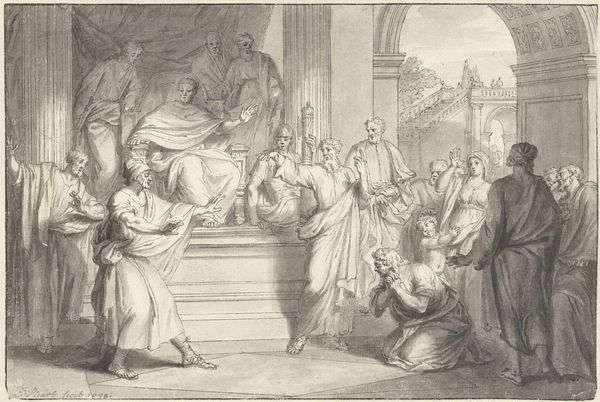
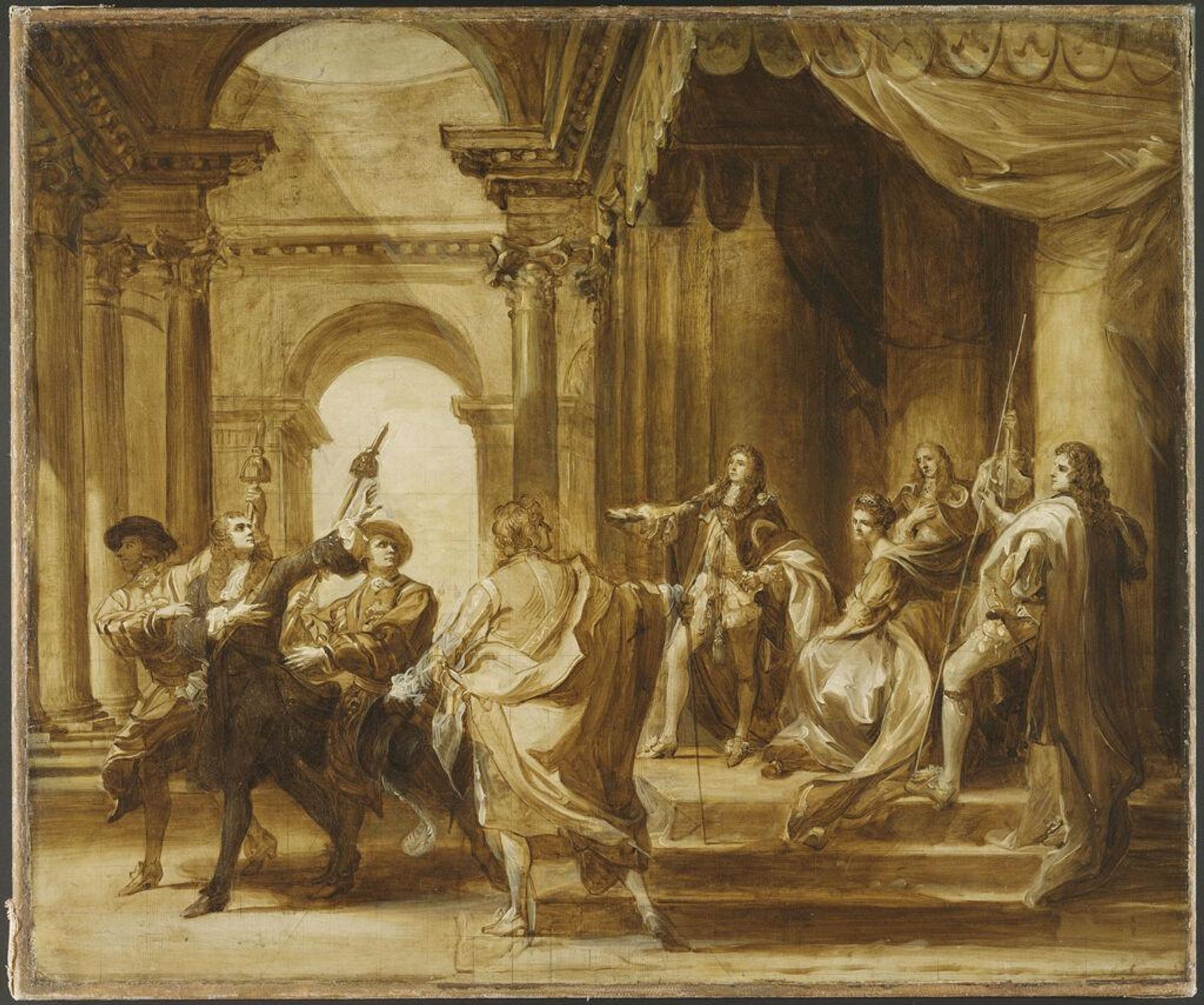
Curator: This is John Singleton Copley's study for "Monmouth Before James II," currently housed here at the Harvard Art Museums. Editor: It feels theatrical, doesn't it? The limited color palette and dramatic lighting create a real sense of tension. Curator: Absolutely. Copley was very interested in the narratives of power, especially in the context of British history and its relationship to the colonies. He's depicting a key moment of rebellion. Editor: Monmouth's rebellion against his uncle, King James II, wasn't just about succession; it was about religious and political freedom. You can feel the desperation in the scene. Curator: Indeed. Copley masterfully captures the political climate of the time, highlighting the conflict between loyalty and rebellion. The composition directs our gaze right to James's accusatory gesture. Editor: Looking at this through a contemporary lens, one can't help but consider how these historical power dynamics continue to play out in our own socio-political landscape. Curator: It's a powerful reminder that history isn't just something that happened "back then," but that it shapes our present. Editor: Precisely. It challenges us to engage with the legacy of colonialism and its enduring impact on identity and justice.
Study for "Monmouth Before James II"
1782 - 1794


Artwork details
- Dimensions
- 64.8 x 77.5 cm (25 1/2 x 30 1/2 in.) framed: 76.8 x 88.3 x 4.1 cm (30 1/4 x 34 3/4 x 1 5/8 in.)
- Location
- Harvard Art Museums
- Copyright
- CC0 1.0
Comments
Share your thoughts
About this artwork
Curator: This is John Singleton Copley's study for "Monmouth Before James II," currently housed here at the Harvard Art Museums. Editor: It feels theatrical, doesn't it? The limited color palette and dramatic lighting create a real sense of tension. Curator: Absolutely. Copley was very interested in the narratives of power, especially in the context of British history and its relationship to the colonies. He's depicting a key moment of rebellion. Editor: Monmouth's rebellion against his uncle, King James II, wasn't just about succession; it was about religious and political freedom. You can feel the desperation in the scene. Curator: Indeed. Copley masterfully captures the political climate of the time, highlighting the conflict between loyalty and rebellion. The composition directs our gaze right to James's accusatory gesture. Editor: Looking at this through a contemporary lens, one can't help but consider how these historical power dynamics continue to play out in our own socio-political landscape. Curator: It's a powerful reminder that history isn't just something that happened "back then," but that it shapes our present. Editor: Precisely. It challenges us to engage with the legacy of colonialism and its enduring impact on identity and justice.
Comments
Share your thoughts