About this artwork
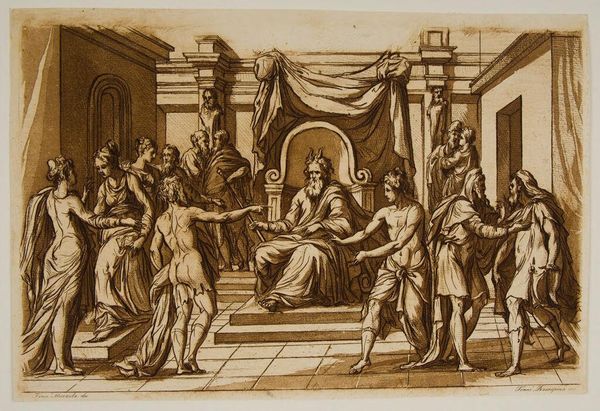
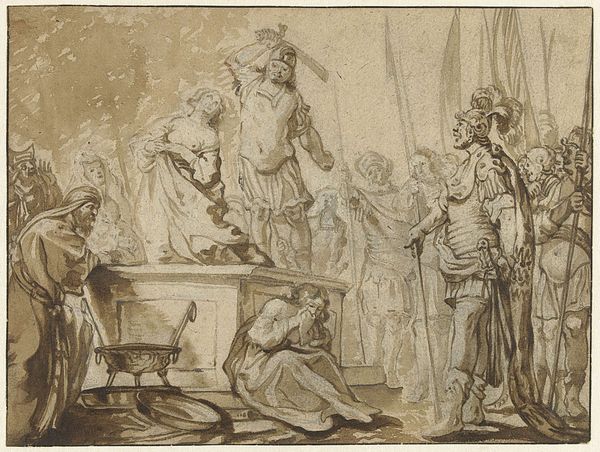
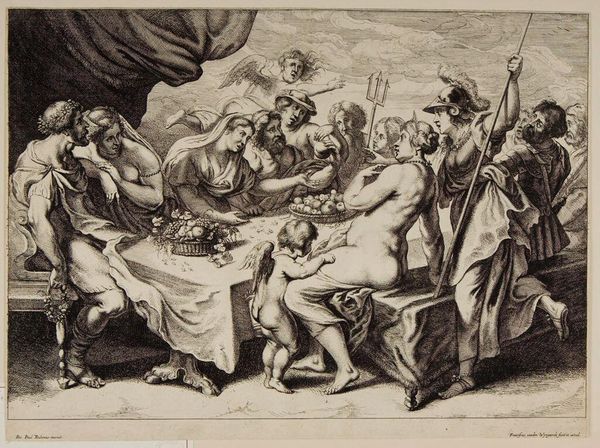
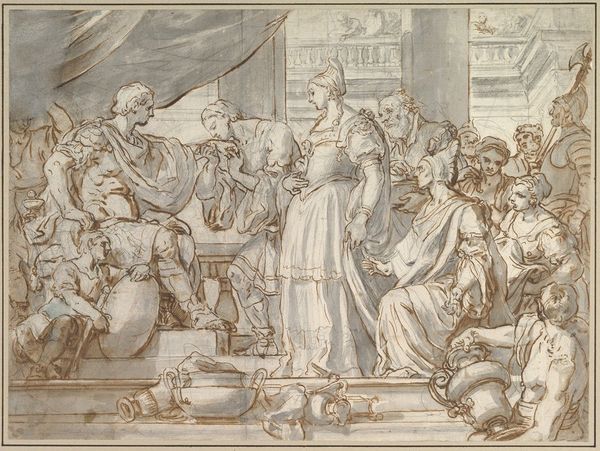
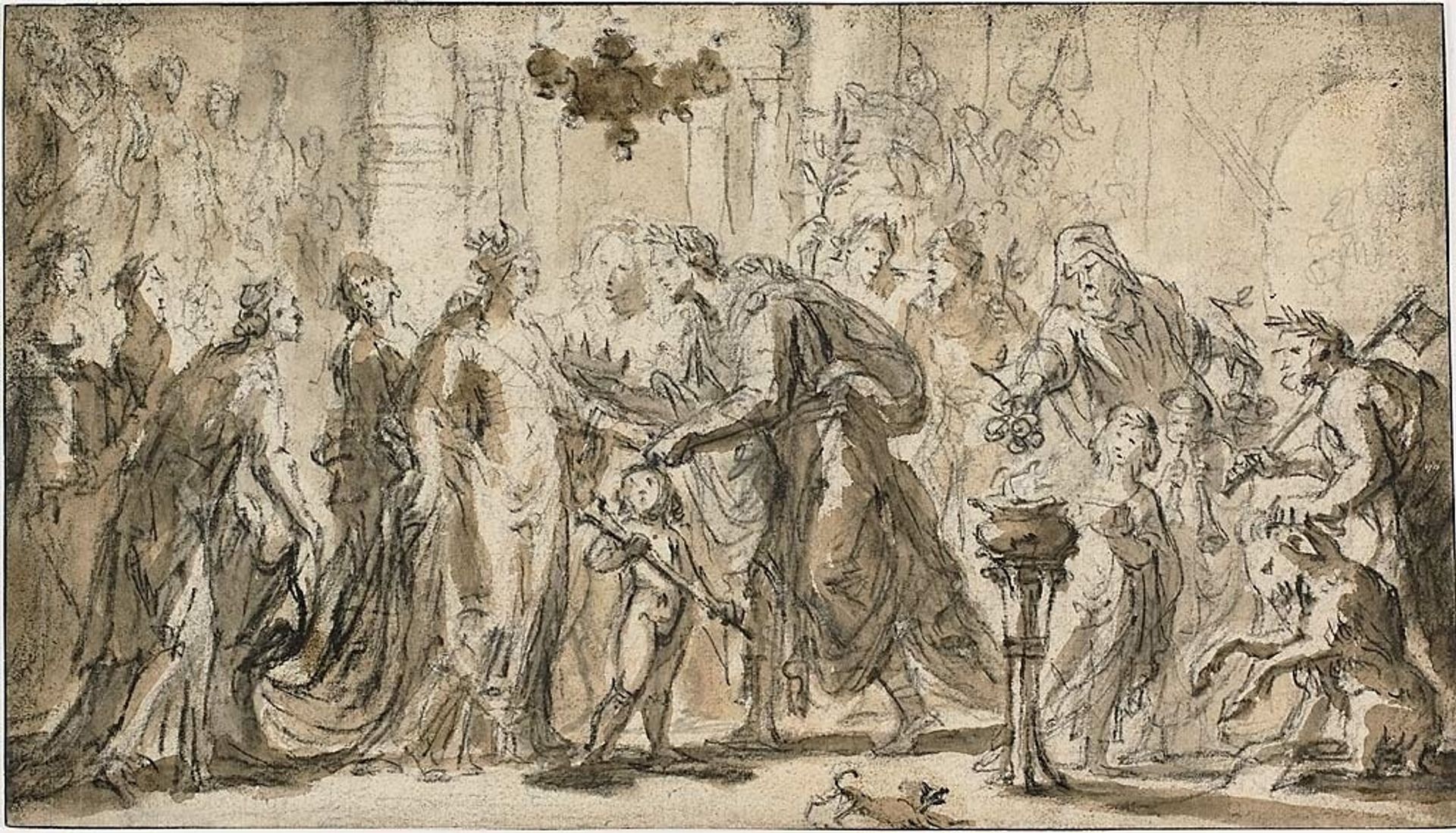
Justus van Egmont created this ink and wash drawing titled 'The Marriage of Zenobia and Odenatus.' Van Egmont, working in the 17th century, a period marked by the rise of powerful monarchies, chooses as his subject a queen who challenged the Roman Empire. Here, we see the wedding of Zenobia, the Queen of Palmyra, to Odenatus, the King of Palmyra. Zenobia was not just a queen, but a warrior, a scholar, and a symbol of resistance against Roman dominance. Van Egmont, likely inspired by classical texts, captures a moment of union but also alludes to a narrative of power, ambition, and cultural identity. As you consider this drawing, think about how historical depictions can both celebrate and complicate the legacies of powerful women. Reflect on the choices van Egmont made in portraying Zenobia, and what those choices might reveal about 17th-century attitudes towards female leadership and cultural identity.
The Marriage of Zenobia and Odenatus
n.d.


Artwork details
- Medium
- drawing, print, paper, chalk, pen, charcoal, black-chalk
- Dimensions
- 182 × 319 mm
- Location
- The Art Institute of Chicago
- Copyright
- Public Domain
Tags
Comments
Share your thoughts
About this artwork
Justus van Egmont created this ink and wash drawing titled 'The Marriage of Zenobia and Odenatus.' Van Egmont, working in the 17th century, a period marked by the rise of powerful monarchies, chooses as his subject a queen who challenged the Roman Empire. Here, we see the wedding of Zenobia, the Queen of Palmyra, to Odenatus, the King of Palmyra. Zenobia was not just a queen, but a warrior, a scholar, and a symbol of resistance against Roman dominance. Van Egmont, likely inspired by classical texts, captures a moment of union but also alludes to a narrative of power, ambition, and cultural identity. As you consider this drawing, think about how historical depictions can both celebrate and complicate the legacies of powerful women. Reflect on the choices van Egmont made in portraying Zenobia, and what those choices might reveal about 17th-century attitudes towards female leadership and cultural identity.
Comments
Share your thoughts