About this artwork
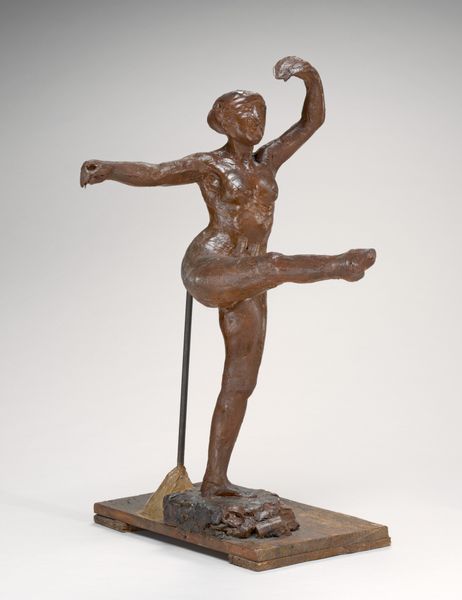
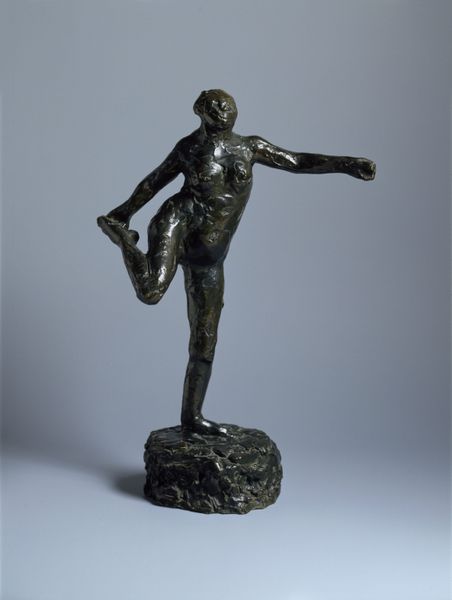
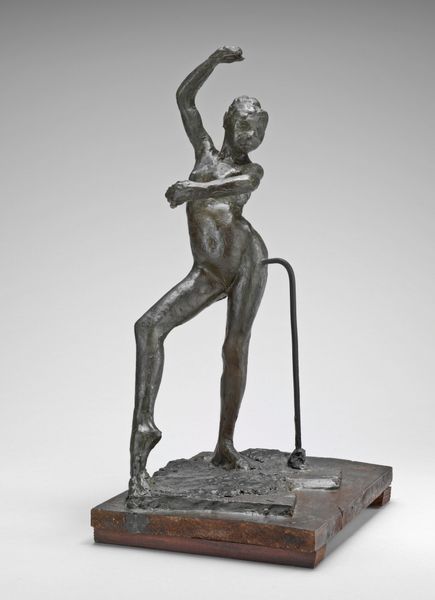
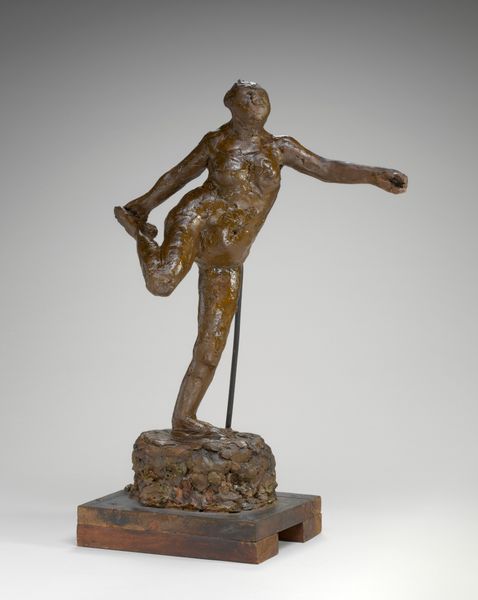
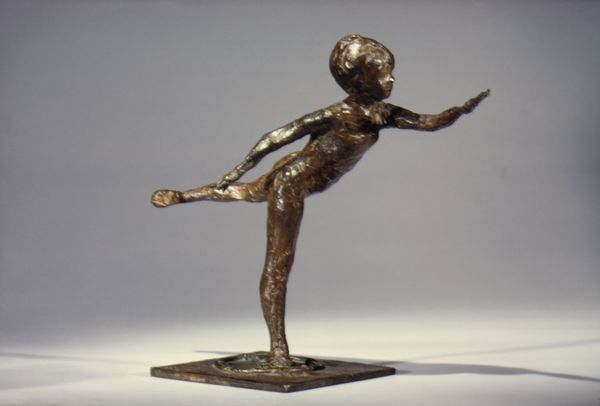
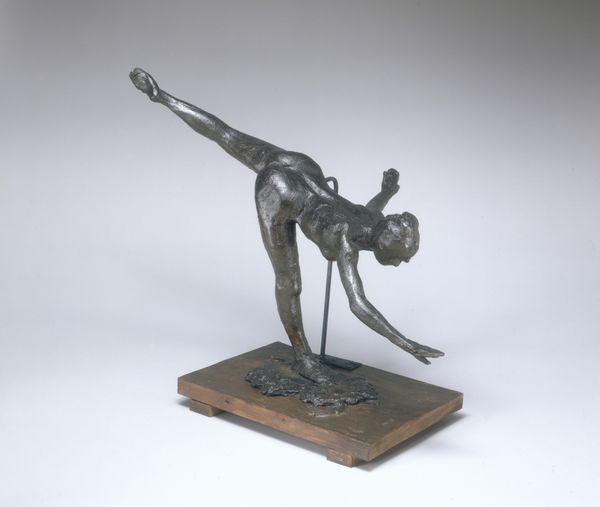
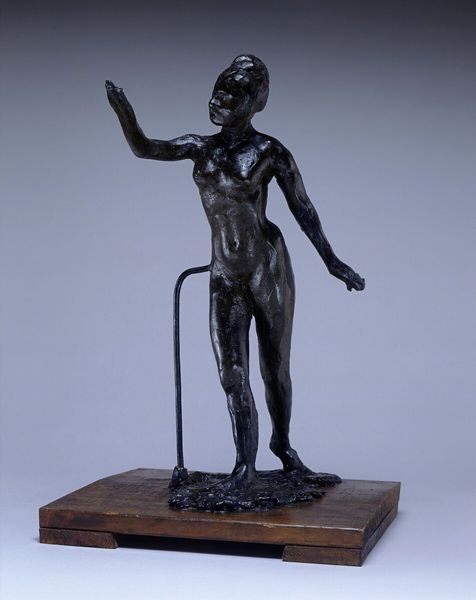
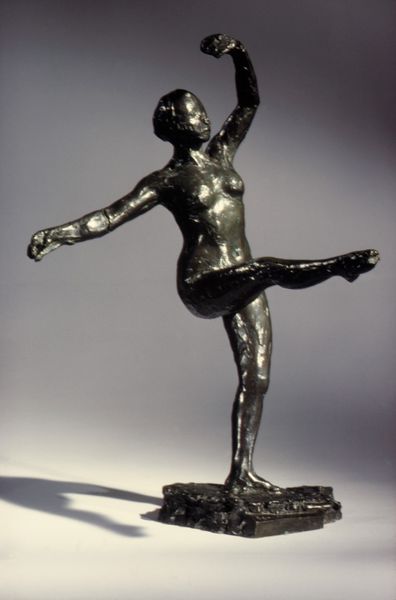
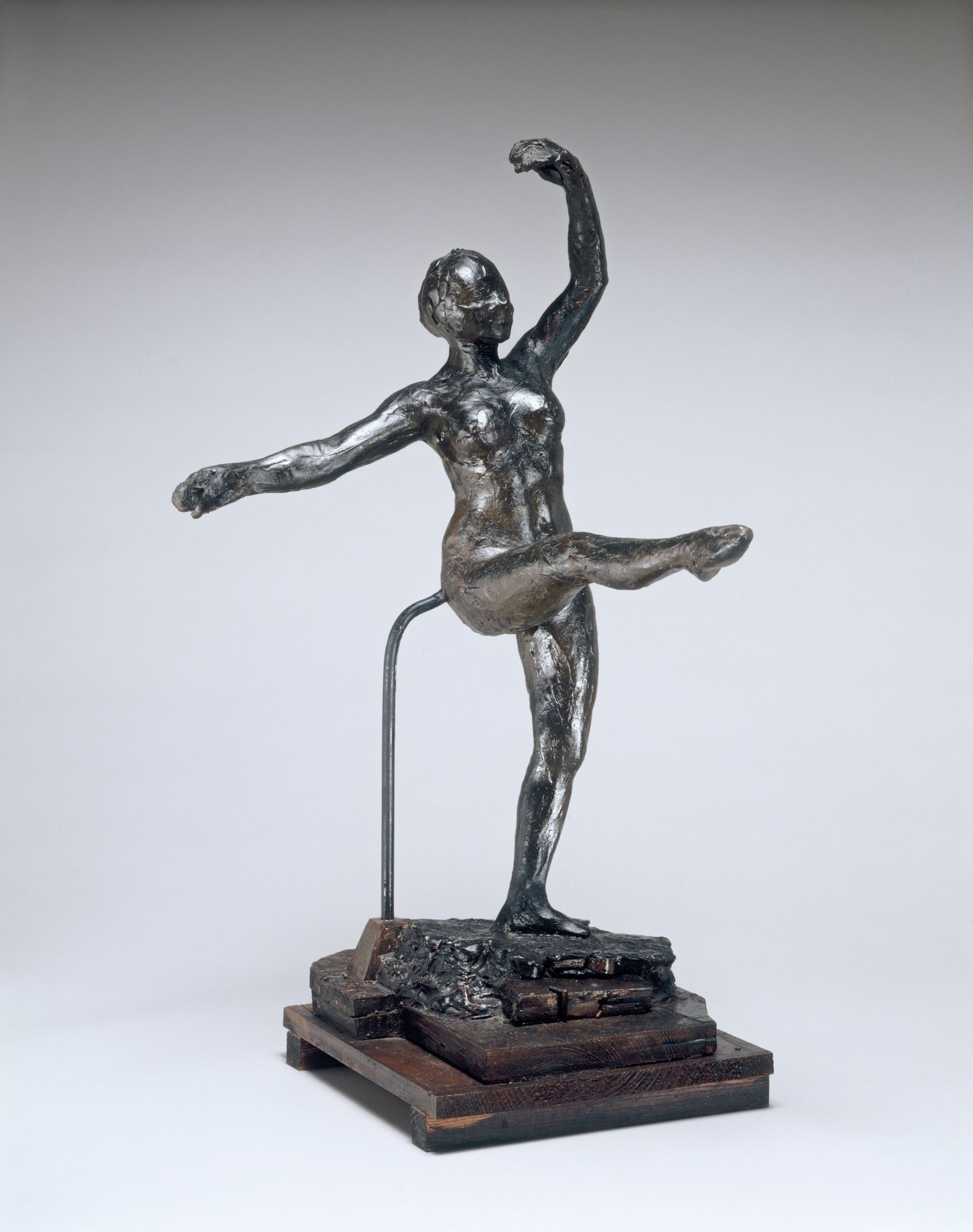
This bronze sculpture by Edgar Degas captures a young dancer in the 'fourth position'. Her extended limbs and arched form represent not just physical grace, but the culmination of rigorous training and discipline. Consider the motif of the raised arm. Throughout history, this gesture symbolizes supplication and aspiration, seen in ancient depictions of orants and reaching figures. In classical sculpture, a similar pose embodies triumph or divine connection. Degas transforms this symbolic reach into the dancer's striving for technical perfection and artistic expression. The act of balancing on one leg connects to the archetypal image of the tightrope walker, symbolizing life's precariousness and the constant need for balance. The dancer’s struggle is one of control versus abandon, tradition versus innovation. As we reflect on the dancer, we consider how these symbols persist, constantly re-emerging.
Fourth Position Front, on the Left Leg c. 1885 - 1890


Artwork details
- Medium
- bronze, sculpture
- Dimensions
- overall without base: 60.3 x 37.8 x 34.1 cm (23 3/4 x 14 7/8 x 13 7/16 in.) height (of figure): 56.8 cm (22 3/8 in.)
- Copyright
- National Gallery of Art: CC0 1.0
Tags
portrait
statue
impressionism
sculpture
bronze
figuration
sculpture
statue
Comments
No comments
About this artwork
This bronze sculpture by Edgar Degas captures a young dancer in the 'fourth position'. Her extended limbs and arched form represent not just physical grace, but the culmination of rigorous training and discipline. Consider the motif of the raised arm. Throughout history, this gesture symbolizes supplication and aspiration, seen in ancient depictions of orants and reaching figures. In classical sculpture, a similar pose embodies triumph or divine connection. Degas transforms this symbolic reach into the dancer's striving for technical perfection and artistic expression. The act of balancing on one leg connects to the archetypal image of the tightrope walker, symbolizing life's precariousness and the constant need for balance. The dancer’s struggle is one of control versus abandon, tradition versus innovation. As we reflect on the dancer, we consider how these symbols persist, constantly re-emerging.
Comments
No comments