About this artwork
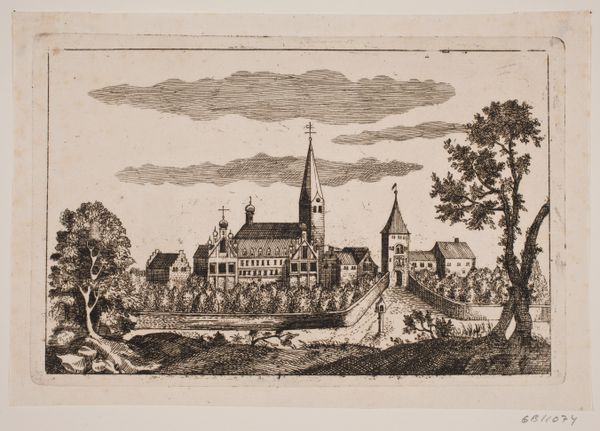
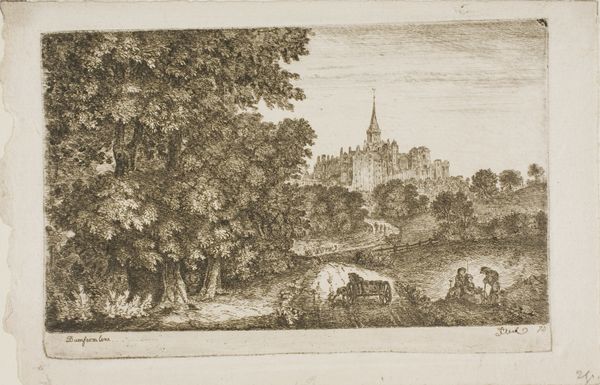
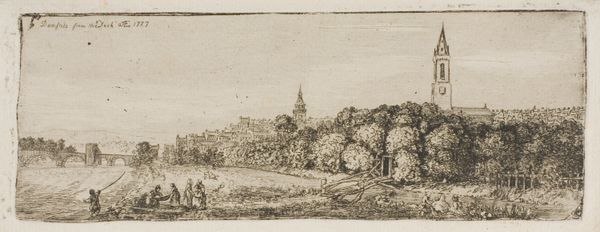
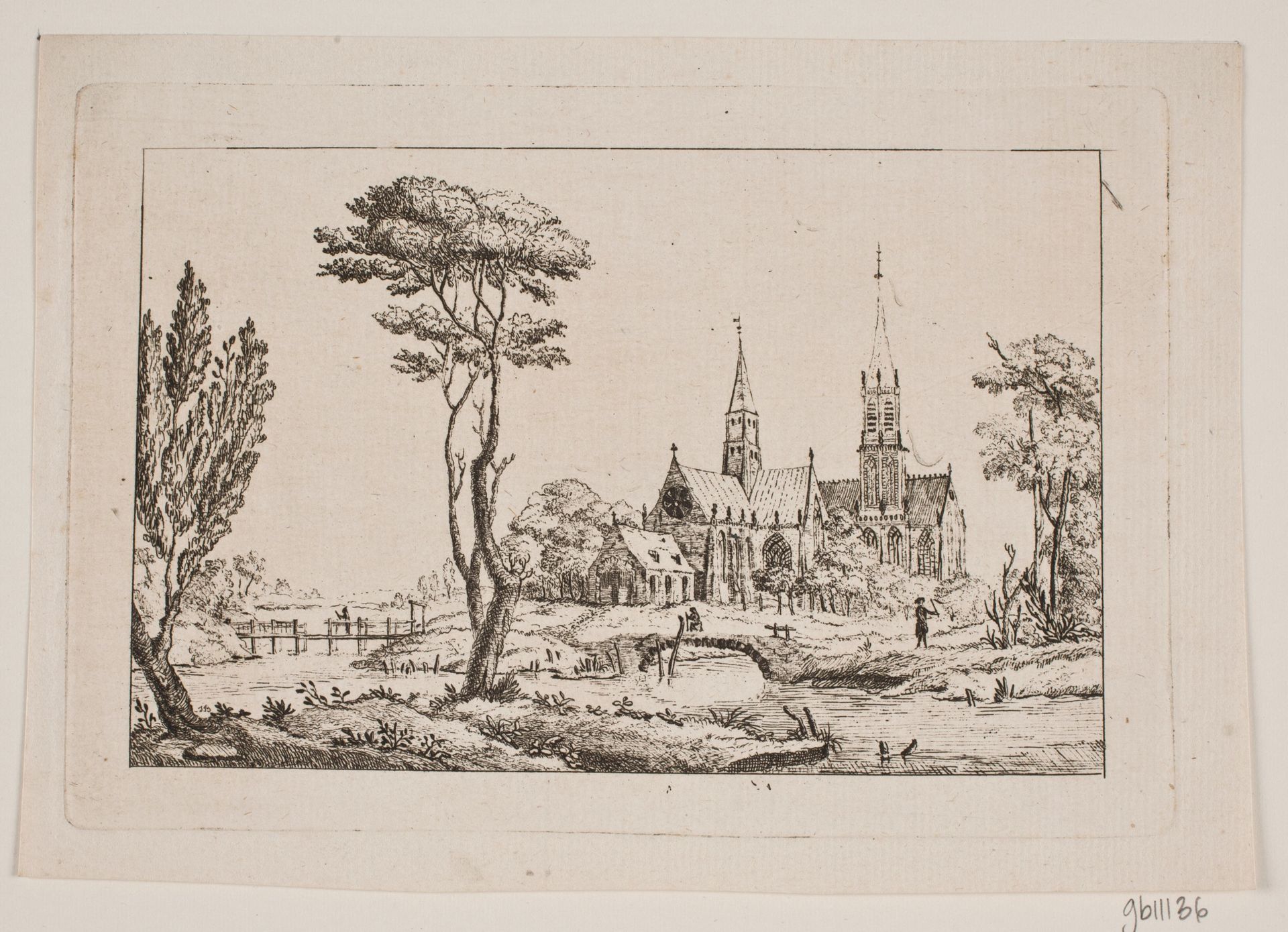
"Gotisk Kirke" is an etching made by Johan Bülow, sometime between the late 18th and early 19th centuries. Bülow was born into the landed gentry and served as a knight in the Order of the Dannebrog, so his position within Danish society afforded him the freedom to pursue artistic interests, such as this one. The print depicts an idyllic scene of rural life complete with a gothic church, a bridge, and various figures. It subtly engages with the prevalent artistic trends of its time, such as Romanticism which emphasized the beauty of nature and the sublime power of religious architecture. It represents an idealized vision, where class divisions seem softened by the shared experience of the natural world. The detailed etching technique captures the textures of the trees and the stone of the church, inviting viewers into this tranquil landscape. This artwork serves not just as a visual representation but as a cultural artifact. It reflects the values, aesthetics, and social structures of the time, quietly inviting us to consider the historical narratives embedded within.
Gotisk Kirke
1751 - 1828


Artwork details
- Medium
- drawing, print, etching
- Dimensions
- 106 mm (height) x 156 mm (width) (plademaal)
- Location
- SMK - Statens Museum for Kunst
Tags
Comments
Share your thoughts
About this artwork
"Gotisk Kirke" is an etching made by Johan Bülow, sometime between the late 18th and early 19th centuries. Bülow was born into the landed gentry and served as a knight in the Order of the Dannebrog, so his position within Danish society afforded him the freedom to pursue artistic interests, such as this one. The print depicts an idyllic scene of rural life complete with a gothic church, a bridge, and various figures. It subtly engages with the prevalent artistic trends of its time, such as Romanticism which emphasized the beauty of nature and the sublime power of religious architecture. It represents an idealized vision, where class divisions seem softened by the shared experience of the natural world. The detailed etching technique captures the textures of the trees and the stone of the church, inviting viewers into this tranquil landscape. This artwork serves not just as a visual representation but as a cultural artifact. It reflects the values, aesthetics, and social structures of the time, quietly inviting us to consider the historical narratives embedded within.
Comments
Share your thoughts