About this artwork
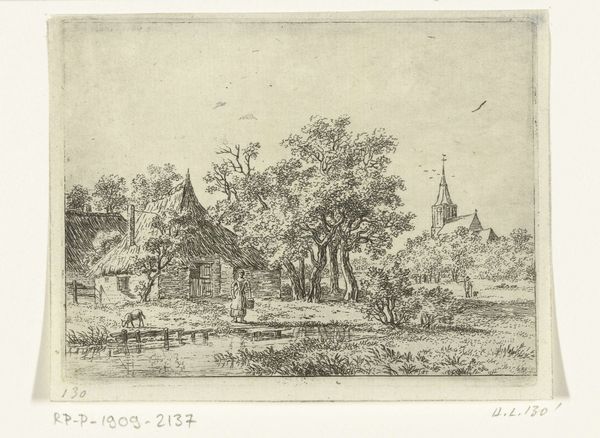
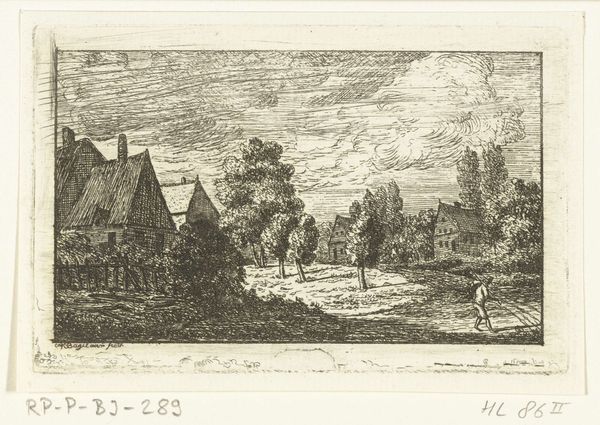
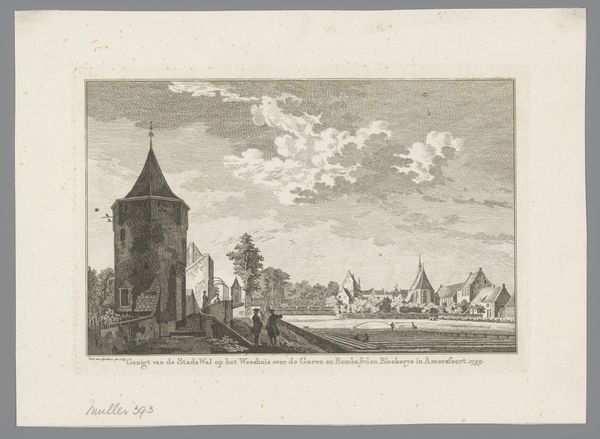
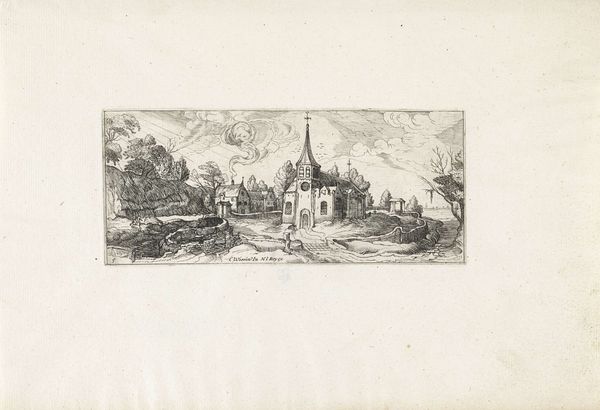
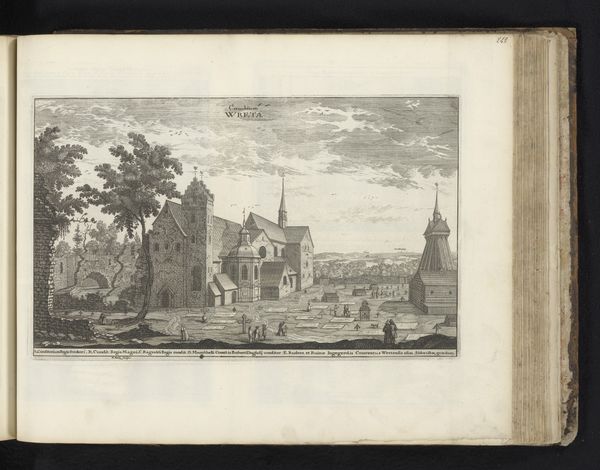
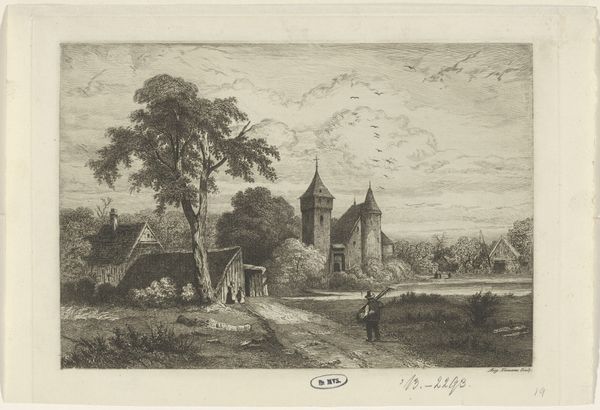
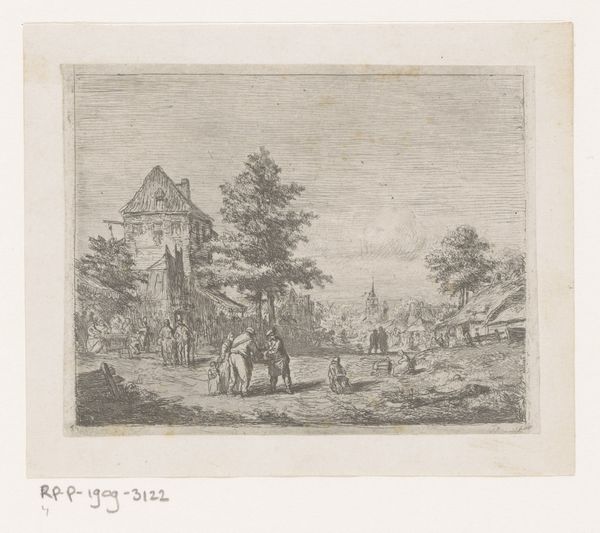
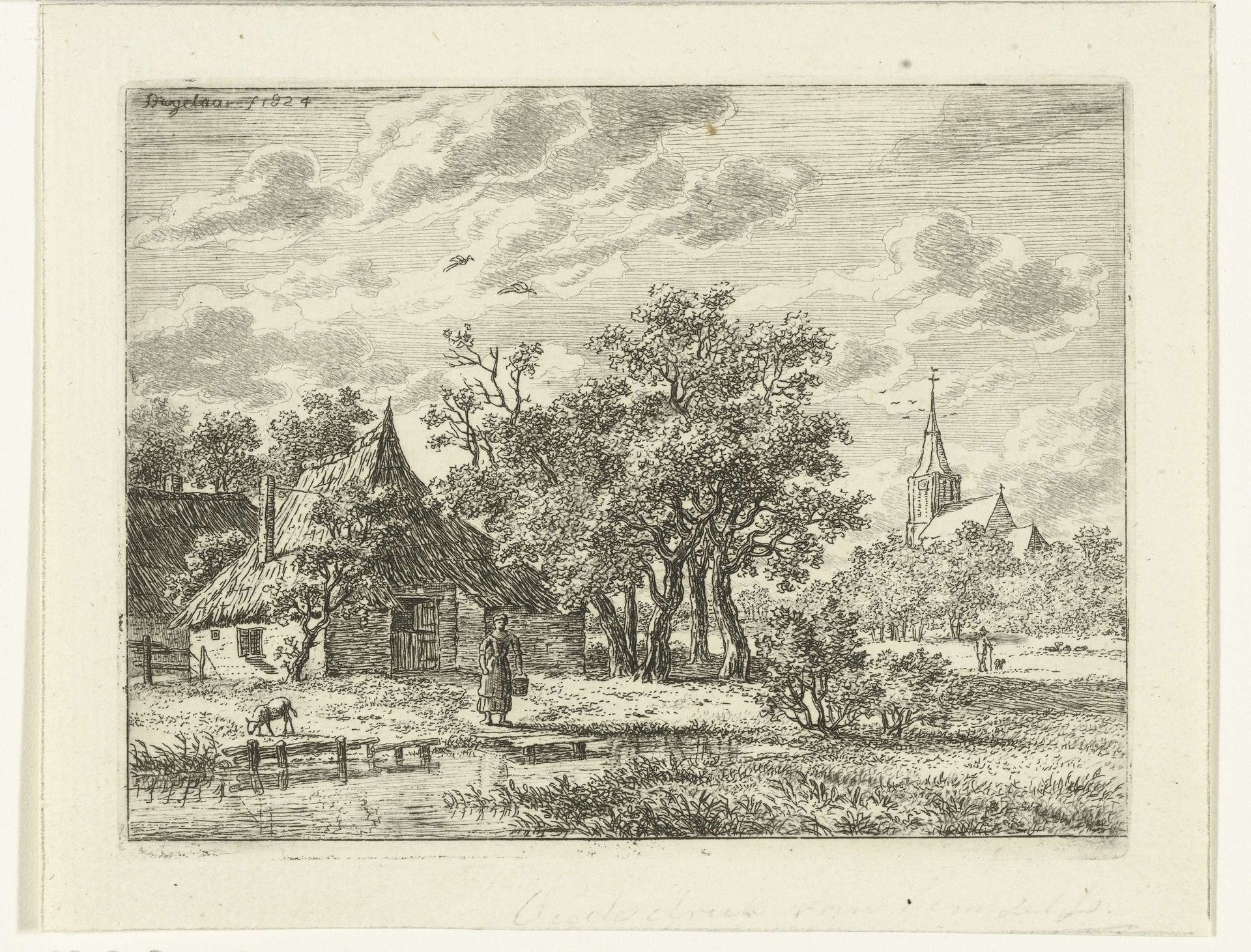
Ernst Willem Jan Bagelaar created this etching, "Village scene with a virgin taking water from the ditch", in 1824. Etching is an indirect intaglio process where the image is incised into a metal plate with acid. The plate would have been covered with a waxy, acid-resistant ground, through which the artist scratched the design, exposing the bare metal. The plate was then immersed in acid, which bit into the metal where exposed, creating recessed lines. These lines hold ink, and when pressed onto paper, they form the image. The lines in this etching vary in thickness and depth, achieved by controlling the strength of the acid and the duration of the etching process. Bagelaar skillfully used this to create a range of tones and textures, from the soft clouds to the rough thatch of the cottage roof. The etched lines create a delicate, intricate composition. Looking at the image, you can see the labor involved in producing the etching and how the artist used the medium to depict the labor of the woman drawing water. The very act of creating this print mirrors the work it represents, reminding us of the value and dignity inherent in all forms of making.
Dorpsgezicht met maagd die water uit de sloot haalt 1824

Artwork details
- Medium
- print, engraving
- Dimensions
- height 95 mm, width 122 mm
- Copyright
- Rijks Museum: Open Domain
Tags
landscape
romanticism
northern-renaissance
engraving
Comments
No comments
About this artwork
Ernst Willem Jan Bagelaar created this etching, "Village scene with a virgin taking water from the ditch", in 1824. Etching is an indirect intaglio process where the image is incised into a metal plate with acid. The plate would have been covered with a waxy, acid-resistant ground, through which the artist scratched the design, exposing the bare metal. The plate was then immersed in acid, which bit into the metal where exposed, creating recessed lines. These lines hold ink, and when pressed onto paper, they form the image. The lines in this etching vary in thickness and depth, achieved by controlling the strength of the acid and the duration of the etching process. Bagelaar skillfully used this to create a range of tones and textures, from the soft clouds to the rough thatch of the cottage roof. The etched lines create a delicate, intricate composition. Looking at the image, you can see the labor involved in producing the etching and how the artist used the medium to depict the labor of the woman drawing water. The very act of creating this print mirrors the work it represents, reminding us of the value and dignity inherent in all forms of making.
Comments
No comments