About this artwork
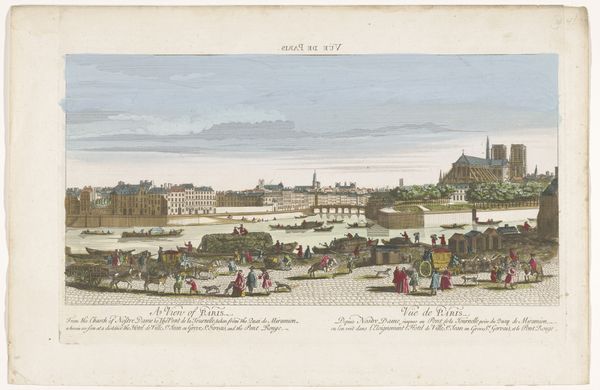
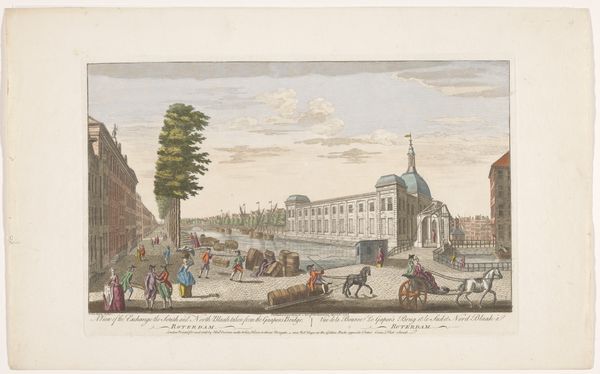
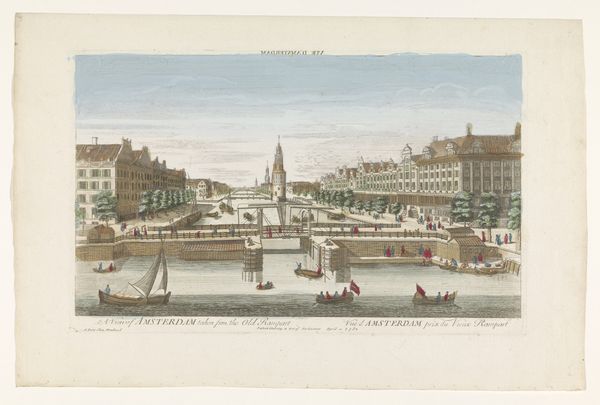
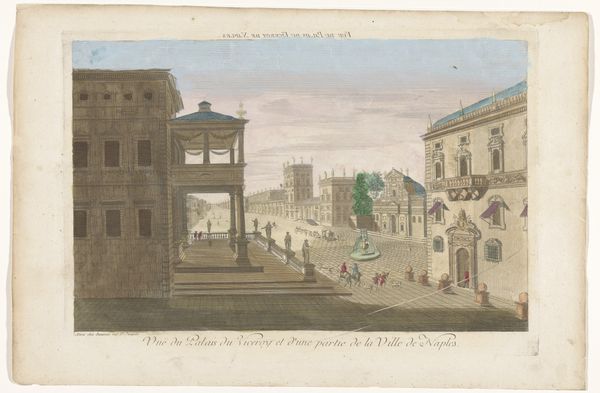
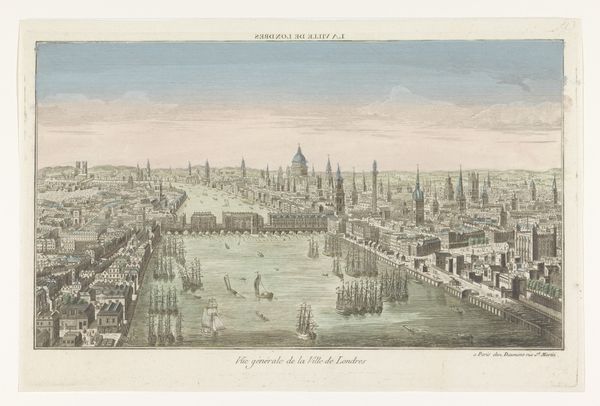
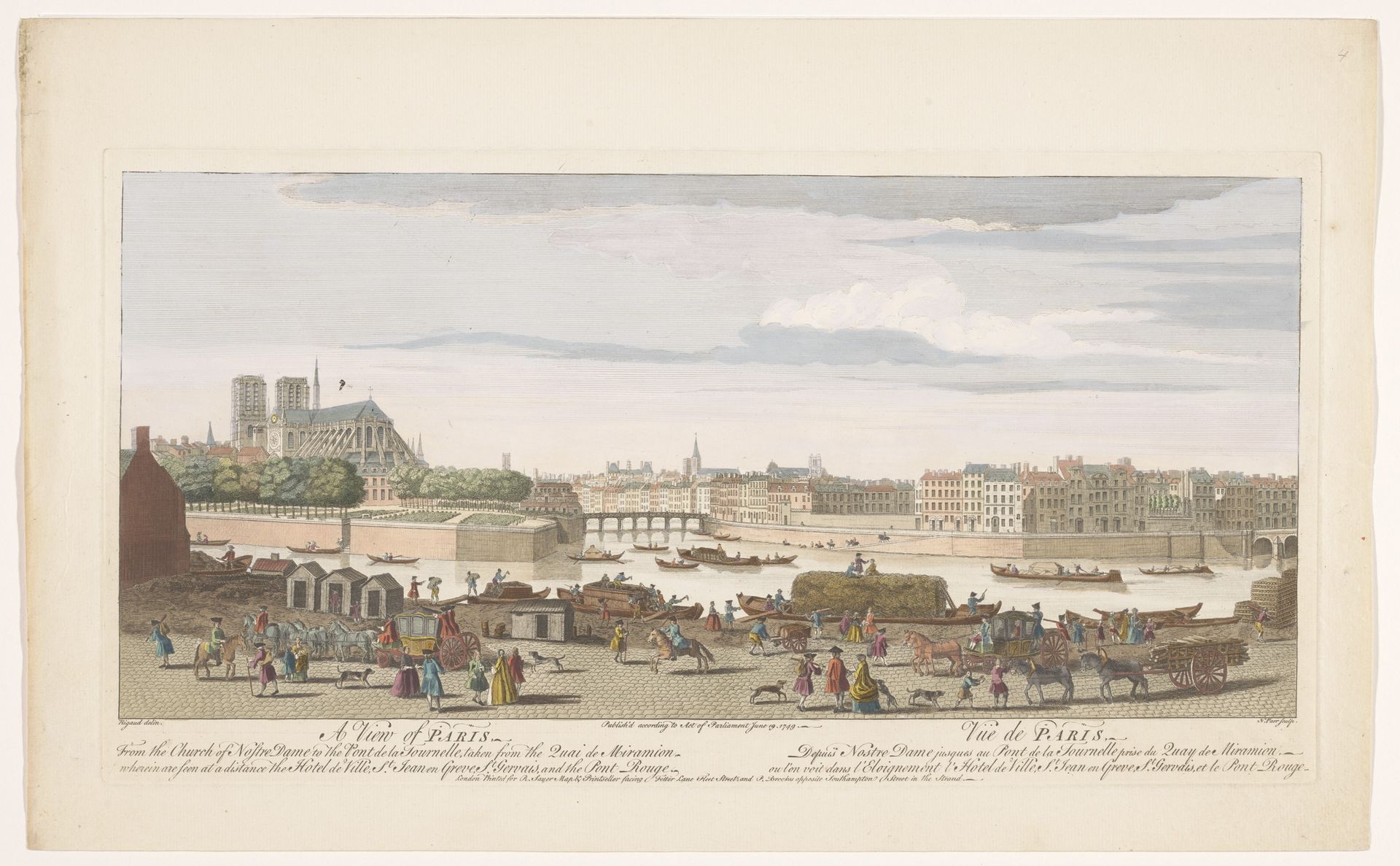
Robert Sayer created this print of Paris around 1750 using etching and engraving techniques, and then added watercolor washes. It’s not just a picture, it's a product of a complex, collaborative process. Think about the copper plate that would have been etched with acid, then incised with a burin to create the fine lines of the image. The workforce needed to produce the paper, mix the inks, and operate the printing press. And finally, the skilled hand that applied the delicate watercolor. Sayer was a publisher as well as an artist. This print wasn't just about aesthetics; it was a commodity. Consider the social context: images of Paris were in high demand, feeding a growing appetite for visual representations of city life. This print reflects a burgeoning culture of consumption, where art became intertwined with commerce and popular culture. Paying attention to the materials, techniques, and context of production allows us to appreciate the full complexity of this artwork.
Gezicht op de stad Parijs gezien vanaf de Quai de Miramion
Possibly 1749
Robert Sayer
1725 - 1794Location
RijksmuseumArtwork details
- Medium
- painting, watercolor
- Dimensions
- height 250 mm, width 484 mm
- Location
- Rijksmuseum
- Copyright
- Rijks Museum: Open Domain
Tags
Comments
Share your thoughts
About this artwork
Robert Sayer created this print of Paris around 1750 using etching and engraving techniques, and then added watercolor washes. It’s not just a picture, it's a product of a complex, collaborative process. Think about the copper plate that would have been etched with acid, then incised with a burin to create the fine lines of the image. The workforce needed to produce the paper, mix the inks, and operate the printing press. And finally, the skilled hand that applied the delicate watercolor. Sayer was a publisher as well as an artist. This print wasn't just about aesthetics; it was a commodity. Consider the social context: images of Paris were in high demand, feeding a growing appetite for visual representations of city life. This print reflects a burgeoning culture of consumption, where art became intertwined with commerce and popular culture. Paying attention to the materials, techniques, and context of production allows us to appreciate the full complexity of this artwork.
Comments
Share your thoughts