About this artwork
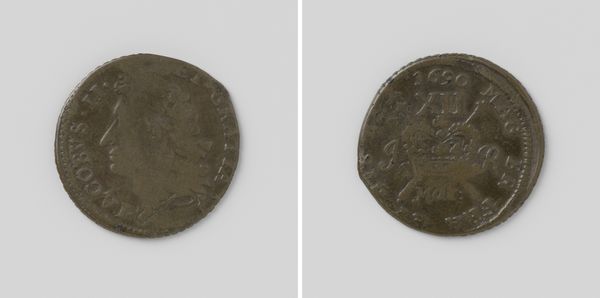
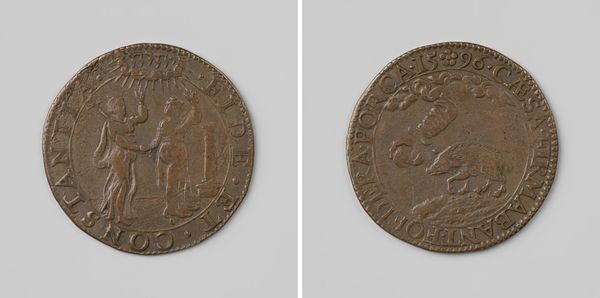
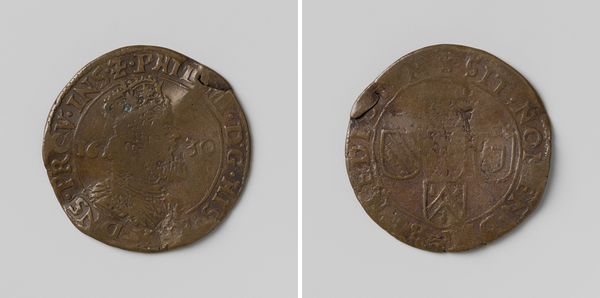
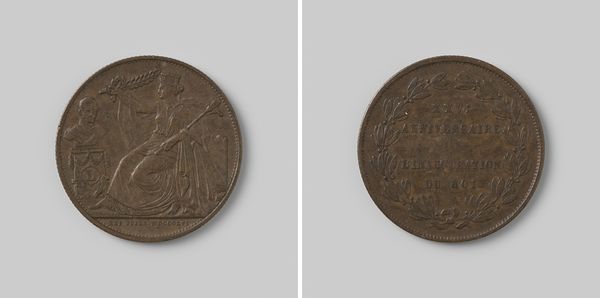
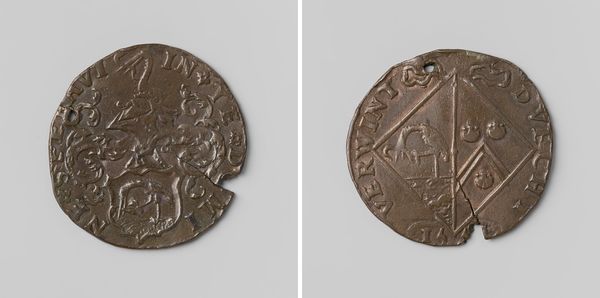
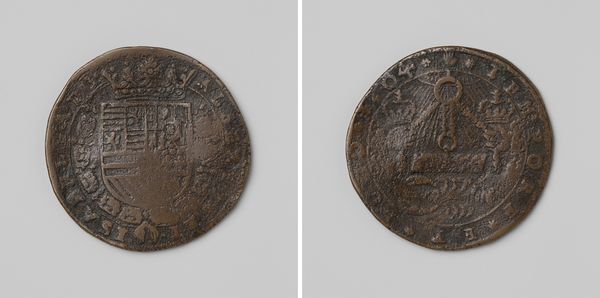
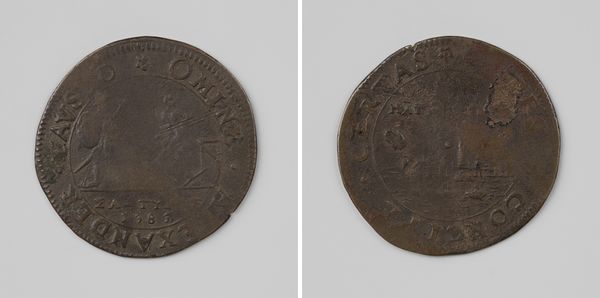
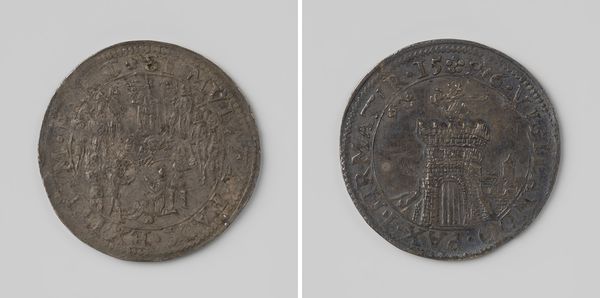
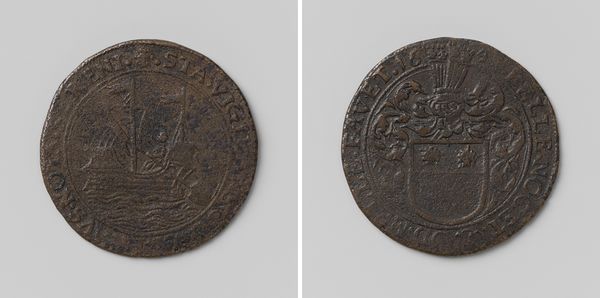
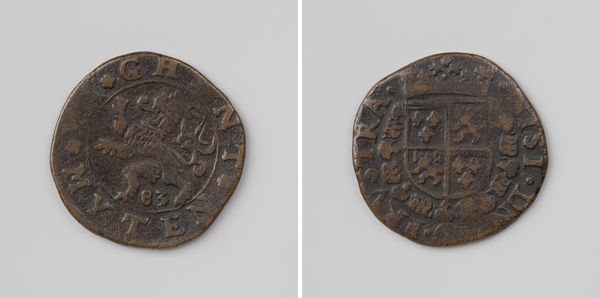
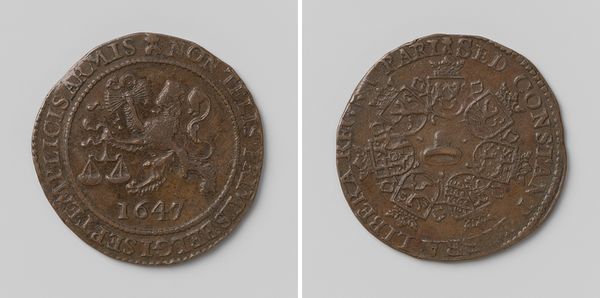
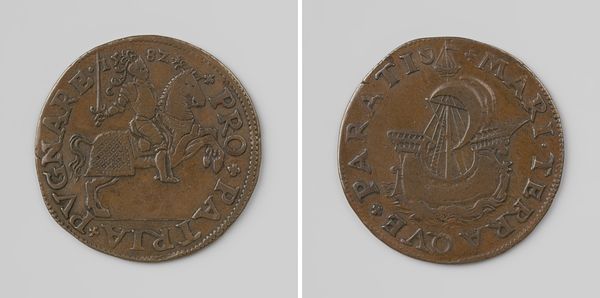
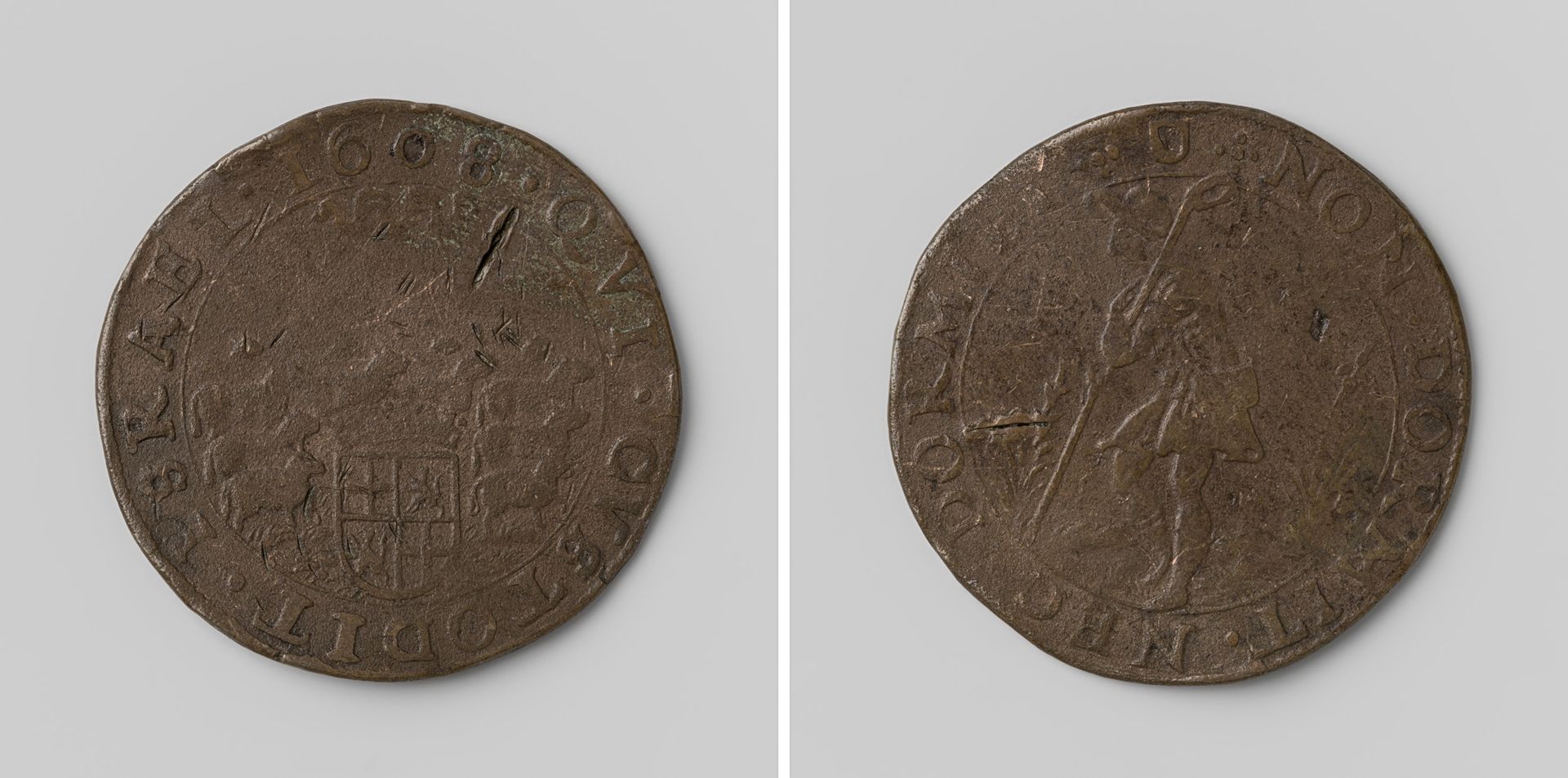
This is a copper coin, likely struck in the Netherlands sometime in the 17th century, by an anonymous maker. The imagery is stamped into the surface of the coin. Note the coat of arms on one side, and the figure on the other, each surrounded by a ring of text. Consider what it took to produce this small, ubiquitous object: the mining of raw materials, refining of the copper, the hand-engraving of dies, and the striking of the coin itself. These processes have imbued the artwork with social and cultural significance. The coin gives us access to the material culture of the past. While it may not be considered a work of “high art,” objects like this testify to the value that early modern society placed on the circulation of goods, labor, and politics. By attending to these contexts, we can broaden our sense of what art can be, and of how it relates to the world around it.
Aanvaarding van de voorstellen voor een bestand tussen de Republiek en Spanje 1608

Artwork details
- Medium
- carving, print, metal, sculpture, engraving
- Dimensions
- diameter 3 cm, weight 5.18 gr
- Copyright
- Rijks Museum: Open Domain
Tags
portrait
carving
baroque
metal
sculpture
ancient-mediterranean
sculpture
carved
history-painting
engraving
Comments
No comments
About this artwork
This is a copper coin, likely struck in the Netherlands sometime in the 17th century, by an anonymous maker. The imagery is stamped into the surface of the coin. Note the coat of arms on one side, and the figure on the other, each surrounded by a ring of text. Consider what it took to produce this small, ubiquitous object: the mining of raw materials, refining of the copper, the hand-engraving of dies, and the striking of the coin itself. These processes have imbued the artwork with social and cultural significance. The coin gives us access to the material culture of the past. While it may not be considered a work of “high art,” objects like this testify to the value that early modern society placed on the circulation of goods, labor, and politics. By attending to these contexts, we can broaden our sense of what art can be, and of how it relates to the world around it.
Comments
No comments