About this artwork
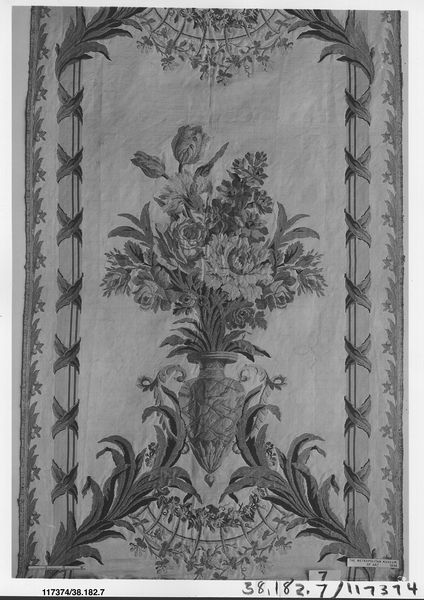
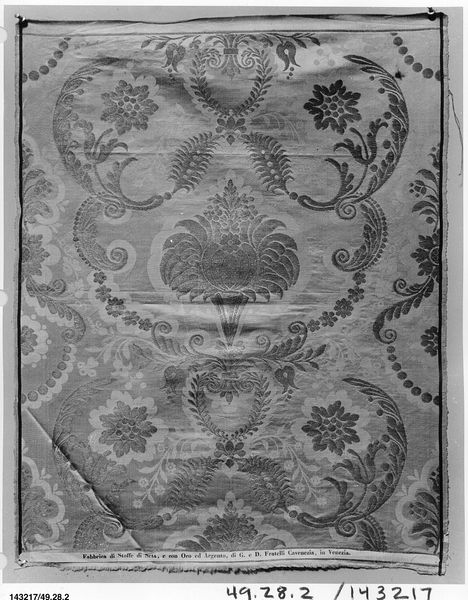
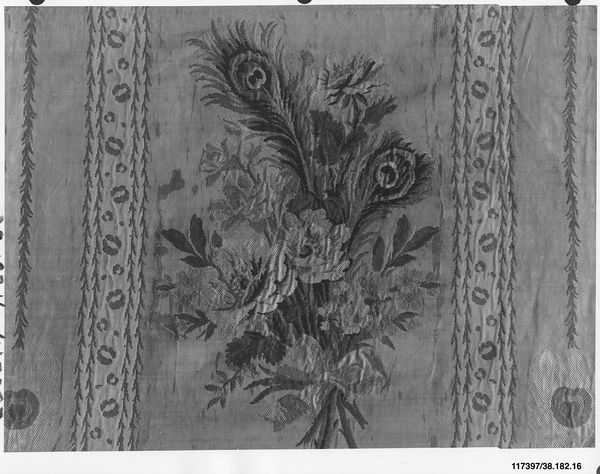
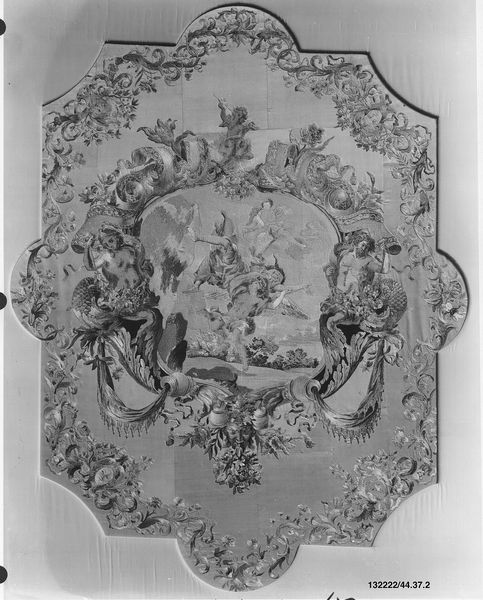
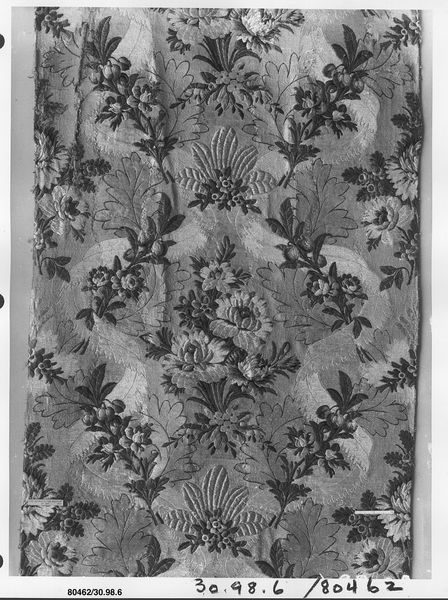
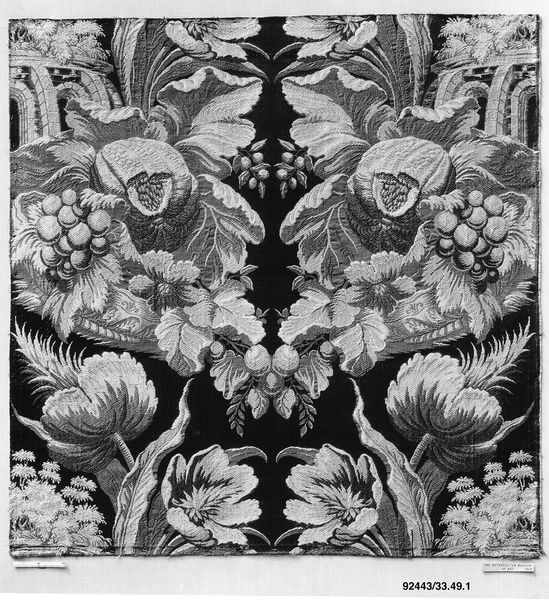
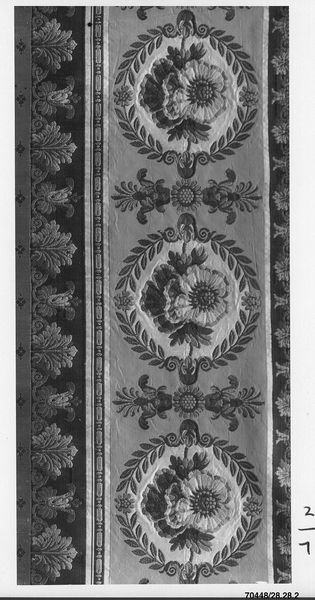
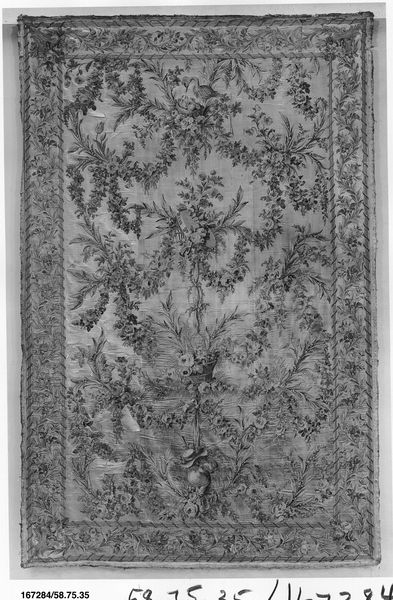
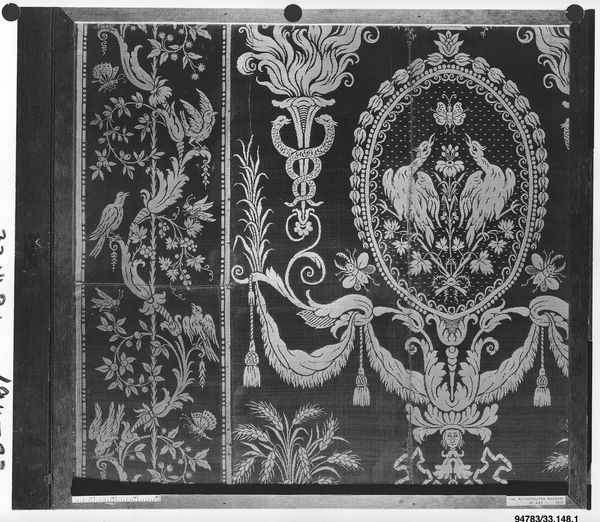
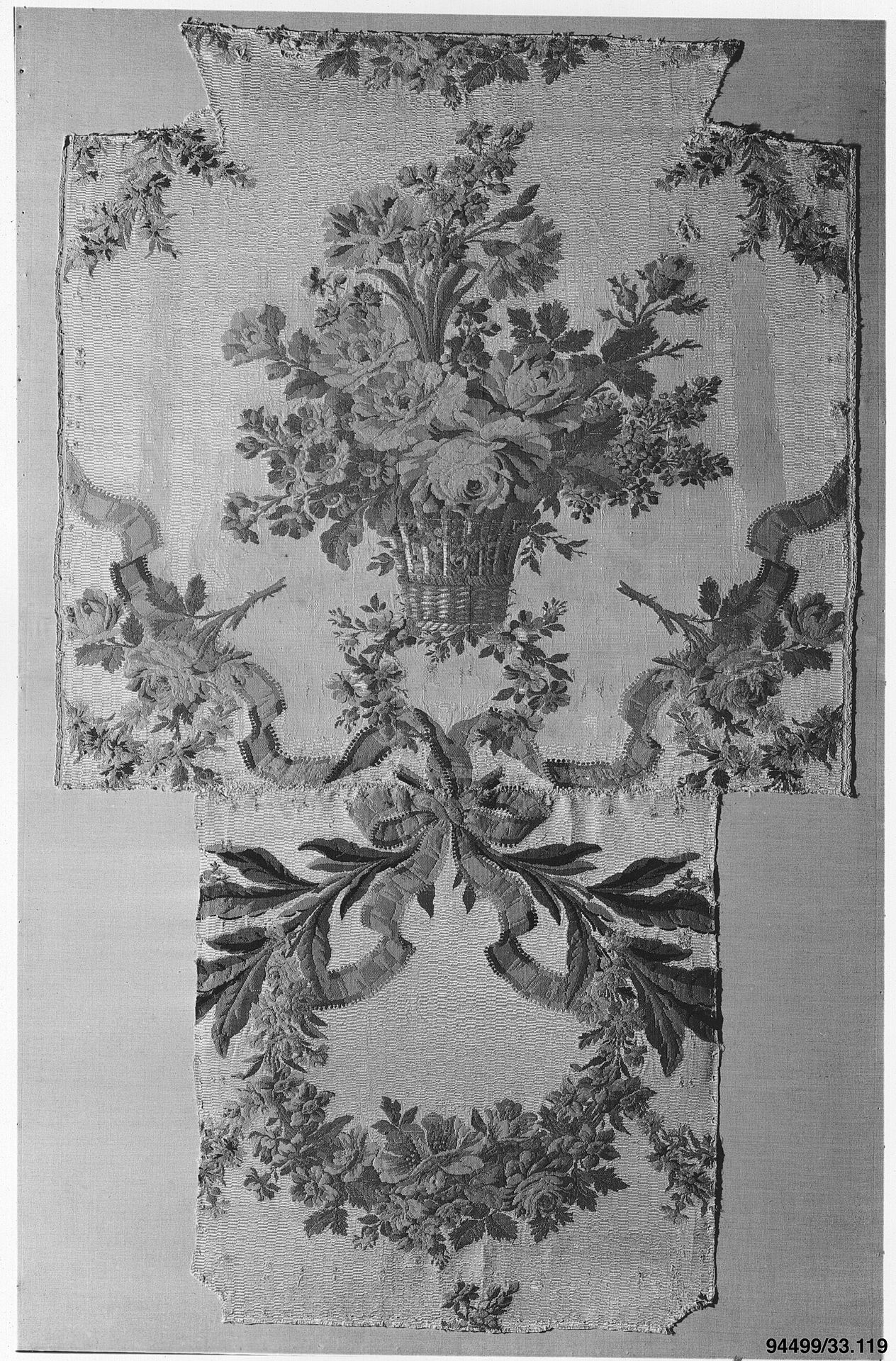
Philippe de Lasalle designed this woven silk upholstery in the 18th century, and it is now held at the Metropolitan Museum. The most striking symbol here is the lavish display of flowers, arranged in baskets and wreaths, and tied with bows. Floral motifs, of course, are nothing new. Recall the garlands in Roman frescoes or the scattered flowers in Flemish paintings. What is significant here, however, is the arrangement and its context. The flowers are carefully composed, not merely strewn, and placed upon a textile meant for domestic use, specifically a chair. Consider how far we have come from the sacred groves of antiquity. What does it mean when something as wild and ephemeral as a flower is tamed and brought indoors? Are we not attempting to master nature itself? This taming speaks to a desire for control, a subconscious drive to bring the outside in, to domesticate not just our living spaces, but also our understanding of the world. Through the cyclical recurrence of floral motifs, we are reminded that our engagement with nature is an evolving dialogue.
Woven silk upholstery for a chair
1765 - 1775

Philippe de Lasalle
1723 - 1804
The Metropolitan Museum of Art
Metropolitan Museum of Art, New York, NYArtwork details
- Medium
- textile
- Dimensions
- L. 50 x W. 30 1/2 inches (127.0 x 77.5 cm) (loom width)
- Location
- Metropolitan Museum of Art, New York, NY
- Copyright
- Public Domain
Tags
Comments
Share your thoughts
About this artwork
Philippe de Lasalle designed this woven silk upholstery in the 18th century, and it is now held at the Metropolitan Museum. The most striking symbol here is the lavish display of flowers, arranged in baskets and wreaths, and tied with bows. Floral motifs, of course, are nothing new. Recall the garlands in Roman frescoes or the scattered flowers in Flemish paintings. What is significant here, however, is the arrangement and its context. The flowers are carefully composed, not merely strewn, and placed upon a textile meant for domestic use, specifically a chair. Consider how far we have come from the sacred groves of antiquity. What does it mean when something as wild and ephemeral as a flower is tamed and brought indoors? Are we not attempting to master nature itself? This taming speaks to a desire for control, a subconscious drive to bring the outside in, to domesticate not just our living spaces, but also our understanding of the world. Through the cyclical recurrence of floral motifs, we are reminded that our engagement with nature is an evolving dialogue.
Comments
Share your thoughts