About this artwork
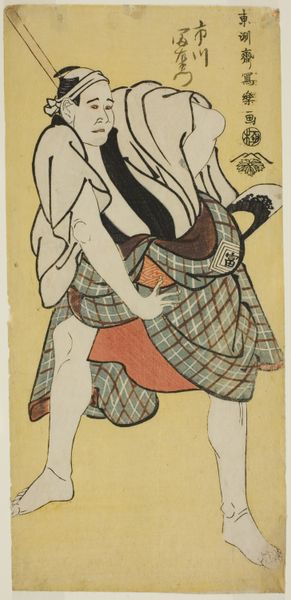
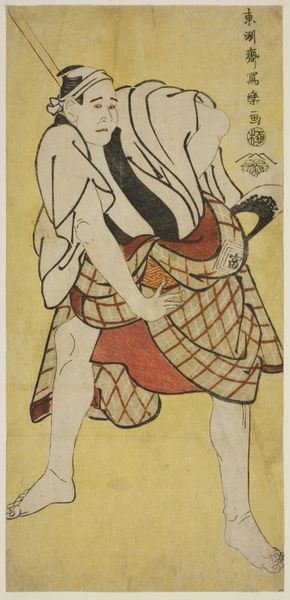
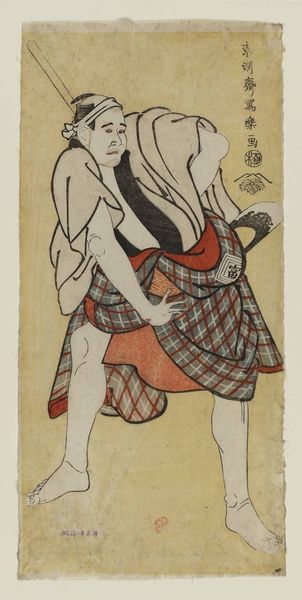
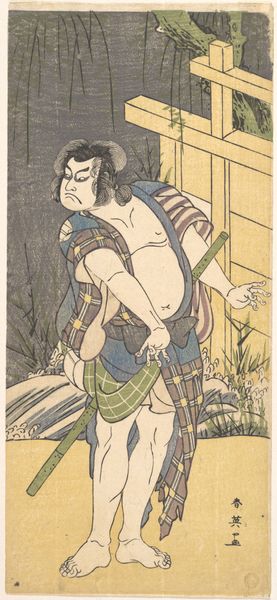
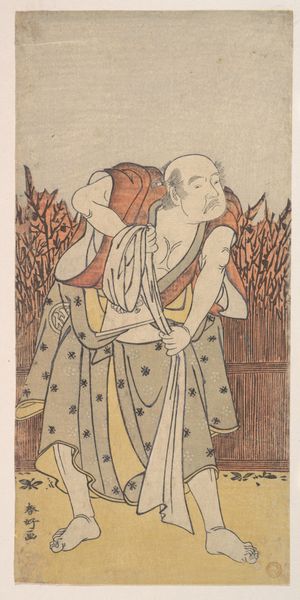
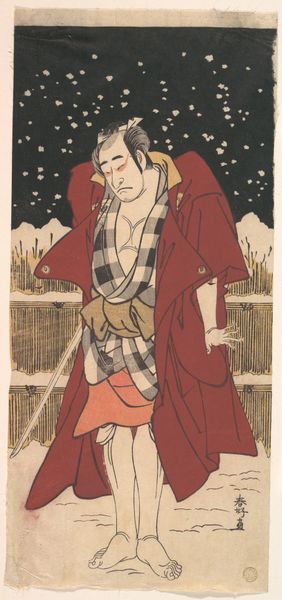
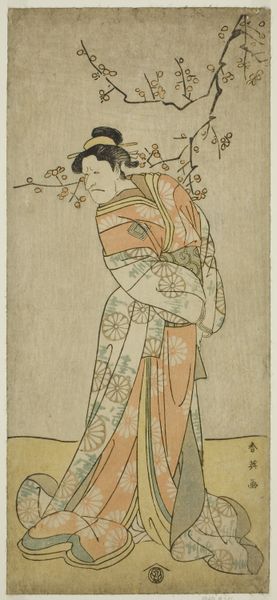
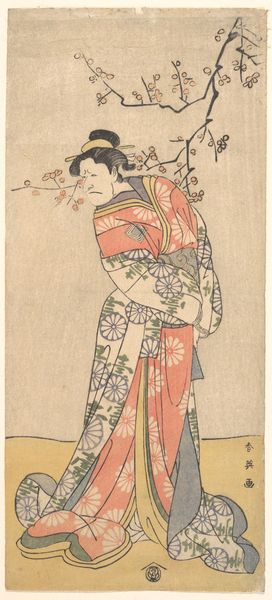
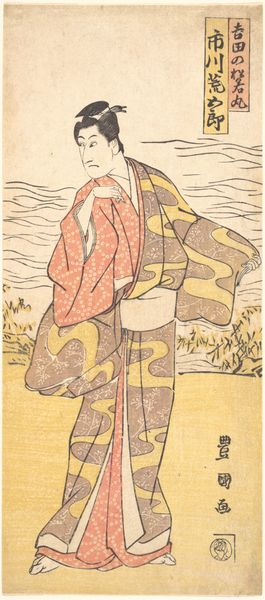
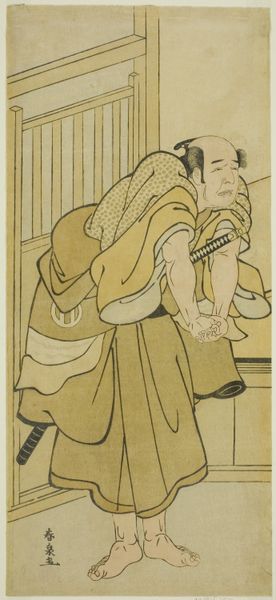
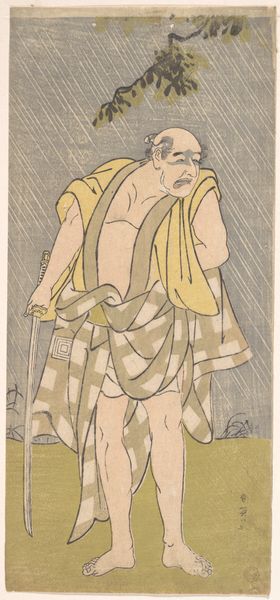
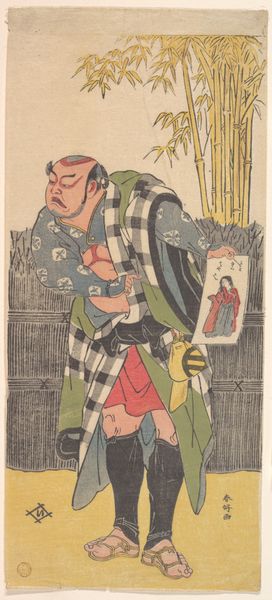
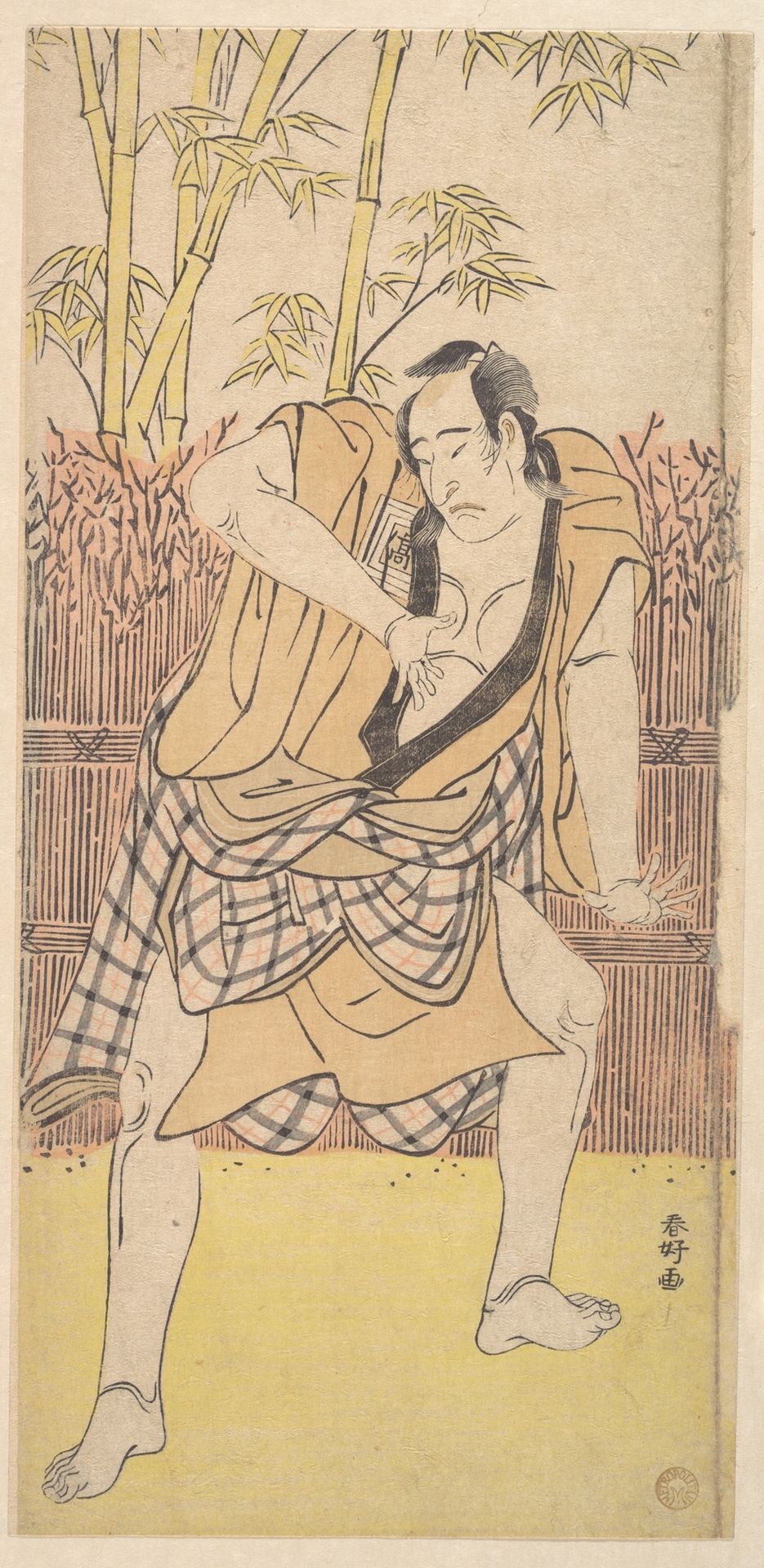
Katsukawa Shunko’s print depicts the actor Ichikawa Komazo, rendered in ink and colors on paper. The technique involved is woodblock printing, a demanding process of carving, inking, and pressing. What interests me most is how this production method influences our perception of the actor’s identity. Woodblock printing allowed for mass production and distribution, meeting the demand of the public that consumed images of performers like Komazo. His likeness, captured through this process, becomes a commodity, much like the performances he gave on stage. Consider the labor involved: not only the artist’s work in the original design, but also the craftsmanship of the carvers and printers who multiplied the image. The material outcome is this flattened, graphic style, so different from other portraiture traditions. Yet, this method democratized art, bringing images of high culture to a wider audience. And that is what makes the work so compelling. By understanding the means of production, we start to consider broader questions around labor, consumption, and the circulation of images in society.
The Second Ichikawa Komazo as a Man standing in a Dramatic Attitude
1780 - 1800


Artwork details
- Medium
- print, woodblock-print
- Dimensions
- 11 1/2 x 5 1/2 in. (29.2 x 14 cm)
- Location
- Metropolitan Museum of Art, New York, NY
- Copyright
- Public Domain
Tags
Comments
Share your thoughts
About this artwork
Katsukawa Shunko’s print depicts the actor Ichikawa Komazo, rendered in ink and colors on paper. The technique involved is woodblock printing, a demanding process of carving, inking, and pressing. What interests me most is how this production method influences our perception of the actor’s identity. Woodblock printing allowed for mass production and distribution, meeting the demand of the public that consumed images of performers like Komazo. His likeness, captured through this process, becomes a commodity, much like the performances he gave on stage. Consider the labor involved: not only the artist’s work in the original design, but also the craftsmanship of the carvers and printers who multiplied the image. The material outcome is this flattened, graphic style, so different from other portraiture traditions. Yet, this method democratized art, bringing images of high culture to a wider audience. And that is what makes the work so compelling. By understanding the means of production, we start to consider broader questions around labor, consumption, and the circulation of images in society.
Comments
Share your thoughts