About this artwork
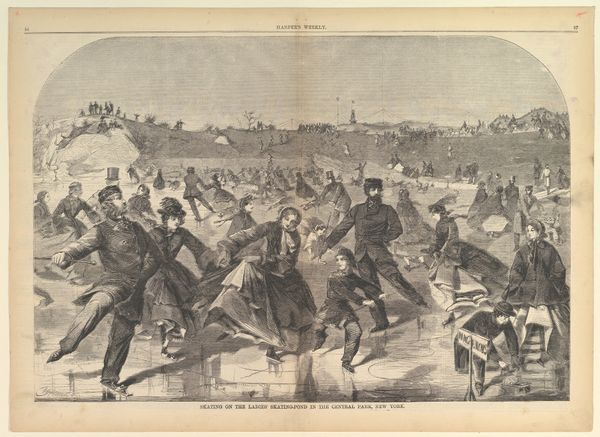
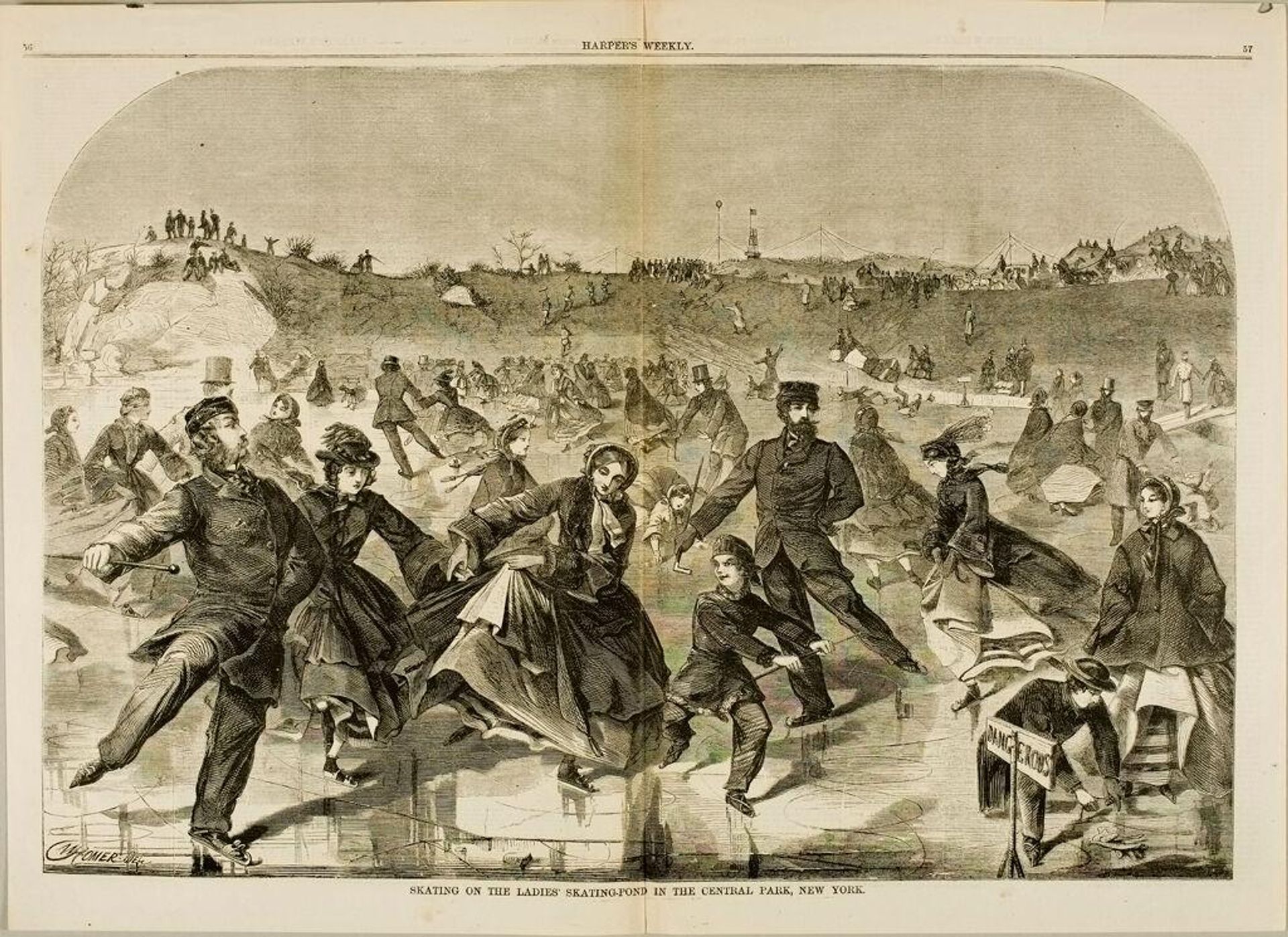
Editor: This is "Skating on the Ladies' Skating Pond in Central Park, New York," by Winslow Homer. It depicts a winter scene full of figures enjoying a day on the ice. It feels like a snapshot of leisure and social life. What strikes you about it? Curator: It's a glimpse into the carefully constructed leisure activities of the 19th century. The designated "Ladies' Skating Pond" speaks volumes about gender roles and the controlled spaces for women in public. Who was allowed access to this park, and what social norms were being reinforced here? Editor: So, it's not just a charming scene but a reflection of societal structures? Curator: Precisely. The print's publication in "Harper's Weekly" also tells us something about the consumption of imagery and the idealization of urban life for a wide audience. It's a curated view of reality, shaping perceptions of progress and social order. Editor: That's fascinating, I hadn't considered how staged and intentional the scene is. Thanks for illuminating its historical context!
Skating on the Ladies' Skating Pond in Central Park, New York 28 - 1860

Artwork details
- Dimensions
- Image: 35 Ã 51.5 cm (13 3/4 Ã 20 1/4 in.) Sheet: 40 Ã 55.3 cm (15 3/4 Ã 21 3/4 in.)
- Location
- Harvard Art Museums
- Copyright
- CC0 1.0
Comments
No comments
About this artwork
Editor: This is "Skating on the Ladies' Skating Pond in Central Park, New York," by Winslow Homer. It depicts a winter scene full of figures enjoying a day on the ice. It feels like a snapshot of leisure and social life. What strikes you about it? Curator: It's a glimpse into the carefully constructed leisure activities of the 19th century. The designated "Ladies' Skating Pond" speaks volumes about gender roles and the controlled spaces for women in public. Who was allowed access to this park, and what social norms were being reinforced here? Editor: So, it's not just a charming scene but a reflection of societal structures? Curator: Precisely. The print's publication in "Harper's Weekly" also tells us something about the consumption of imagery and the idealization of urban life for a wide audience. It's a curated view of reality, shaping perceptions of progress and social order. Editor: That's fascinating, I hadn't considered how staged and intentional the scene is. Thanks for illuminating its historical context!
Comments
No comments