About this artwork
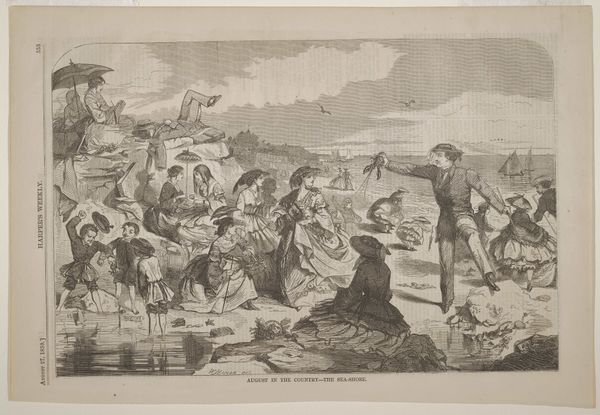
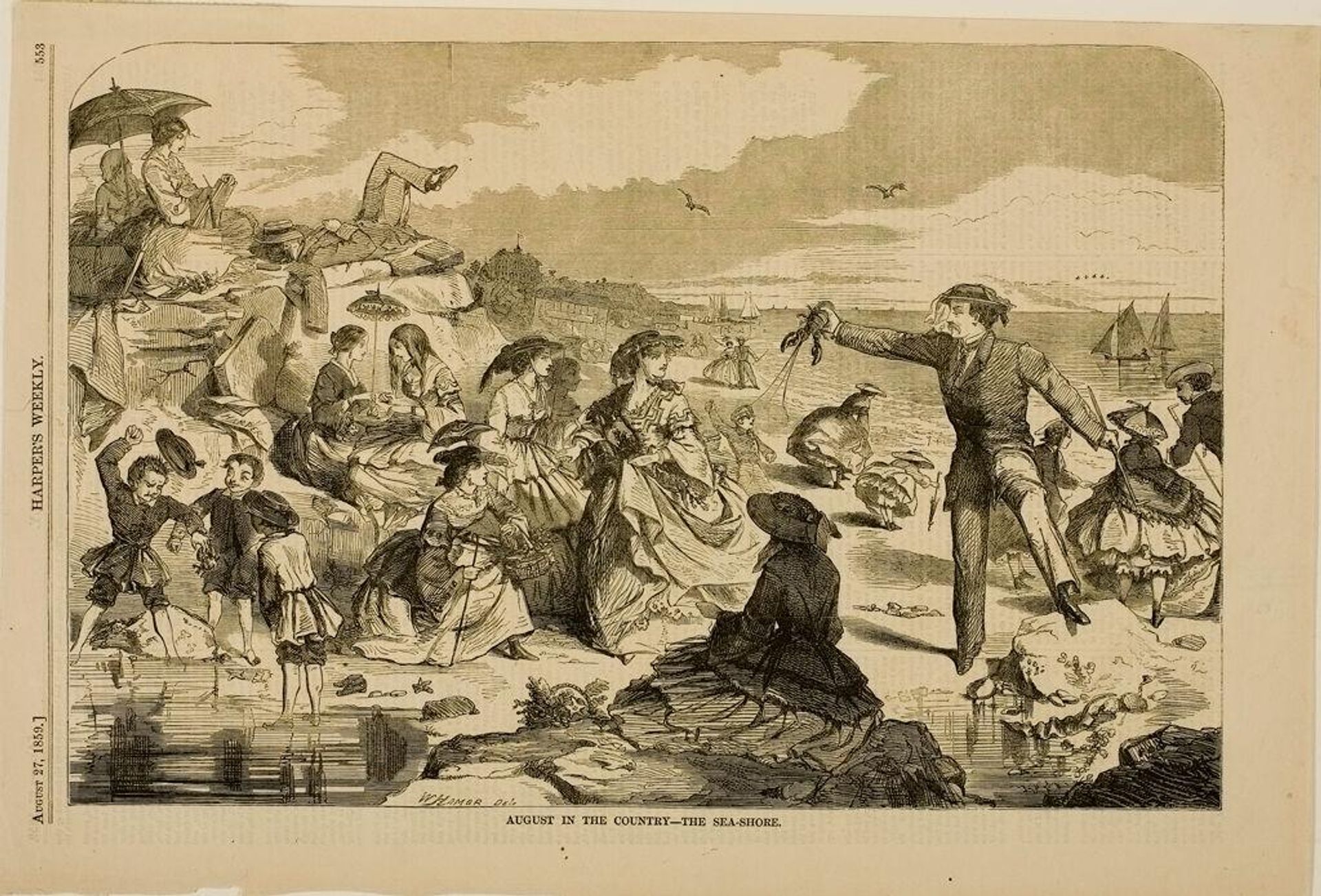
Curator: This is "August in the Country - The Sea-Shore," designed by Winslow Homer, published in Harper's Weekly. It captures a seaside scene bustling with activity. Editor: My first thought? A chaotic picnic where everyone is overdressed. There's a weird tension between leisure and constraint. Curator: Absolutely. This illustration reflects the social dynamics of leisure among the upper classes during the mid-19th century, showcasing the performative aspects of recreation tied to gender and class expectations. Editor: The guy dangling the lobster… it’s oddly aggressive, a bit like a power play amidst the bonnets and parasols. It's like, "Look what I caught!" Curator: His actions are certainly meant to display a form of mastery, reinforcing patriarchal structures and the control over natural resources. Editor: Makes you wonder who actually gets to enjoy the beach. Seems like a lot of work being that fancy at the seaside. Curator: Well, it offers a glimpse into a very specific, constructed experience of leisure in that era. Editor: Yeah, makes you think about who is always missing from these idealized scenes. Something to keep in mind.
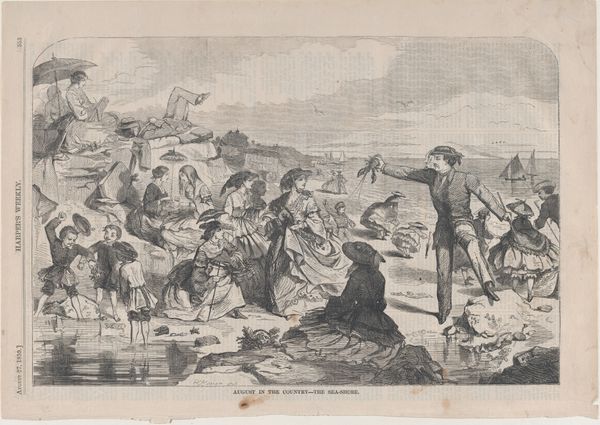
August in the Country - The Sea-Shore
27 - 1859

Artwork details
- Dimensions
- Image: 23.3 Ã 35.2 cm (9 3/16 Ã 13 7/8 in.) Sheet: 27 Ã 40 cm (10 5/8 Ã 15 3/4 in.)
- Location
- Harvard Art Museums
- Copyright
- CC0 1.0
Comments
Share your thoughts
About this artwork
Curator: This is "August in the Country - The Sea-Shore," designed by Winslow Homer, published in Harper's Weekly. It captures a seaside scene bustling with activity. Editor: My first thought? A chaotic picnic where everyone is overdressed. There's a weird tension between leisure and constraint. Curator: Absolutely. This illustration reflects the social dynamics of leisure among the upper classes during the mid-19th century, showcasing the performative aspects of recreation tied to gender and class expectations. Editor: The guy dangling the lobster… it’s oddly aggressive, a bit like a power play amidst the bonnets and parasols. It's like, "Look what I caught!" Curator: His actions are certainly meant to display a form of mastery, reinforcing patriarchal structures and the control over natural resources. Editor: Makes you wonder who actually gets to enjoy the beach. Seems like a lot of work being that fancy at the seaside. Curator: Well, it offers a glimpse into a very specific, constructed experience of leisure in that era. Editor: Yeah, makes you think about who is always missing from these idealized scenes. Something to keep in mind.
Comments
Share your thoughts