About this artwork
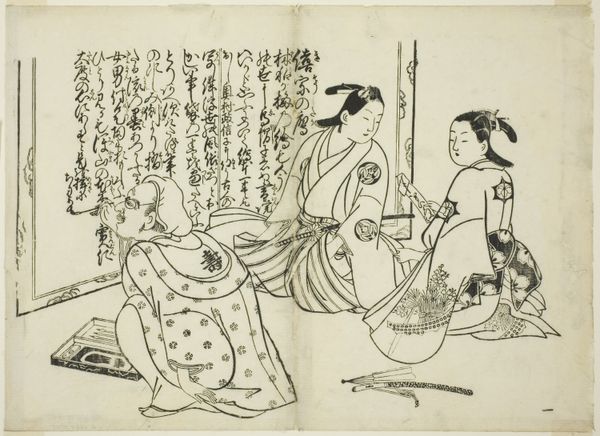
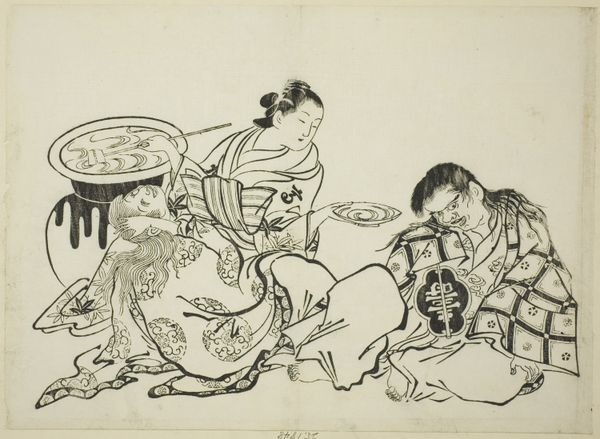
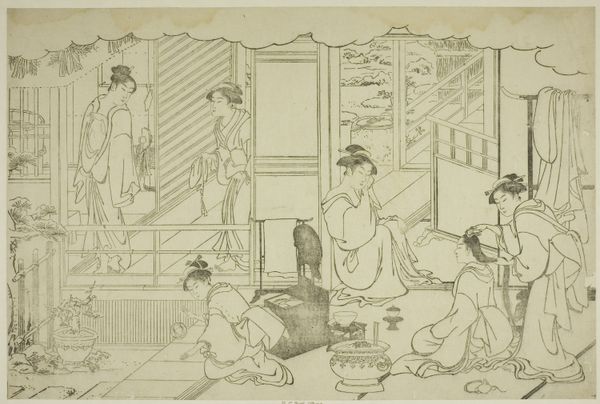
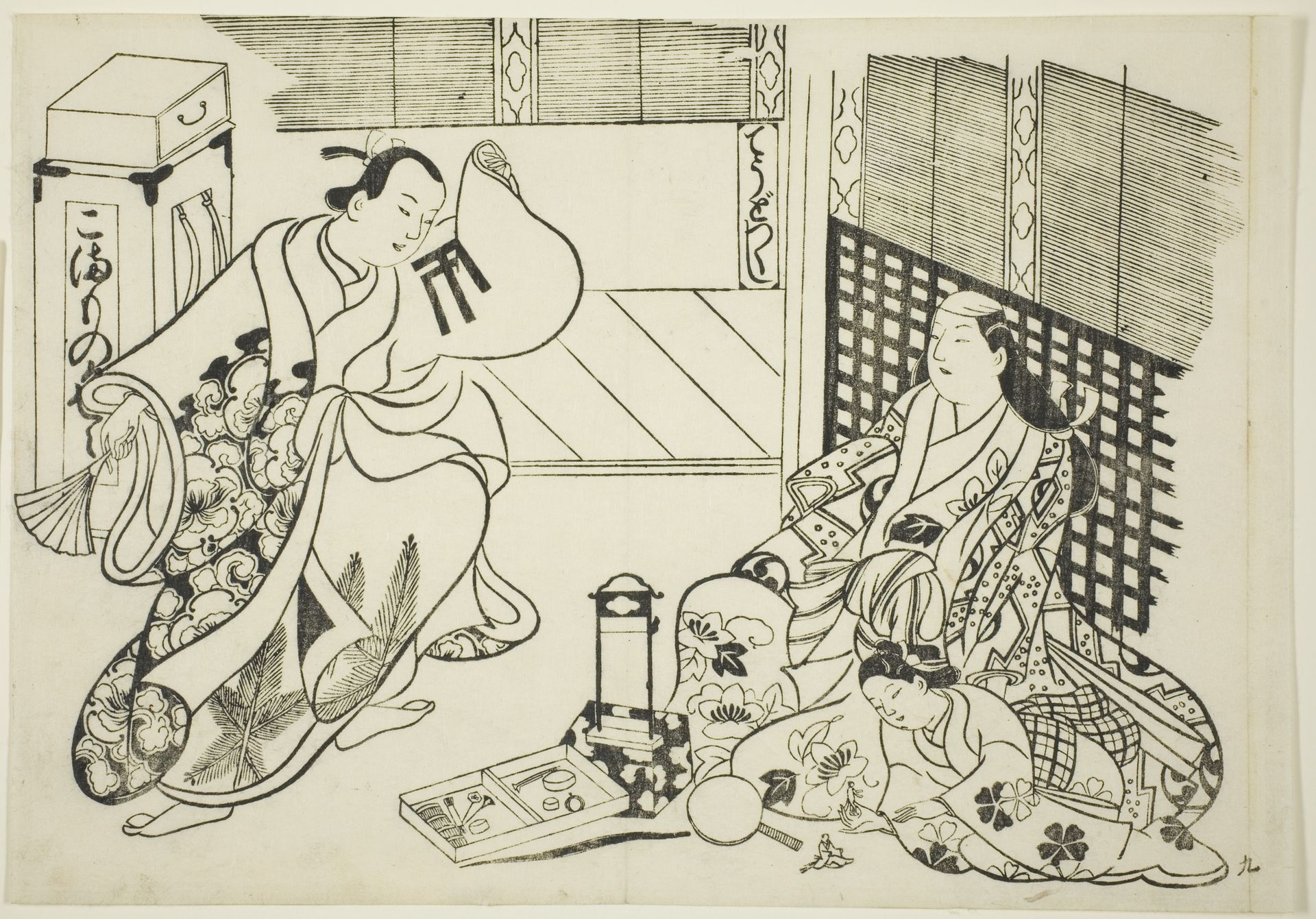
This woodblock print, "All Kinds of Household Items," was created by Okumura Masanobu in Japan. The scene overflows with everyday objects, elevated to symbols of domestic life and the human drama unfolding within these walls. Note the crest on the kimono of the standing figure, consisting of three vertical bars. This symbol speaks volumes. Across cultures, vertical lines often represent stability, strength, and connection to the heavens. Yet, in the context of Japanese heraldry, such designs were deeply intertwined with family identity and social standing. Observe how such emblems, charged with historical and cultural significance, reappear in different guises throughout history. From family crests to corporate logos, we see how these simple shapes carry the weight of tradition, evolving and adapting across time. The psychological impact is undeniable; such symbols evoke deep-seated feelings of belonging, identity, and perhaps even nostalgia. These household items and family crests weave a non-linear narrative, transcending time to connect us to past lives and familiar environments.
All Kinds of Household Items (Chodo zukushi), from the series "Famous Scenes from Japanese Puppet Plays (Yamato irotake)" c. 1705 - 1706


Artwork details
- Medium
- print, paper, woodcut
- Dimensions
- 27.3 × 39.1 cm
- Location
- The Art Institute of Chicago
- Copyright
- Public Domain
Tags
narrative-art
asian-art
ukiyo-e
figuration
paper
personal sketchbook
woodcut
genre-painting
Comments
No comments
About this artwork
This woodblock print, "All Kinds of Household Items," was created by Okumura Masanobu in Japan. The scene overflows with everyday objects, elevated to symbols of domestic life and the human drama unfolding within these walls. Note the crest on the kimono of the standing figure, consisting of three vertical bars. This symbol speaks volumes. Across cultures, vertical lines often represent stability, strength, and connection to the heavens. Yet, in the context of Japanese heraldry, such designs were deeply intertwined with family identity and social standing. Observe how such emblems, charged with historical and cultural significance, reappear in different guises throughout history. From family crests to corporate logos, we see how these simple shapes carry the weight of tradition, evolving and adapting across time. The psychological impact is undeniable; such symbols evoke deep-seated feelings of belonging, identity, and perhaps even nostalgia. These household items and family crests weave a non-linear narrative, transcending time to connect us to past lives and familiar environments.
Comments
No comments