About this artwork
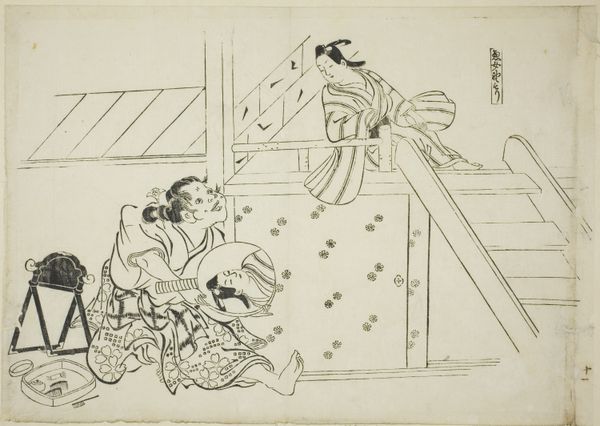
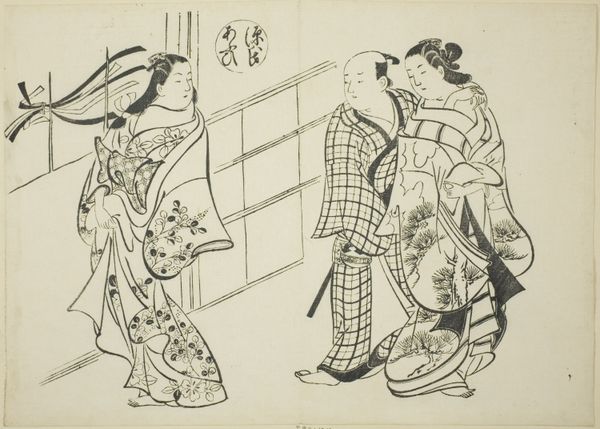
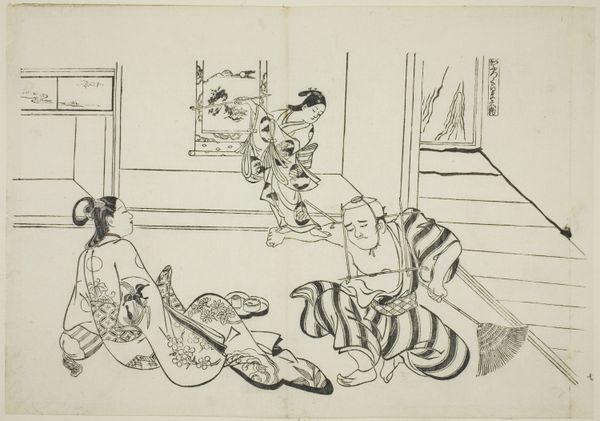
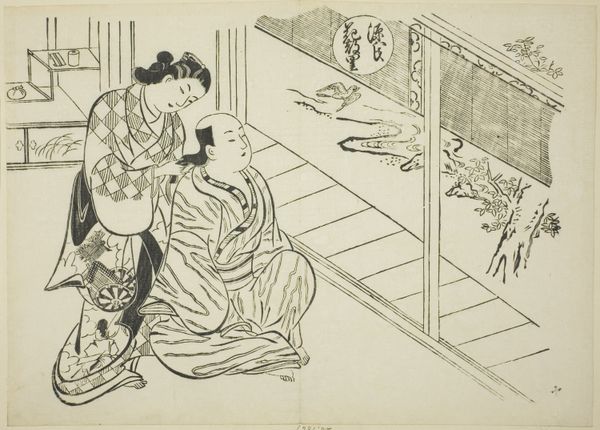
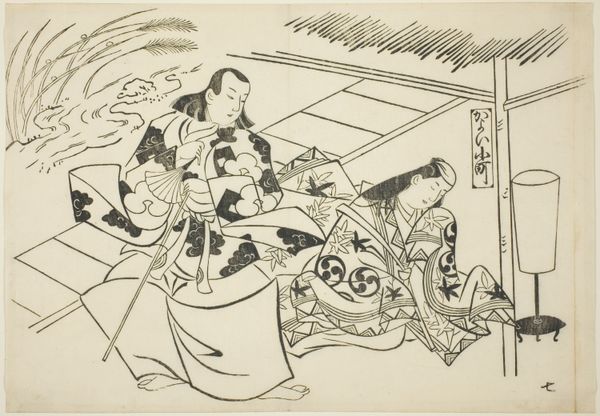
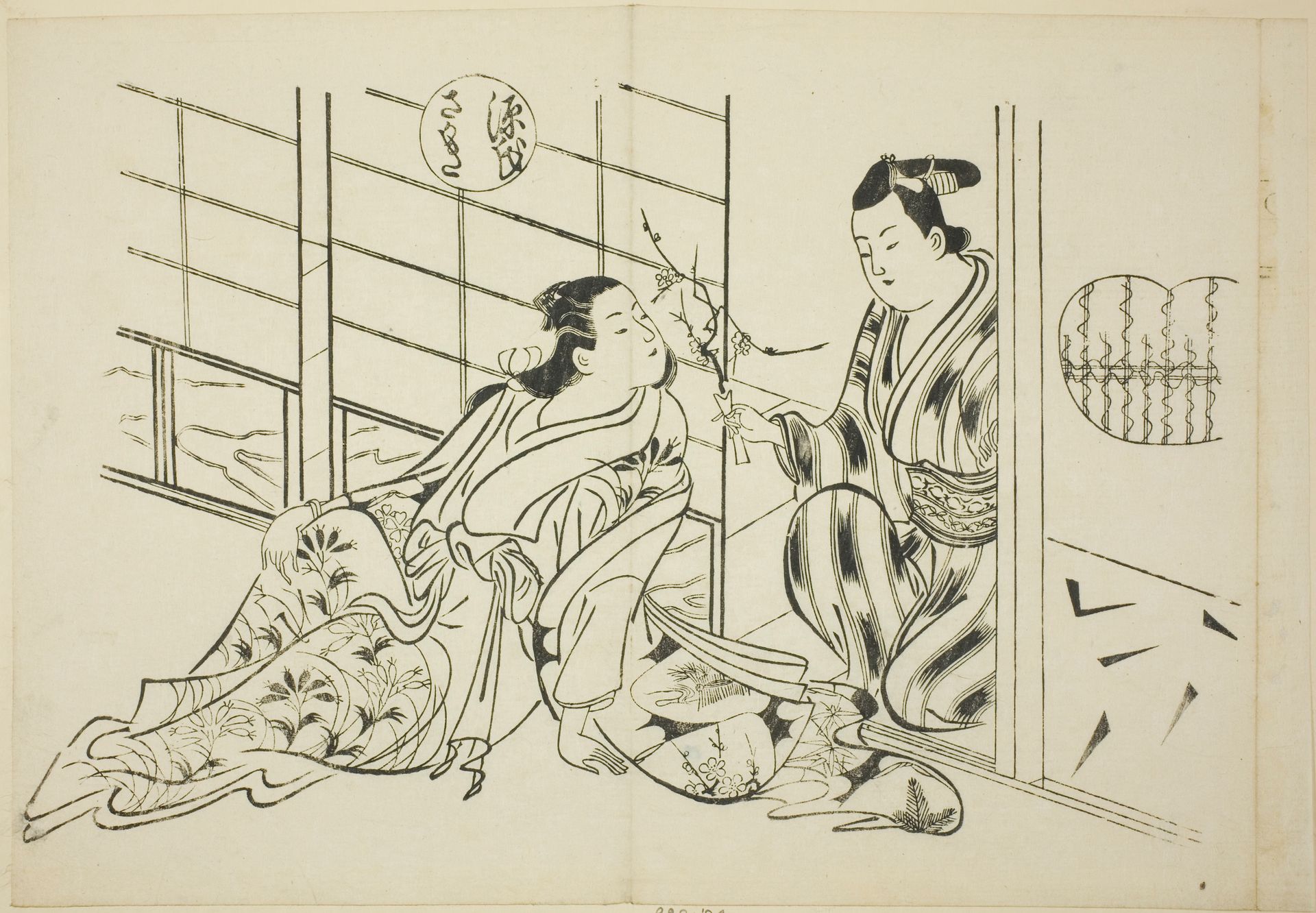
Okumura Masanobu created this woodblock print, "The Sakaki Chapter from 'The Tale of Genji'," part of a series of Genji parodies, in Japan during the Edo period. Masanobu cleverly uses parody to critique the rigid social structures of his time. Here, we see a scene that riffs on the famous "Tale of Genji," a cornerstone of Japanese literature and aristocratic culture. By subverting this iconic story, Masanobu questions the exclusivity and seriousness often associated with high culture. The playful depiction of the characters and the informal setting challenge the traditional, idealized portrayals of court life. This piece serves as a social commentary, poking fun at the cultural elite and suggesting a more accessible, perhaps even democratic, view of art and literature. Further research into Edo-period social dynamics and the reception of "The Tale of Genji" would enrich our understanding of Masanobu's intentions and the artwork's cultural impact. Art history reminds us that meaning is always shaped by context.
The Sakaki Chapter from "The Tale of Genji" (Genji Sakaki), from a series of Genji parodies
c. 1710


Artwork details
- Medium
- print, paper, ink, woodblock-print, woodcut
- Dimensions
- 27.2 × 39.8 cm
- Location
- The Art Institute of Chicago
- Copyright
- Public Domain
Tags
Comments
Share your thoughts
About this artwork
Okumura Masanobu created this woodblock print, "The Sakaki Chapter from 'The Tale of Genji'," part of a series of Genji parodies, in Japan during the Edo period. Masanobu cleverly uses parody to critique the rigid social structures of his time. Here, we see a scene that riffs on the famous "Tale of Genji," a cornerstone of Japanese literature and aristocratic culture. By subverting this iconic story, Masanobu questions the exclusivity and seriousness often associated with high culture. The playful depiction of the characters and the informal setting challenge the traditional, idealized portrayals of court life. This piece serves as a social commentary, poking fun at the cultural elite and suggesting a more accessible, perhaps even democratic, view of art and literature. Further research into Edo-period social dynamics and the reception of "The Tale of Genji" would enrich our understanding of Masanobu's intentions and the artwork's cultural impact. Art history reminds us that meaning is always shaped by context.
Comments
Share your thoughts