1919
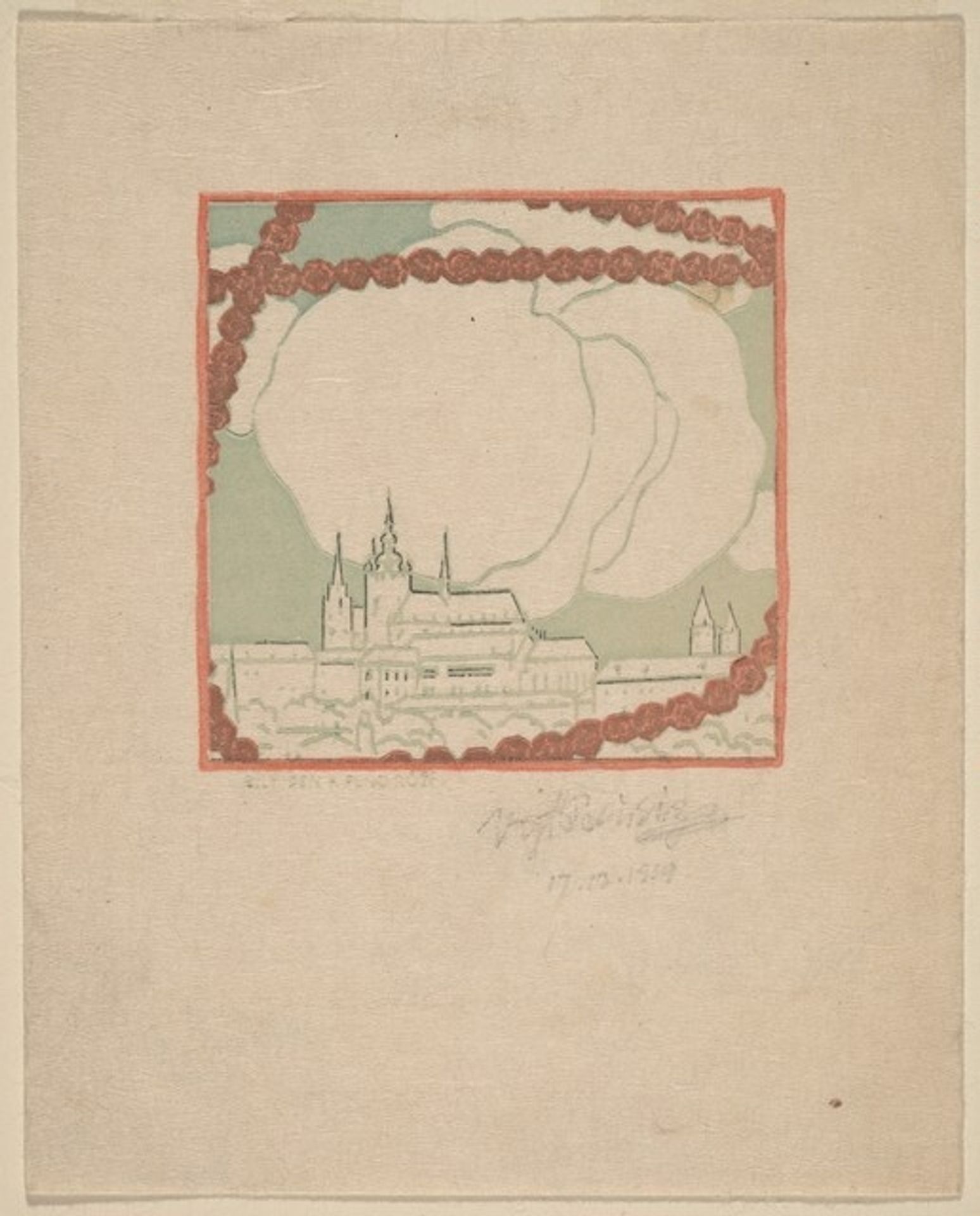
Bíly den a plno ruzí (A Clear Day and Plenty of Roses)


Listen to curator's interpretation
Curatorial notes
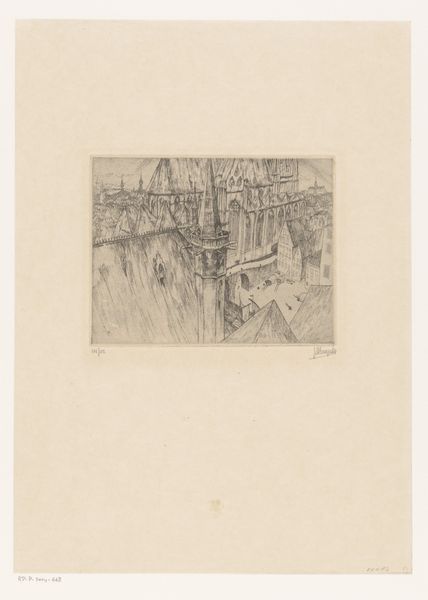
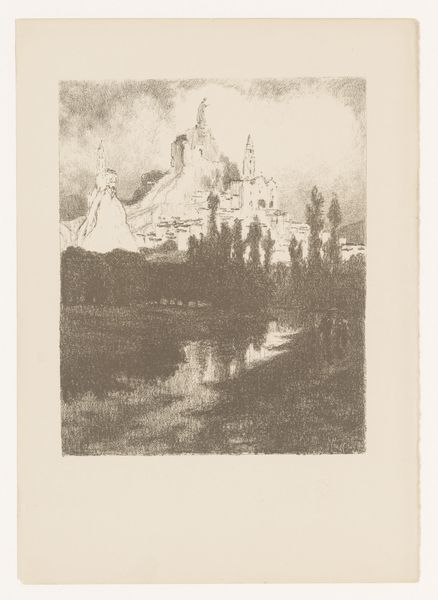
Editor: So this is Vojtech Preissig’s “A Clear Day and Plenty of Roses,” created in 1919 using etching and other graphic art techniques. It feels like a postcard, almost dreamlike. I'm curious – what symbols or hidden meanings do you find embedded within this cityscape? Curator: The roses themselves are a striking motif. In many cultures, roses are symbols of love, beauty, and sometimes even secrecy. Enclosing the city like that, almost guarding it, what does that imply to you? Editor: Perhaps a cherished memory, or a protected space during a time of turmoil? 1919 was a turbulent year after all. The Art Nouveau style is often associated with idealizing beauty, so the roses could represent a desire for peace and order. Curator: Precisely. Consider the rose’s thorns, too. Are they visible in the print? What might their inclusion signify about that idealized beauty you mentioned? Is it without pain, or perhaps tinged with bittersweet memories? Editor: I don’t see thorns in the design, but the implied presence of them certainly does shift the emotional undertones. It adds complexity, suggesting beauty isn't without its challenges or potential for harm. Curator: Indeed. And what about the clear day itself? The clarity after a storm, perhaps? The etching uses quite gentle hues. Look how those light colors create an emotional atmosphere that plays against that imposing architecture in the background. Editor: It's fascinating how these softer colors contrast with the solid form of the buildings! This gives an airy almost fragile feel to a seemingly solid structure. It also makes you wonder whether that "clear day" is more literal or metaphorical... Curator: Visual symbols carry different emotional weight over time. Editor: Thanks for unveiling the beautiful complexities of the work, the rose-tinted window on art history helps me decode hidden symbolism!