About this artwork
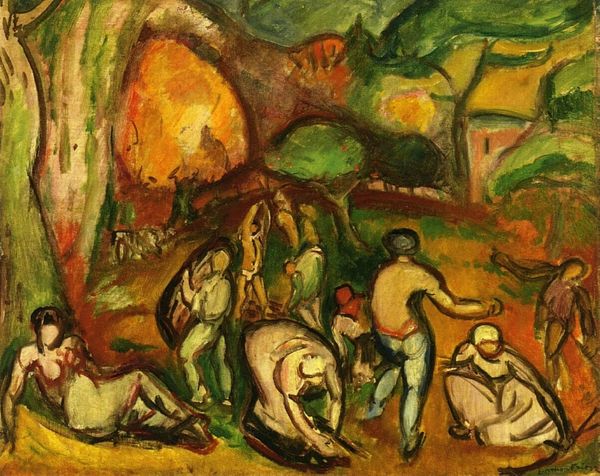
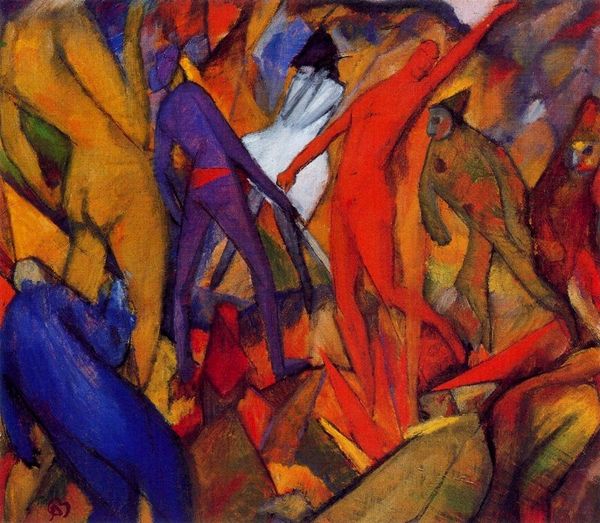
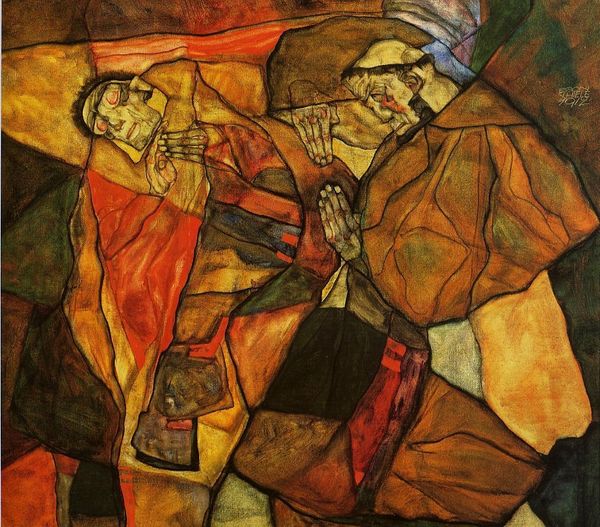
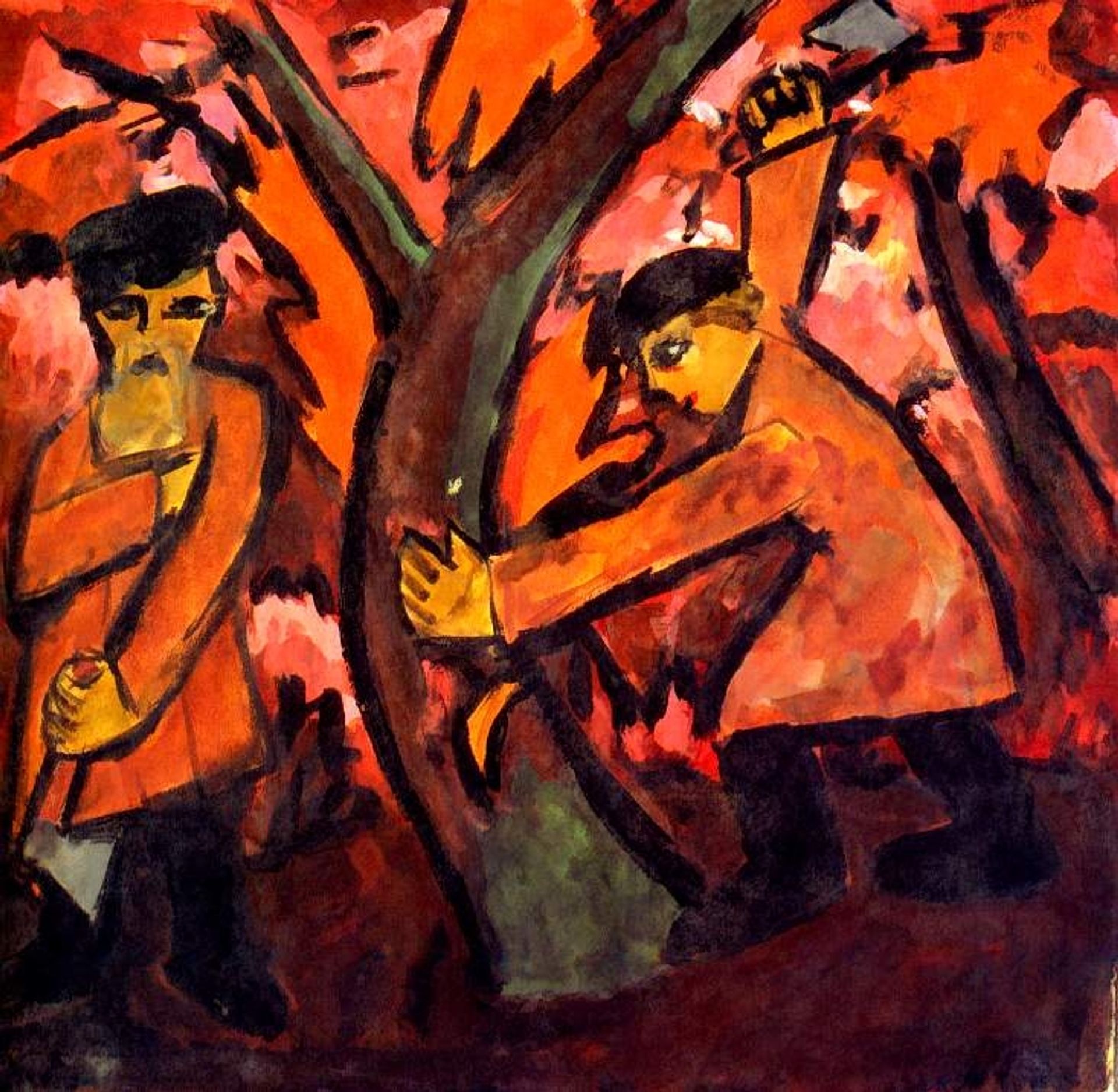
Editor: Goncharova's "Woodcutters," created in 1911, is such a striking painting. The sheer vibrancy of color is almost overwhelming. What do you make of the bold use of color and form here? Curator: Notice how the figures, though seemingly engaged in a simple task, are rendered almost iconic by the intensity of color and line. It echoes ancient woodcuts yet pulses with a distinctly modern anxiety. This contrast reflects the shifting cultural landscape of Russia at the time. Editor: Shifting cultural landscape? How so? Curator: Consider the era. Traditional rural life was rapidly giving way to industrialization. The woodcutters become symbols of a vanishing way of life, elevated to almost mythological status through the Fauvist lens. The fiery palette evokes the fervor of both creation and destruction. Editor: That's fascinating. So, the colors aren't just aesthetic; they represent something deeper? Curator: Precisely. Color is never merely decorative. Here, the predominantly red and orange tones symbolize not only the physical labor of woodcutting, but also a cultural reckoning, a burning away of the old to make way for the new. What feeling does that evoke in you? Editor: A feeling of intense transition, like something is both being created and destroyed at the same time. I hadn’t considered the social commentary aspect before; it adds a whole new layer to the piece. Curator: Indeed. Art allows us to see beyond the surface, decipher the cultural memory embedded within. Perhaps it reflects how all progress comes at a cost. Editor: This makes me consider art's function to present reality with something else, beyond face value. Thanks for opening my eyes.

Artwork details
- Copyright
- Public domain US
Tags
Comments
Share your thoughts
About this artwork
Editor: Goncharova's "Woodcutters," created in 1911, is such a striking painting. The sheer vibrancy of color is almost overwhelming. What do you make of the bold use of color and form here? Curator: Notice how the figures, though seemingly engaged in a simple task, are rendered almost iconic by the intensity of color and line. It echoes ancient woodcuts yet pulses with a distinctly modern anxiety. This contrast reflects the shifting cultural landscape of Russia at the time. Editor: Shifting cultural landscape? How so? Curator: Consider the era. Traditional rural life was rapidly giving way to industrialization. The woodcutters become symbols of a vanishing way of life, elevated to almost mythological status through the Fauvist lens. The fiery palette evokes the fervor of both creation and destruction. Editor: That's fascinating. So, the colors aren't just aesthetic; they represent something deeper? Curator: Precisely. Color is never merely decorative. Here, the predominantly red and orange tones symbolize not only the physical labor of woodcutting, but also a cultural reckoning, a burning away of the old to make way for the new. What feeling does that evoke in you? Editor: A feeling of intense transition, like something is both being created and destroyed at the same time. I hadn’t considered the social commentary aspect before; it adds a whole new layer to the piece. Curator: Indeed. Art allows us to see beyond the surface, decipher the cultural memory embedded within. Perhaps it reflects how all progress comes at a cost. Editor: This makes me consider art's function to present reality with something else, beyond face value. Thanks for opening my eyes.
Comments
Share your thoughts