About this artwork
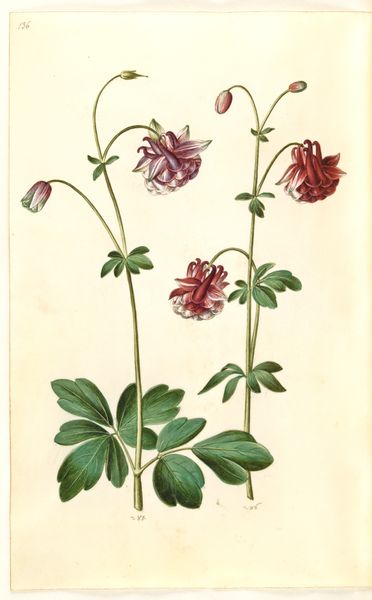
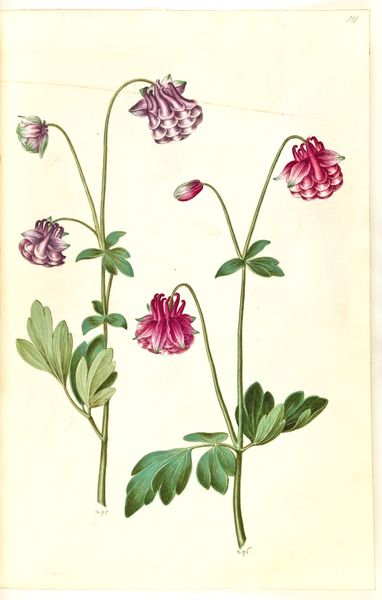
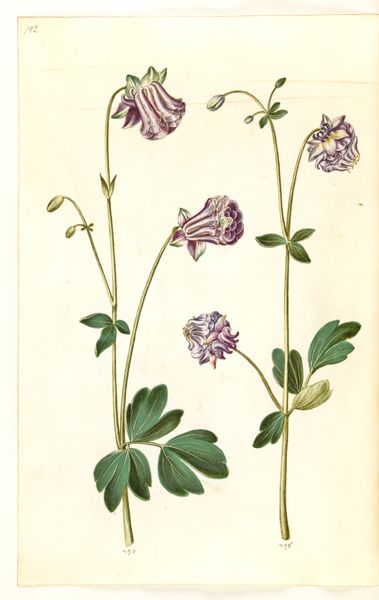
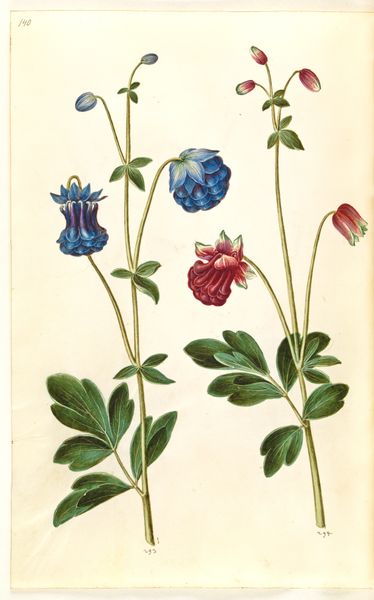
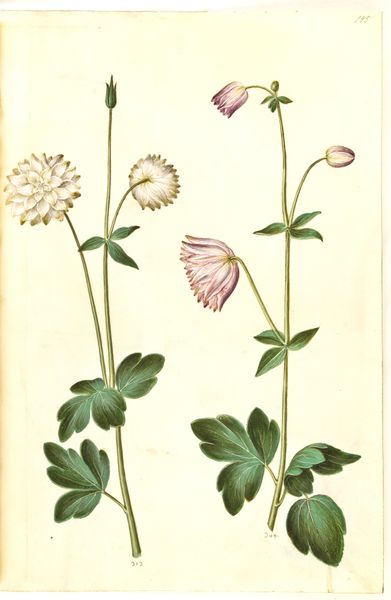
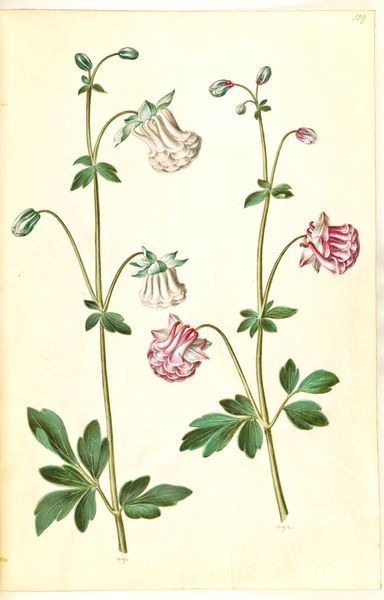
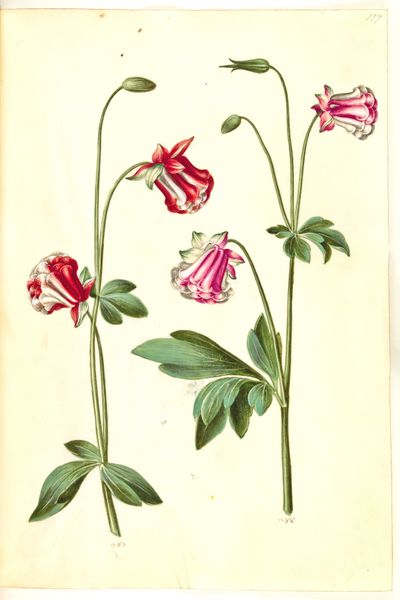
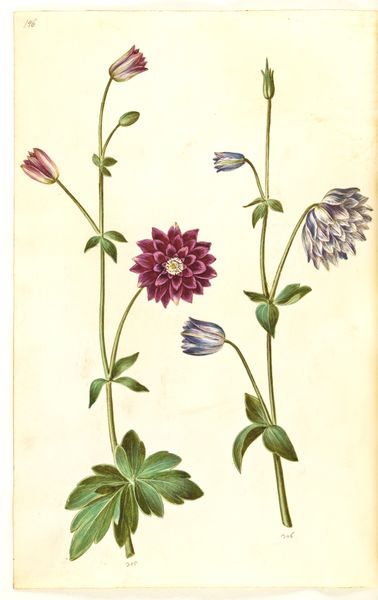
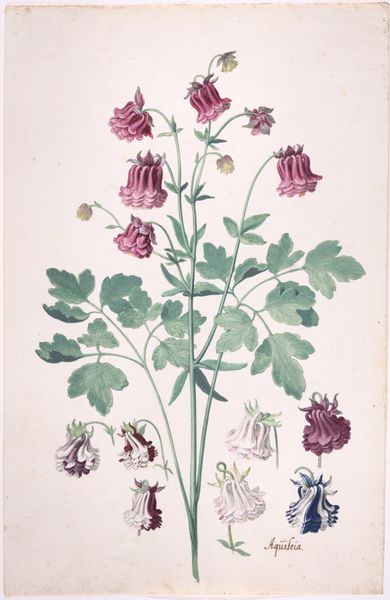
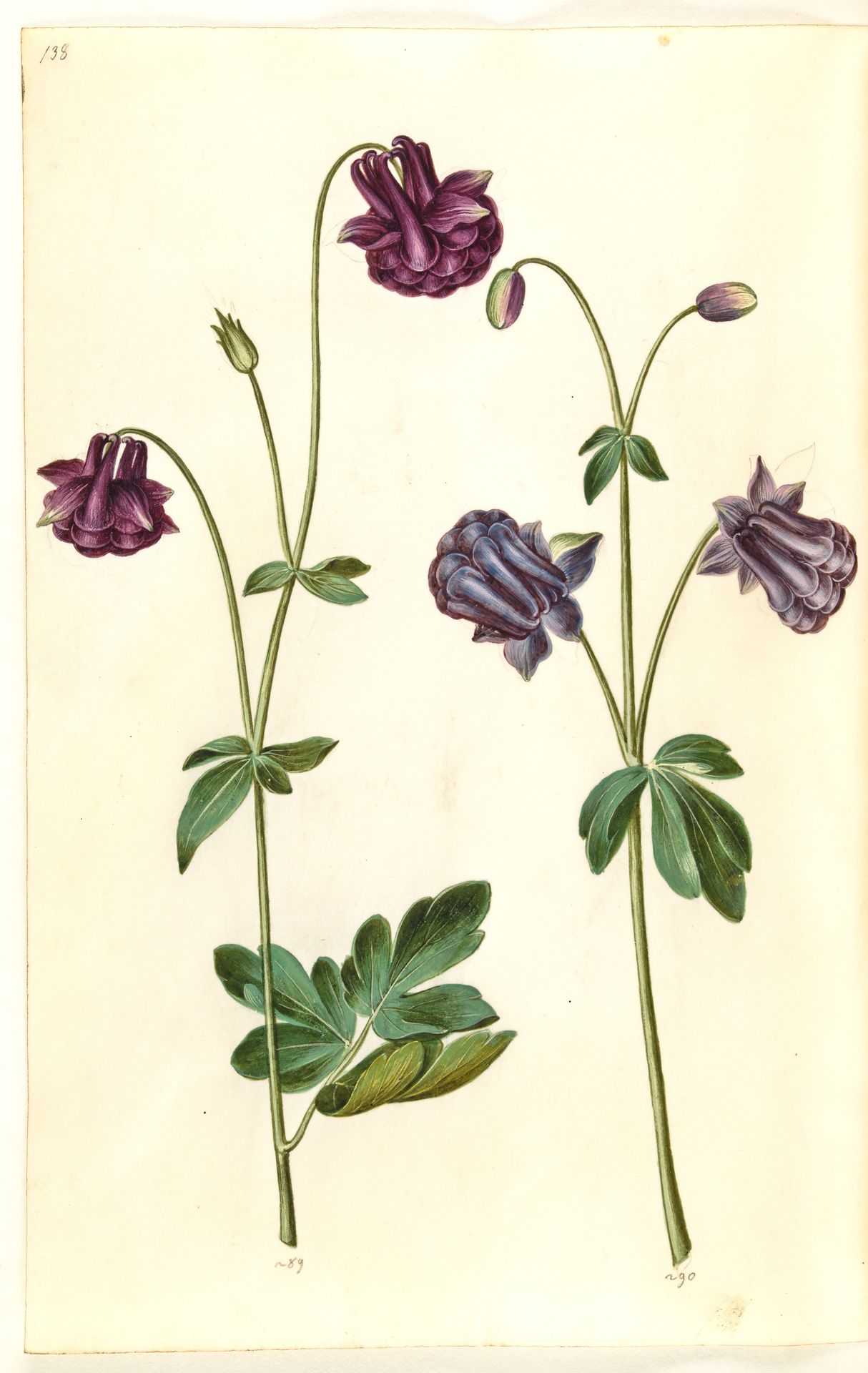
Hans Simon Holtzbecker created this botanical study of Aquilegia vulgaris with watercolor and gouache. The flowers and foliage are meticulously arranged on the page, showcasing a balance between scientific observation and artistic presentation. The composition is structured by the vertical stems of the plants, which lead the eye upwards, each adorned with carefully rendered leaves. Note the contrasting textures achieved through Holtzbecker’s technique. The petals of the Aquilegia are built up with layers of paint to give a tactile sense of depth, while the smooth surfaces of the leaves reflect light, creating a sense of volume. The use of light and shadow helps to define the forms, giving them a sculptural quality. Holtzbecker’s approach reflects the intersection of art and science during his time, seeking to document the natural world through precise and aesthetically pleasing images. The delicate rendering of the Aquilegia highlights both its beauty and botanical structure. Consider how such works served as a means of understanding and classifying the natural world, contributing to the broader scientific discourse of the 17th century.
Aquilegia vulgaris (almindelig akeleje)
1635 - 1664


Artwork details
- Medium
- drawing, painting, gouache
- Dimensions
- 375 mm (height) x 265 mm (width) x 85 mm (depth) (monteringsmaal), 358 mm (height) x 250 mm (width) (bladmaal)
- Location
- SMK - Statens Museum for Kunst
Tags
Comments
Share your thoughts
About this artwork
Hans Simon Holtzbecker created this botanical study of Aquilegia vulgaris with watercolor and gouache. The flowers and foliage are meticulously arranged on the page, showcasing a balance between scientific observation and artistic presentation. The composition is structured by the vertical stems of the plants, which lead the eye upwards, each adorned with carefully rendered leaves. Note the contrasting textures achieved through Holtzbecker’s technique. The petals of the Aquilegia are built up with layers of paint to give a tactile sense of depth, while the smooth surfaces of the leaves reflect light, creating a sense of volume. The use of light and shadow helps to define the forms, giving them a sculptural quality. Holtzbecker’s approach reflects the intersection of art and science during his time, seeking to document the natural world through precise and aesthetically pleasing images. The delicate rendering of the Aquilegia highlights both its beauty and botanical structure. Consider how such works served as a means of understanding and classifying the natural world, contributing to the broader scientific discourse of the 17th century.
Comments
Share your thoughts