About this artwork
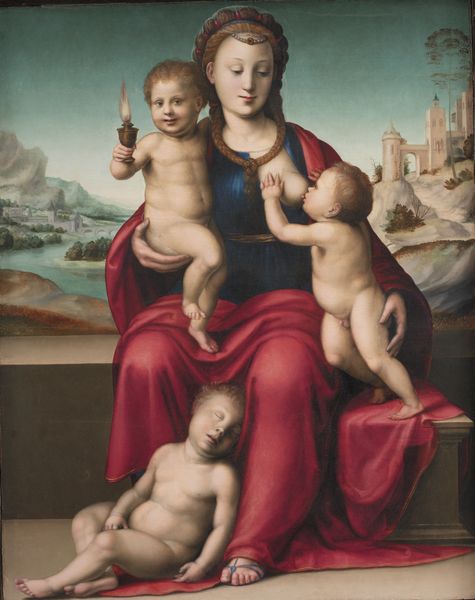
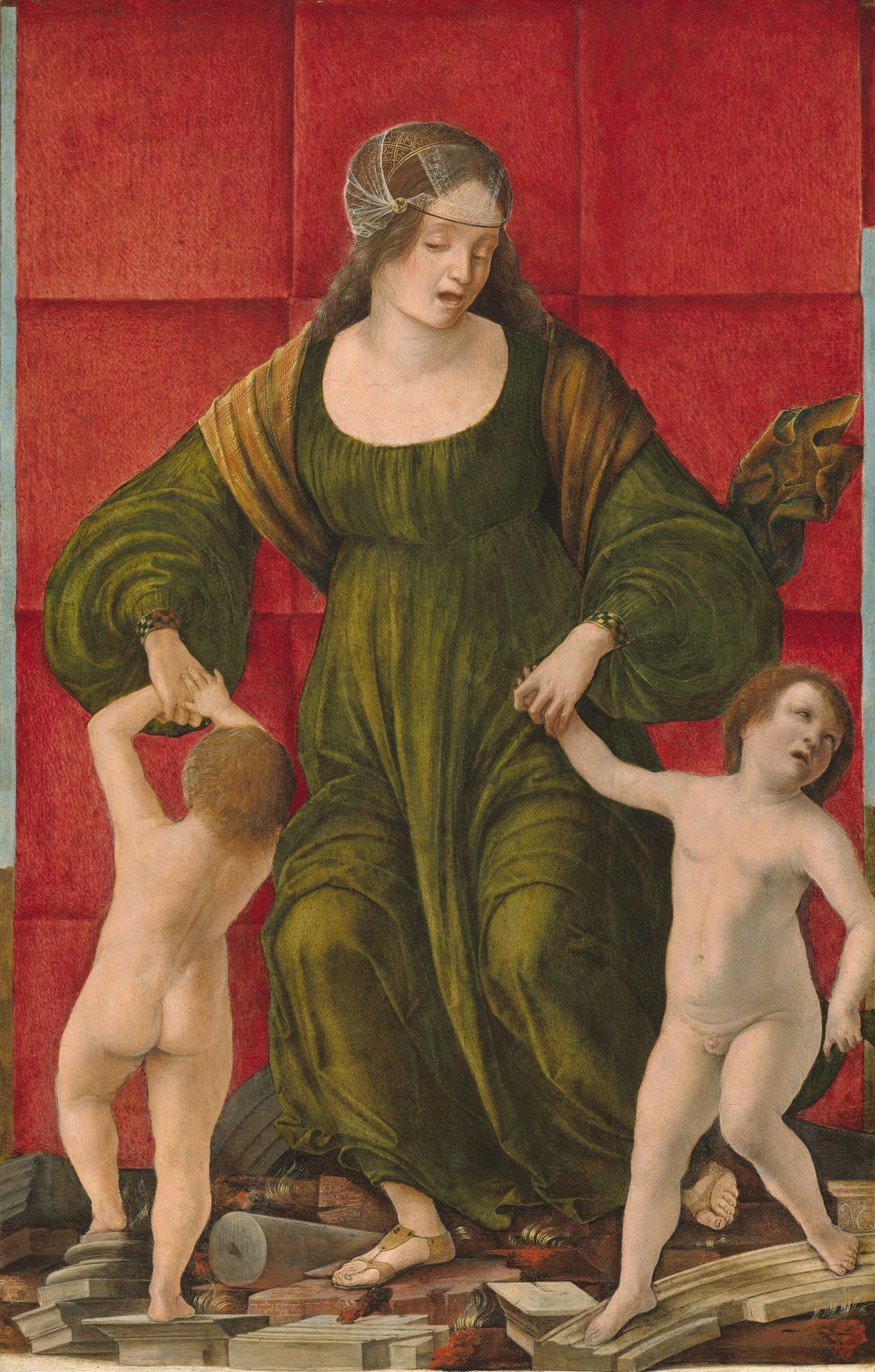
Ercole de' Roberti painted this panel of "The Wife of Hasdrubal and Her Children" in the late 15th century. It depicts a scene from ancient history, yet it speaks volumes about the social expectations of women during the Italian Renaissance. Consider the narrative. Hasdrubal's wife, rather than face Roman conquest, chose to immolate herself and her children. Roberti paints her not in a moment of despair, but as a figure of maternal strength. Her clothing, while not opulent, signals dignity and virtue, qualities highly prized in women of the era. The children, nude and vulnerable, cling to her, representing innocence and dependence. But let's think about this too: what choices did she really have? Roberti asks us to consider the burdens and constraints placed on women. Is she a symbol of strength, or a victim of circumstance? What does it mean to have your identity so entwined with your husband's fate? Notice the crumbled architecture beneath her feet: it's a reminder of the fragility of power and the personal cost of political conflict. The painting invites us to reflect on the complex intersections of gender, power, and sacrifice.
The Wife of Hasdrubal and Her Children
c. 1490 - 1493


Artwork details
- Medium
- painting, oil-paint
- Dimensions
- overall: 47.3 x 30.6 cm (18 5/8 x 12 1/16 in.) framed: 67 x 50.2 x 4.4 cm (26 3/8 x 19 3/4 x 1 3/4 in.)
- Copyright
- National Gallery of Art: CC0 1.0
Tags
Comments
Share your thoughts
About this artwork
Ercole de' Roberti painted this panel of "The Wife of Hasdrubal and Her Children" in the late 15th century. It depicts a scene from ancient history, yet it speaks volumes about the social expectations of women during the Italian Renaissance. Consider the narrative. Hasdrubal's wife, rather than face Roman conquest, chose to immolate herself and her children. Roberti paints her not in a moment of despair, but as a figure of maternal strength. Her clothing, while not opulent, signals dignity and virtue, qualities highly prized in women of the era. The children, nude and vulnerable, cling to her, representing innocence and dependence. But let's think about this too: what choices did she really have? Roberti asks us to consider the burdens and constraints placed on women. Is she a symbol of strength, or a victim of circumstance? What does it mean to have your identity so entwined with your husband's fate? Notice the crumbled architecture beneath her feet: it's a reminder of the fragility of power and the personal cost of political conflict. The painting invites us to reflect on the complex intersections of gender, power, and sacrifice.
Comments
Share your thoughts