About this artwork
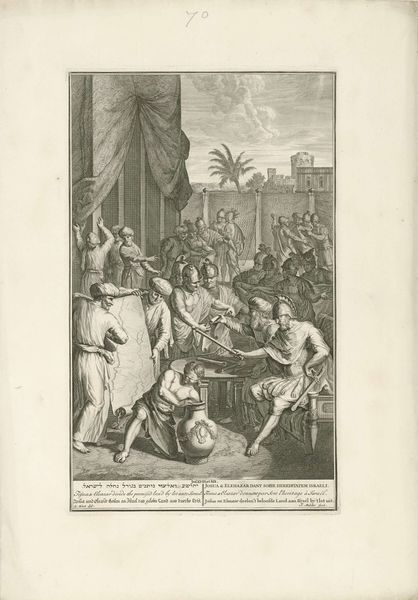
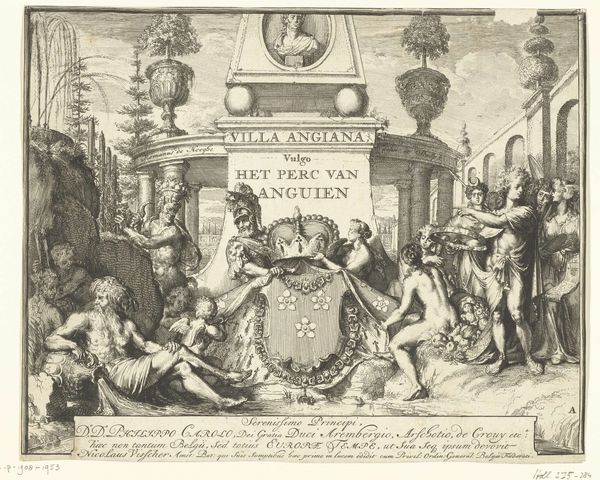
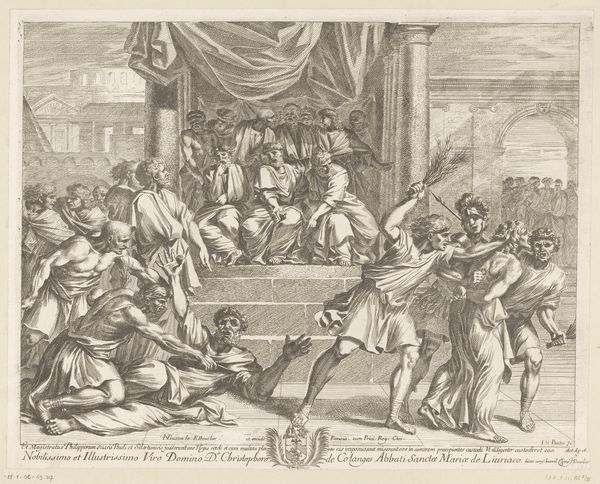
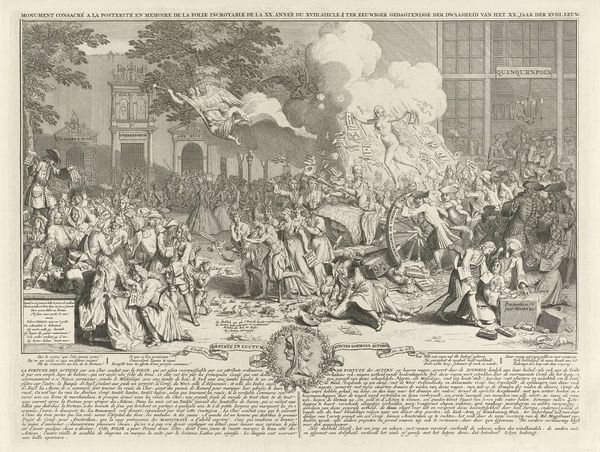
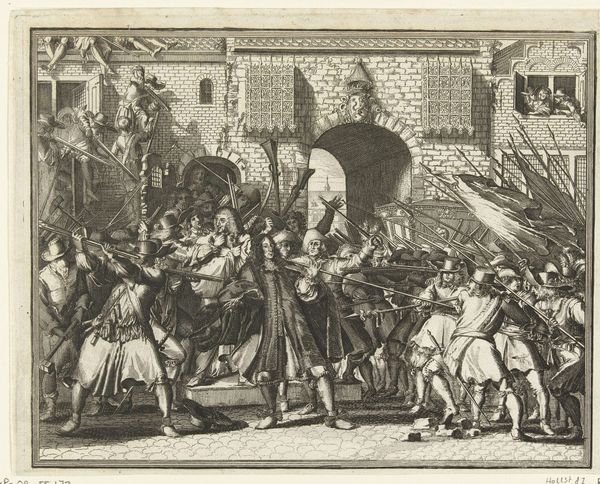
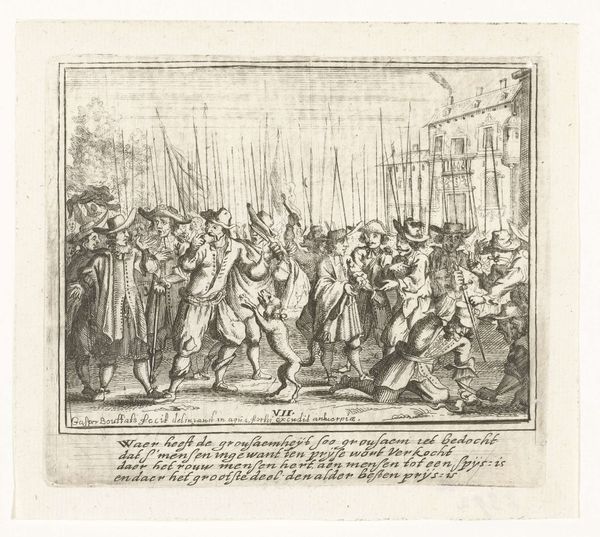
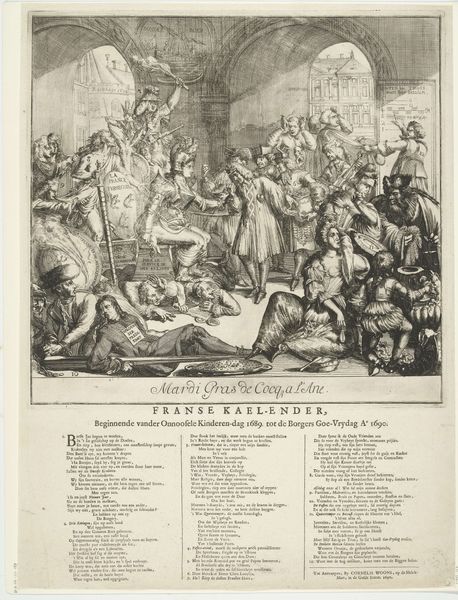
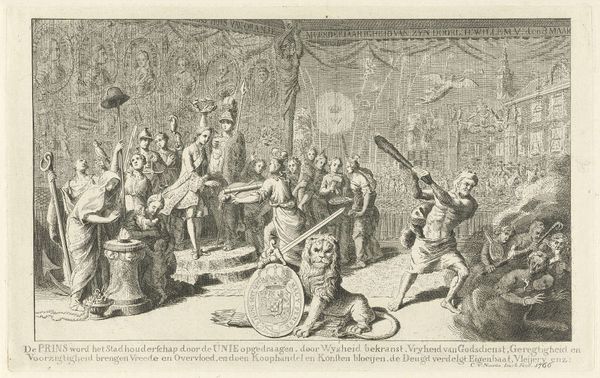
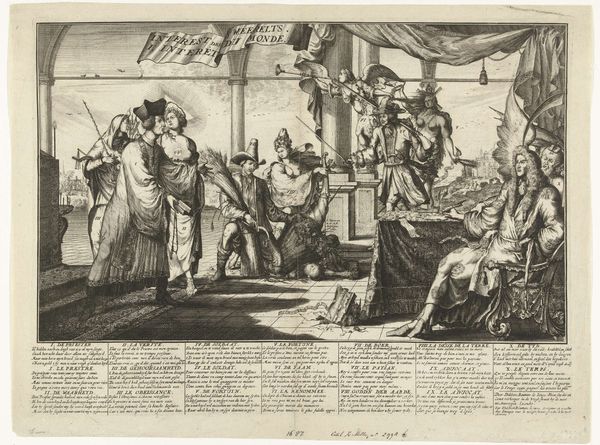
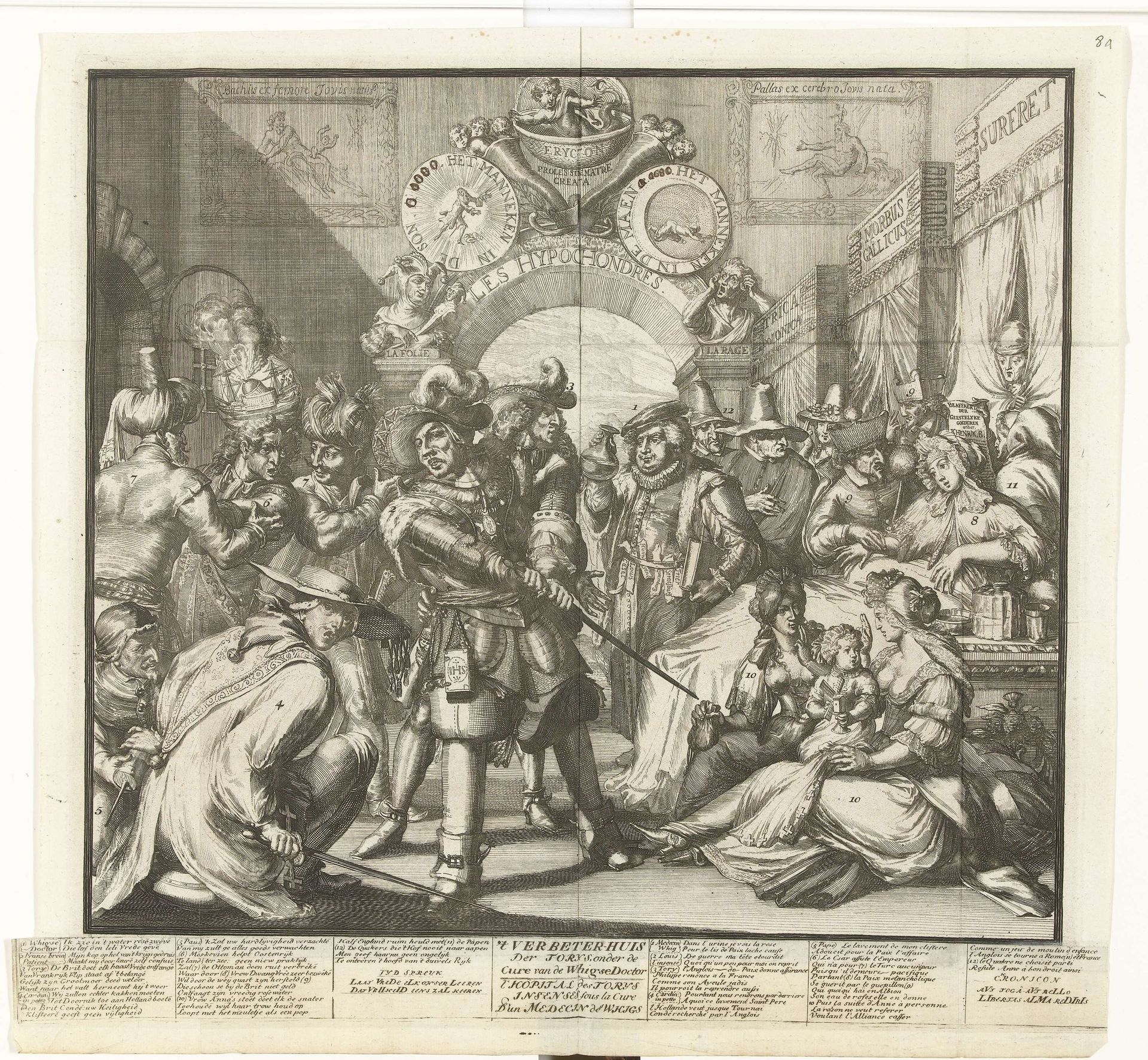
This print, titled "Spotprent op de Vrede van Utrecht," was created in 1713 by Romeyn de Hooghe. It's made using the intaglio process of engraving, where lines are incised into a metal plate, filled with ink, and then transferred to paper under high pressure. The intricate lines and textures you see are all a result of this manual process, showcasing the engraver's skill. But let's consider the social context of printmaking at this time. Engravings like this were essentially mass media. They were a way of disseminating political ideas quickly and widely, reaching a broad audience. Consider the labor involved: the artist's design, the engraver's meticulous work, the printer's expertise, and finally the distribution of the finished product. This was a sophisticated network of production, very much tied to the political and social currents of the day. So, what might seem like a simple image is actually the result of complex social relations. It's a reminder that even in the world of art, materials, making, and context are everything.
Spotprent op de Vrede van Utrecht, 1713 1689 - 1713

Romeyn de Hooghe
1645 - 1708Location
RijksmuseumArtwork details
- Medium
- print, engraving
- Dimensions
- height 400 mm, width 425 mm
- Location
- Rijksmuseum
- Copyright
- Rijks Museum: Open Domain
Tags
narrative-art
baroque
old engraving style
genre-painting
engraving
Comments
No comments
About this artwork
This print, titled "Spotprent op de Vrede van Utrecht," was created in 1713 by Romeyn de Hooghe. It's made using the intaglio process of engraving, where lines are incised into a metal plate, filled with ink, and then transferred to paper under high pressure. The intricate lines and textures you see are all a result of this manual process, showcasing the engraver's skill. But let's consider the social context of printmaking at this time. Engravings like this were essentially mass media. They were a way of disseminating political ideas quickly and widely, reaching a broad audience. Consider the labor involved: the artist's design, the engraver's meticulous work, the printer's expertise, and finally the distribution of the finished product. This was a sophisticated network of production, very much tied to the political and social currents of the day. So, what might seem like a simple image is actually the result of complex social relations. It's a reminder that even in the world of art, materials, making, and context are everything.
Comments
No comments