1612 - 1614
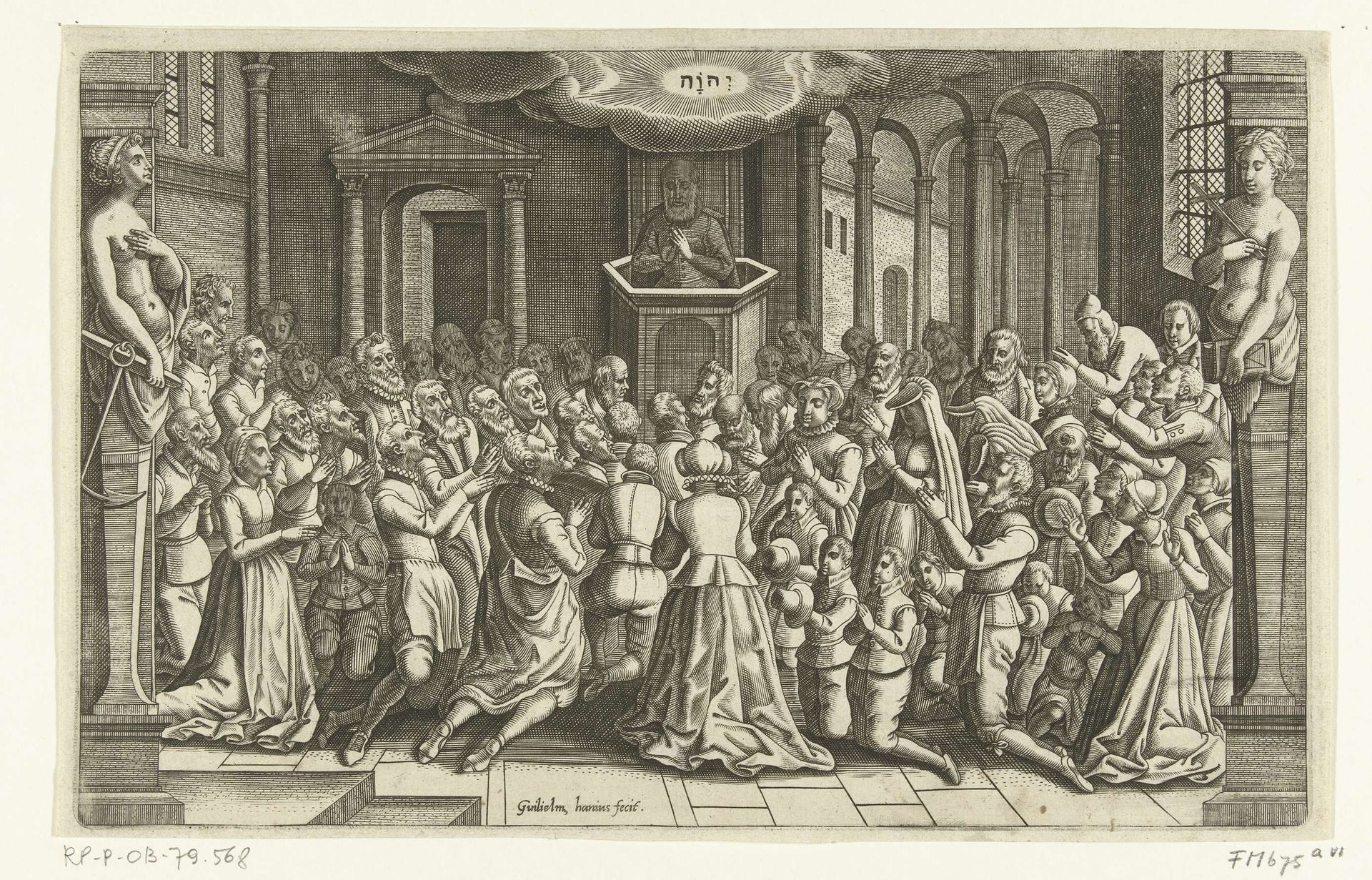
Dank voor het ontzet van Leiden, 1574

Willem de Haen
@willemdehaenLocation
RijksmuseumListen to curator's interpretation
Curatorial notes
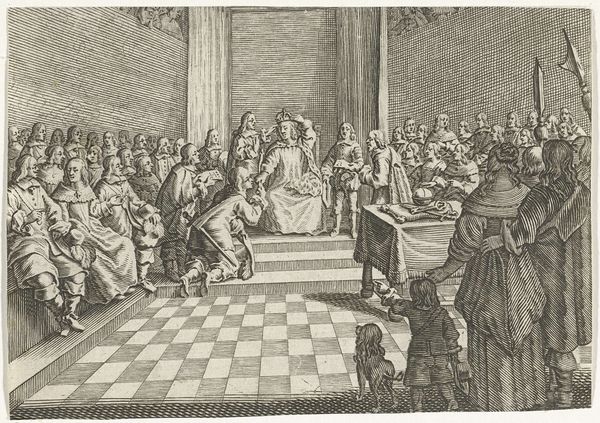
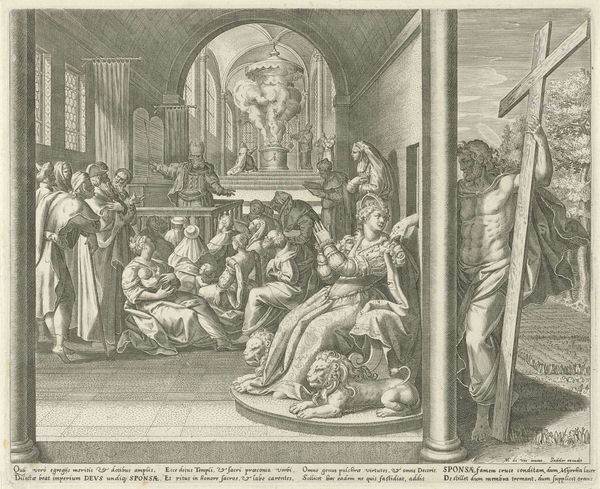
Willem de Haen made this print, Dank voor het ontzet van Leiden, in 1574. It's an engraving, which means the artist would have used a tool called a burin to incise lines into a copper plate. Ink is then pressed into these lines, and the image transferred to paper. The fine lines, so characteristic of engraving, allow for an incredible level of detail. Look closely, and you’ll see the texture of clothing, the expressions on faces, and the architectural elements that frame the scene. The print commemorates the end of the siege of Leiden, and the people depicted are offering thanks in a church. Engraving was a highly skilled craft, demanding precision and control. It was also a reproductive medium, making images widely accessible. In this sense, it can be seen as an early form of mass production. Yet, the quality of the impression still depended on the engraver's expertise, a blend of craft and commerce. So, thinking about process helps us to understand the social and political role this image played at the time.