painting, oil-paint
#
baroque
#
painting
#
oil-paint
#
landscape
#
oil painting
#
history-painting
Copyright: Public domain
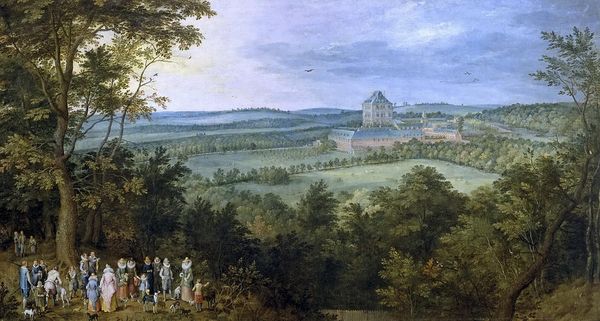
Jan Brueghel the Elder painted this vision of the Caste of Mariemont, capturing an idealized landscape in paint. Observe how the orderly garden ascends to the palatial structure, a symbol of man’s dominion over nature, reminiscent of the Hanging Gardens of Babylon. This motif of control and order echoes through art history, resurfacing in the Renaissance villas and Baroque palace gardens, each reflecting a desire to tame the wildness of nature into structured harmony. But look closer! Is this harmony truly stable, or does it hint at a deeper unease? Consider the garden, a space intended for peace and pleasure, yet rigidly organized. This rigidity might suggest an underlying anxiety, a need to control the unpredictable forces of nature, and perhaps, of human nature itself. This dichotomy—between the yearning for serenity and the impulse to control—reveals the enduring psychological tension embedded in our relationship with the natural world. Thus, the garden becomes a mirror reflecting our complex, often contradictory desires and fears, a recurring motif in the ongoing dialogue between humanity and nature.
Comments
No comments
Be the first to comment and join the conversation on the ultimate creative platform.
 Collect
 React
React Comment
More like this