1756
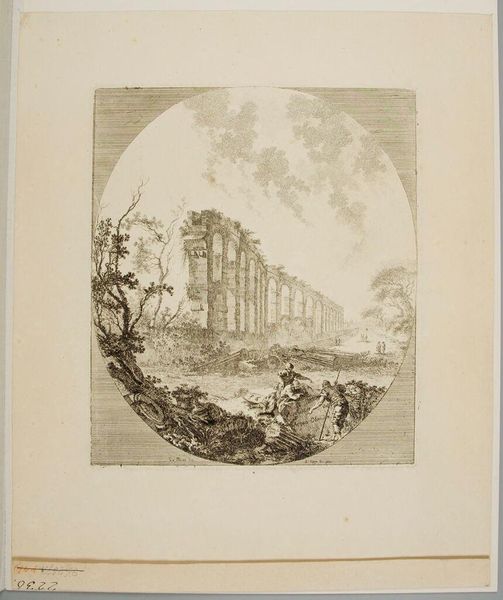
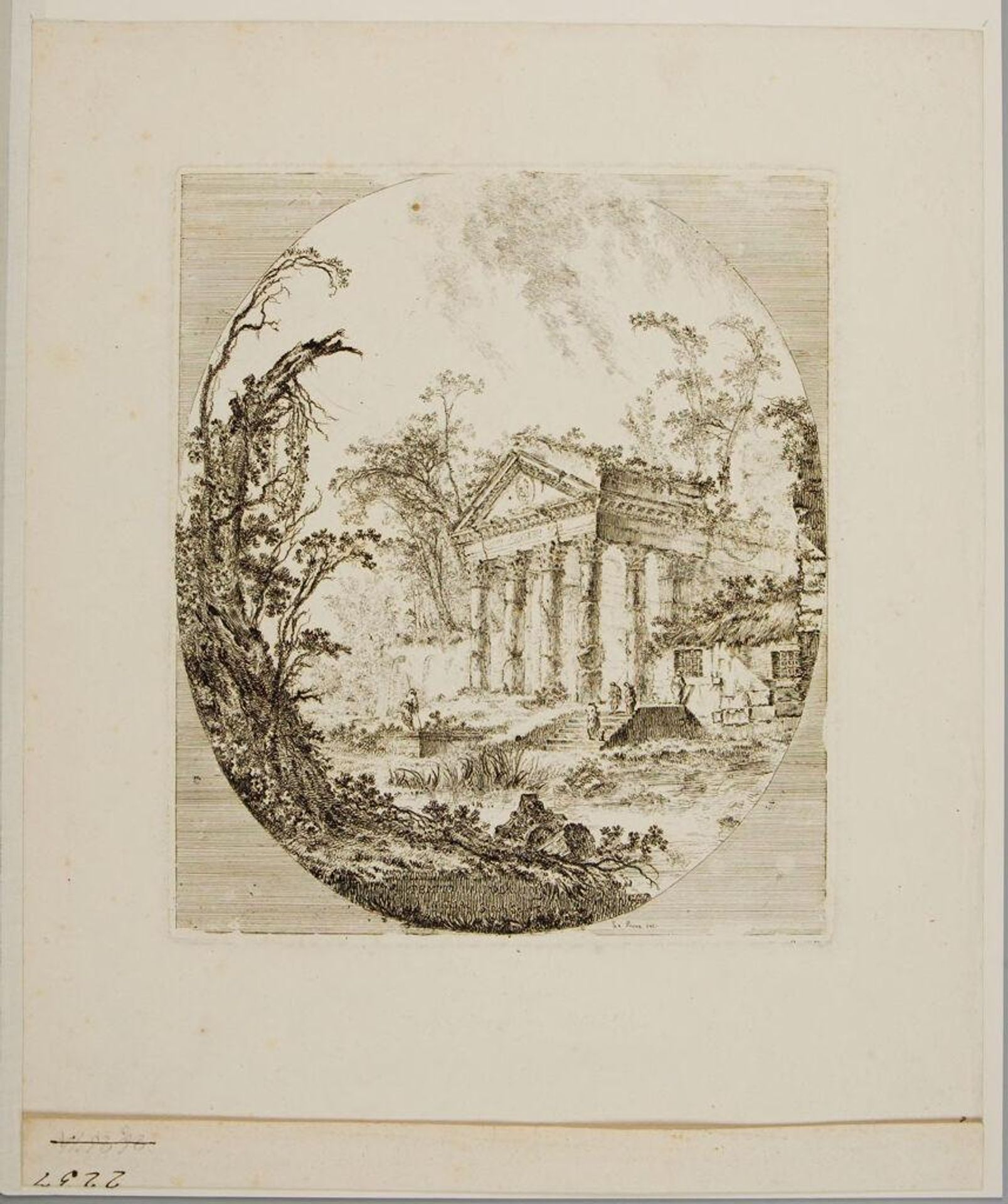
Temple at Pola in Istria
Jean-Claude Richard, Abbé de Saint-Non
@jeanclauderichardabbadesaintnon
Harvard Art Museums
Harvard Art MuseumsListen to curator's interpretation
Curatorial notes
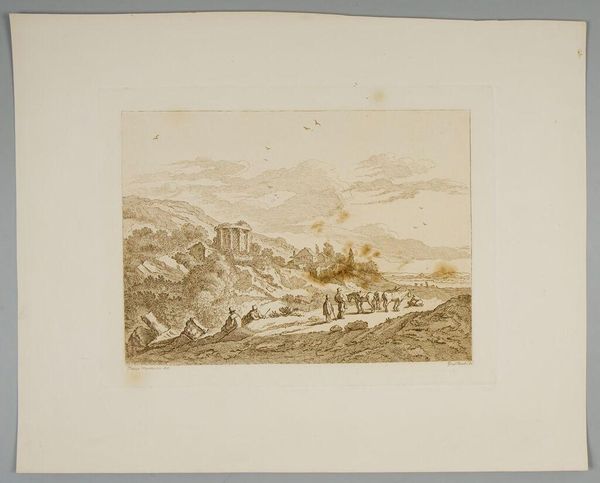
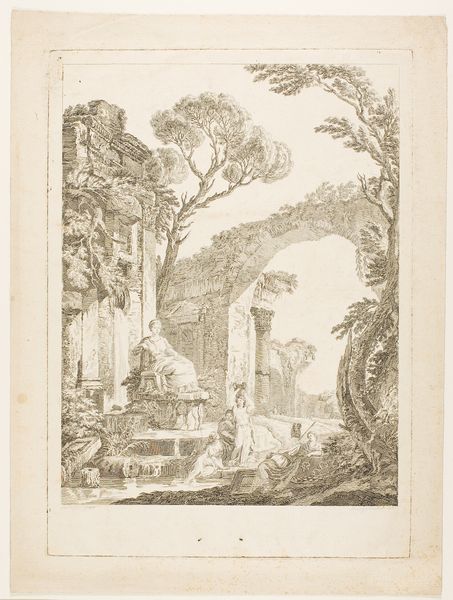
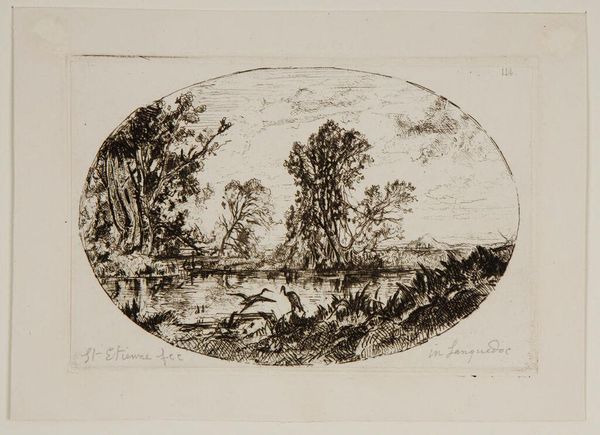
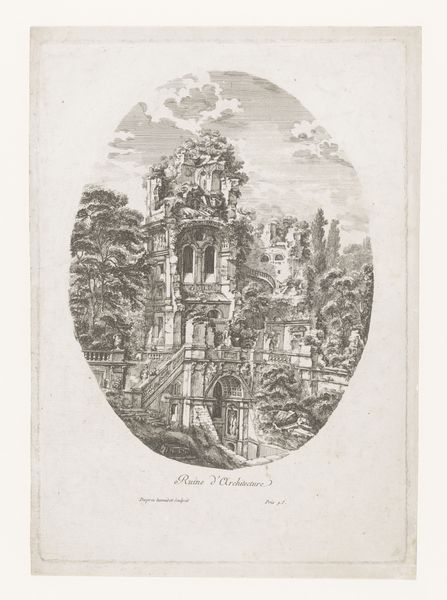
Curator: This is Jean-Claude Richard, Abbé de Saint-Non’s "Temple at Pola in Istria," housed here at the Harvard Art Museums. Editor: It has a melancholic feel. The stark lines and the oval frame make the temple seem isolated, a ruin in its own little world. Curator: The temple's integration within the landscape is interesting, isn't it? It speaks to the 18th-century fascination with classical ruins and their place within the contemporary world. Editor: Absolutely. Note how the vegetation almost overwhelms the structure. It is as if time and nature conspire to reclaim these symbols of power, whispering of mortality and decay. Curator: Indeed. Also, the composition invites questions about power structures, the passage of time, and how societies engage with legacies. Editor: The visual symbols of nature reclaiming this temple carry an emotional weight, a bittersweet meditation on human ambition and inevitable decline. Curator: Considering its historical context, this piece reflects the changing attitudes towards antiquity during the Enlightenment. Editor: A single image evokes the layers of historical narrative, revealing the psychological weight of human history. Curator: Well said. It's striking how a seemingly simple image can provoke such complex contemplation. Editor: Precisely, isn’t it wonderful how visual language transcends time?