1722 - 1733
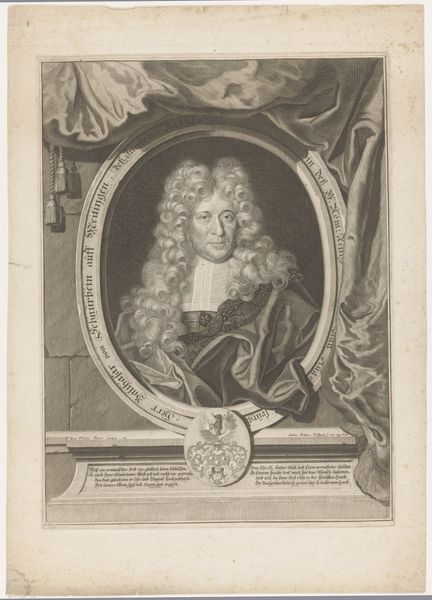
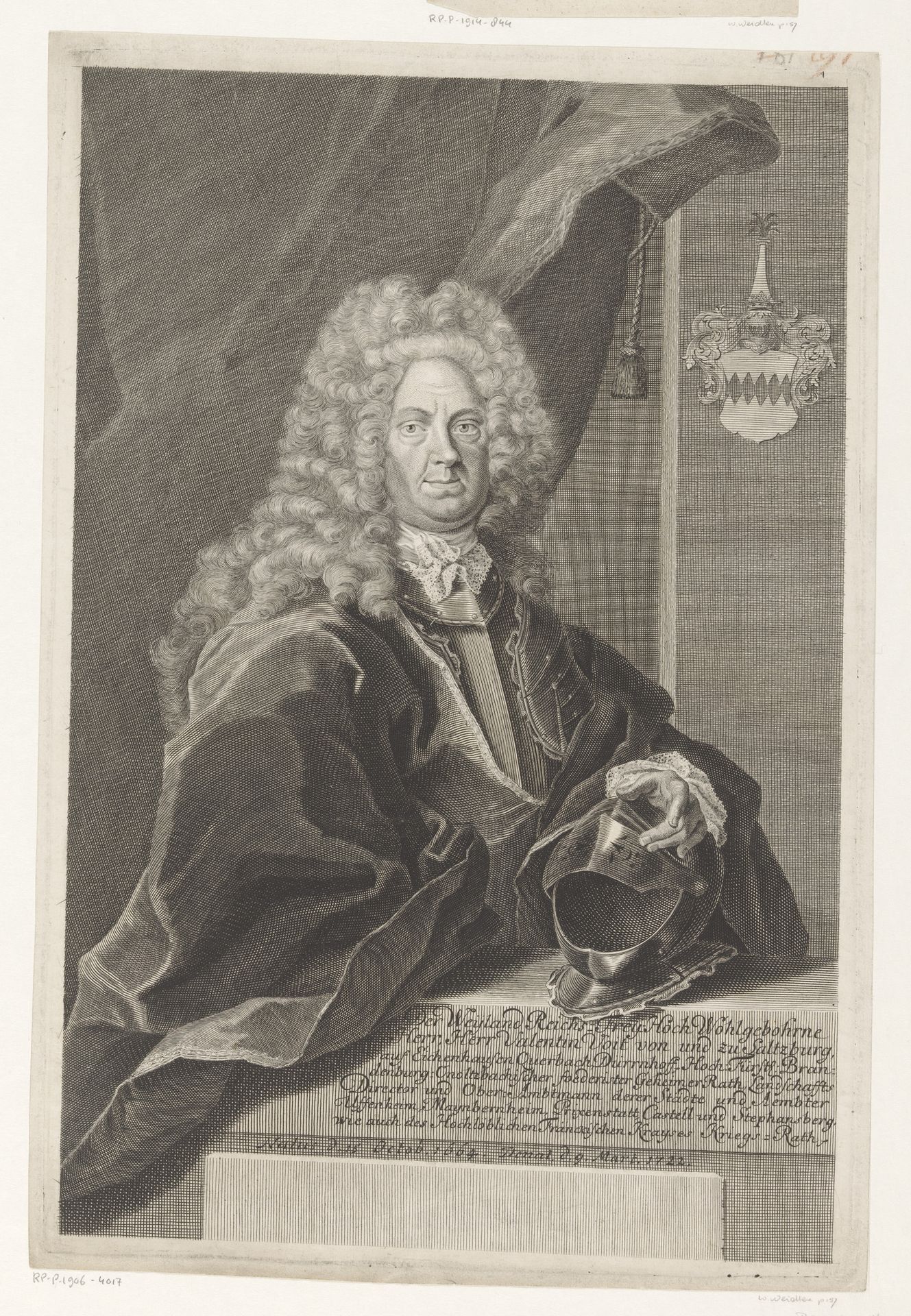
Portret van Valentin Voit von Salzburg

Martin Bernigeroth
1670 - 1733Location
RijksmuseumListen to curator's interpretation
Curatorial notes
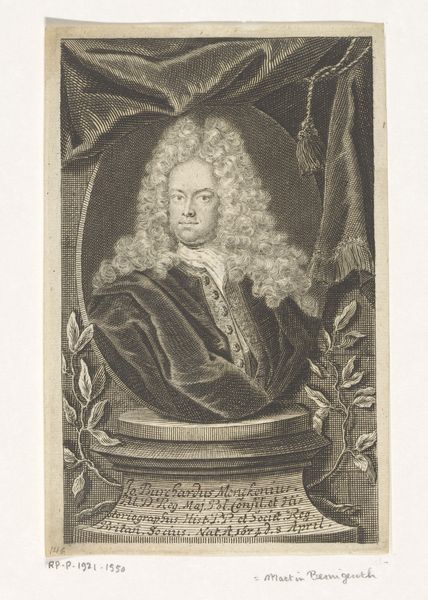
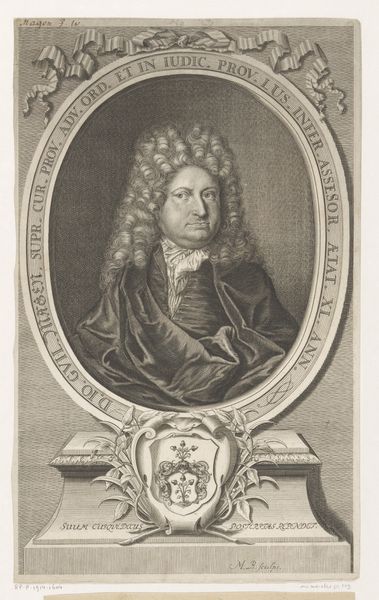
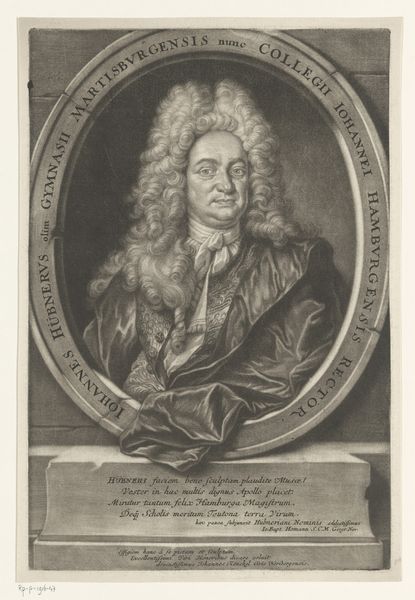
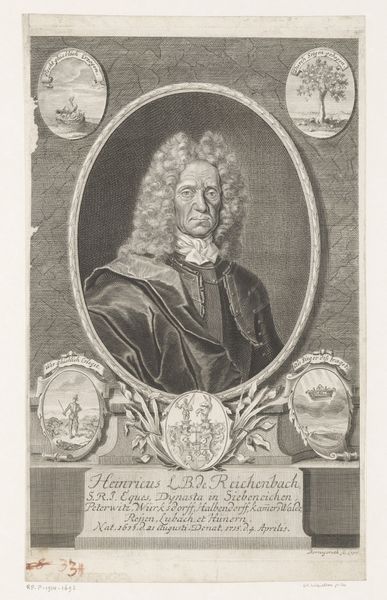
Curator: I see authority, even arrogance, in the tight-lipped expression. Editor: Indeed. This is "Portret van Valentin Voit von Salzburg," an engraving by Martin Bernigeroth, dating from 1722-1733, held at the Rijksmuseum. Bernigeroth really captures the conventions of Baroque portraiture here, wouldn't you agree? Curator: Absolutely, the symbolic language is rich. Note the wig – a waterfall of status, literally framing the face. The helmet, though...that tells a story too. Editor: It's intriguing, isn't it? Placed almost casually on the ledge. It's likely meant to allude to Valentin Voit’s military or administrative roles – perhaps as a councillor for military affairs, judging by the inscription at the bottom. Curator: The juxtaposition is key. The helmet signifies power, defense, perhaps past battles. But his grip is so relaxed; almost nonchalant, the power feels secure, hereditary. He almost scoffs at having to hold the trappings of leadership. Editor: Perhaps. Or is it a reminder of mortality? A "memento mori" nestled beside the symbols of his earthly authority? Baroque art often dances with those themes. What of the coat of arms in the top-right? Does it speak to ancestral connections and a personal motto? Curator: Definitely, It's an assertion of lineage, solidifying his place in the socio-political hierarchy. It's less about the man, Valentin, and more about the office, the family name, the *continuity*. Editor: This engraving then, performs a specific social function. Reproducing and disseminating this image bolsters Valentin Voit's public image, broadcasting his importance and anchoring his identity within a web of historical and political connections. Curator: Which is why Bernigeroth probably gave special attention to surface textures, like the folds in the drapery behind him. A study of visual and tangible power! Editor: Absolutely. It speaks to the craftsmanship that helped forge these types of representations of authority during this period. It makes you wonder how Voits would receive art like this today! Curator: One can imagine he would hope that his image continue to signify power as it once did. The symbolism carries memory—desired and, inevitably, lost—across generations.