About this artwork
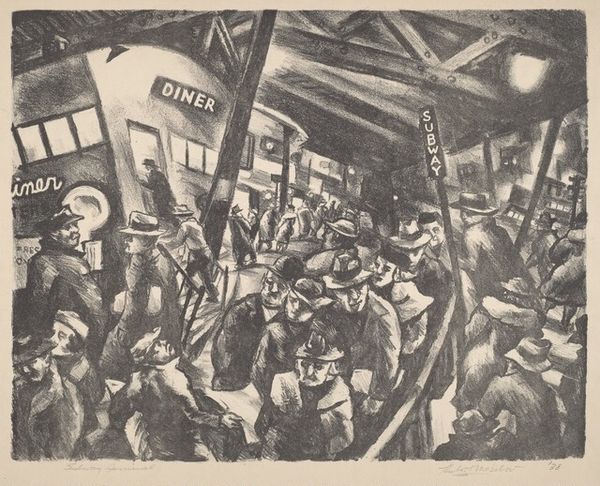
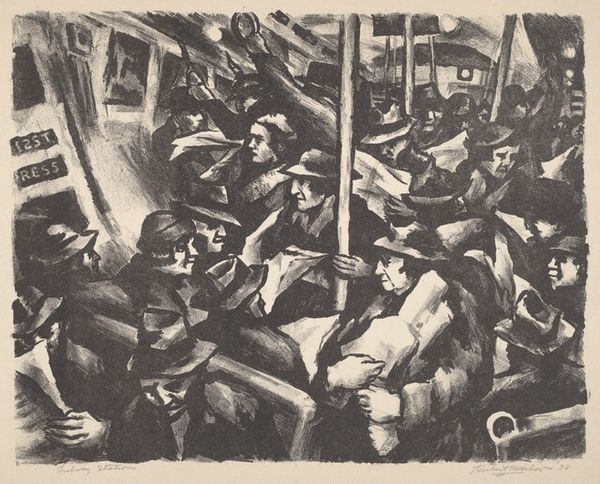
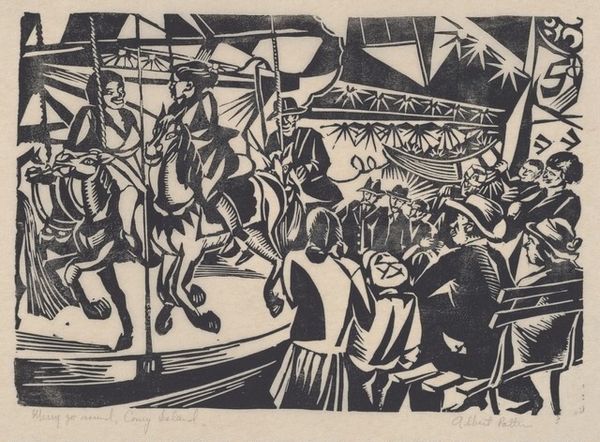
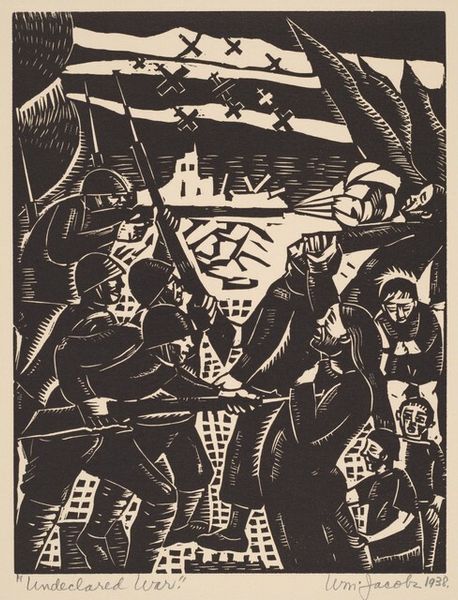
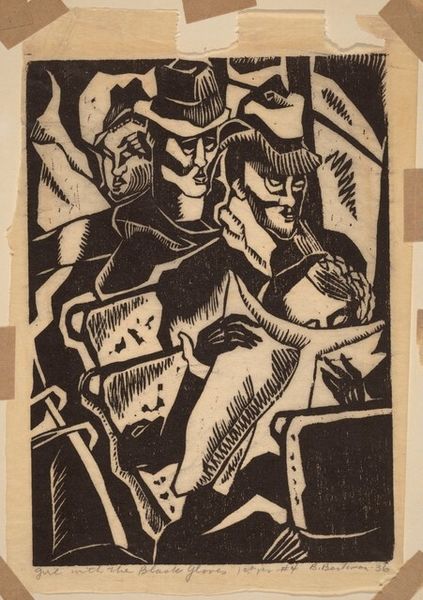
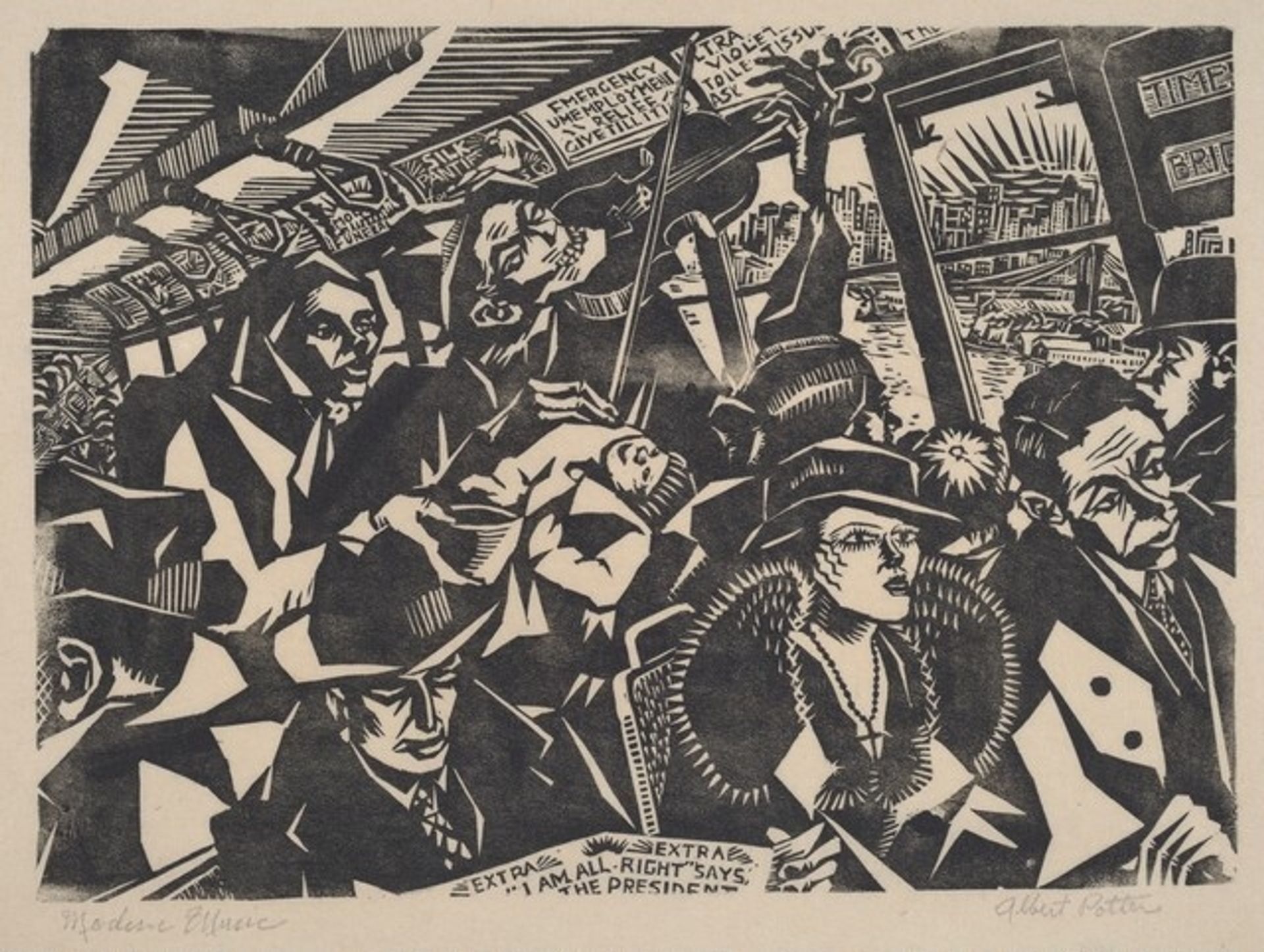
Albert Potter made this woodcut, Modern Music, sometime in the 1930s. It’s all about contrast, black against white, sharp angles and curves, like the sounds of city life clashing together. You can almost feel the artist carving into the wood, each cut a deliberate choice. Looking closely, the way Potter uses line creates texture and depth. Notice the newspapers and advertisements crammed into the space above the people. The sharp linear perspective draws the eye to a distant cityscape and bridge, offering a glimpse of escape from the close confines of the subway car. But escape from what? The whole composition feels crowded, claustrophobic, but also weirdly energized. It reminds me of the German Expressionist printmakers, like Ernst Ludwig Kirchner or Erich Heckel, who were also trying to capture the chaotic energy of modern life. What’s so cool about art is how these ideas keep bouncing around, sparking new conversations across time. In the end, it's up to you to bring your own experience.


Artwork details
- Copyright
- National Gallery of Art: CC0 1.0
Comments
Share your thoughts
About this artwork
Albert Potter made this woodcut, Modern Music, sometime in the 1930s. It’s all about contrast, black against white, sharp angles and curves, like the sounds of city life clashing together. You can almost feel the artist carving into the wood, each cut a deliberate choice. Looking closely, the way Potter uses line creates texture and depth. Notice the newspapers and advertisements crammed into the space above the people. The sharp linear perspective draws the eye to a distant cityscape and bridge, offering a glimpse of escape from the close confines of the subway car. But escape from what? The whole composition feels crowded, claustrophobic, but also weirdly energized. It reminds me of the German Expressionist printmakers, like Ernst Ludwig Kirchner or Erich Heckel, who were also trying to capture the chaotic energy of modern life. What’s so cool about art is how these ideas keep bouncing around, sparking new conversations across time. In the end, it's up to you to bring your own experience.
Comments
Share your thoughts