About this artwork
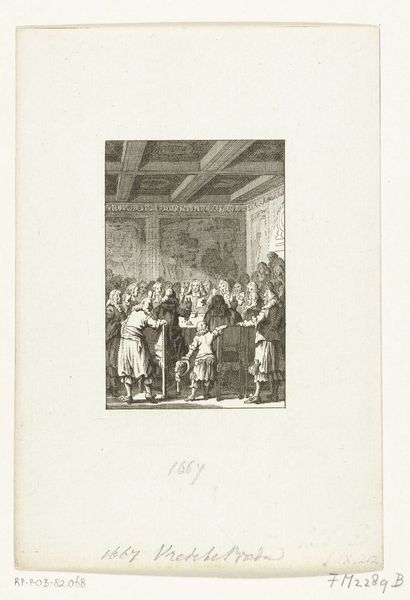
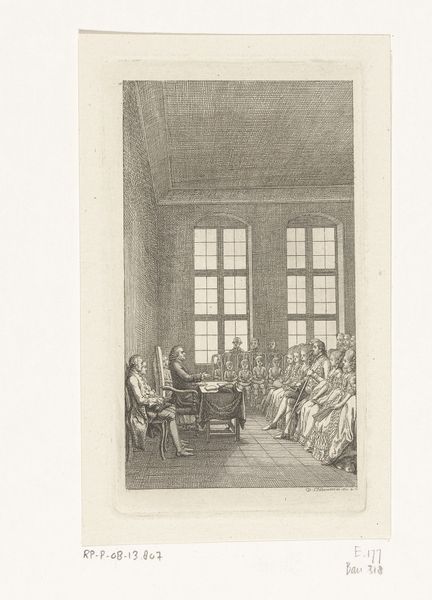
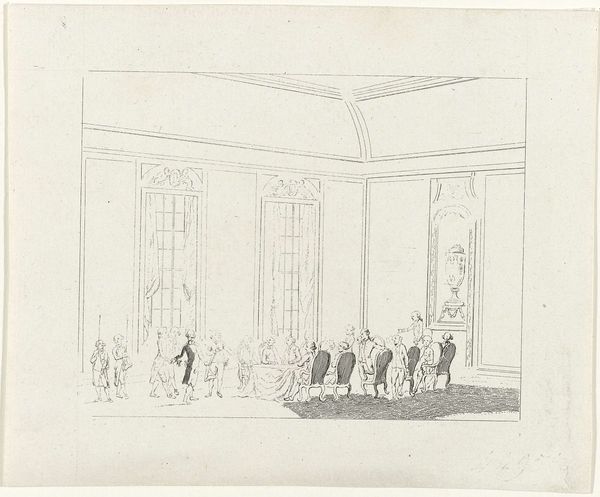
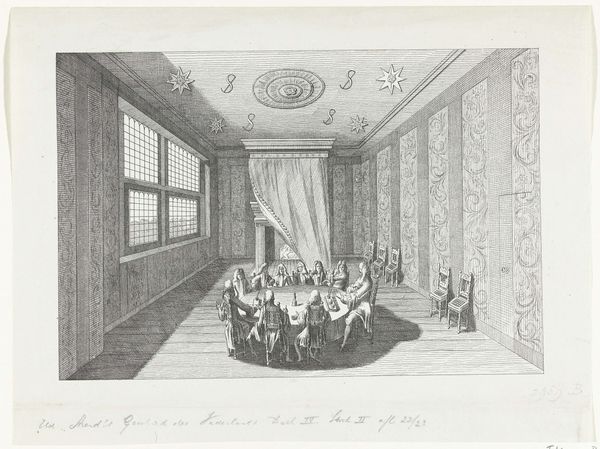
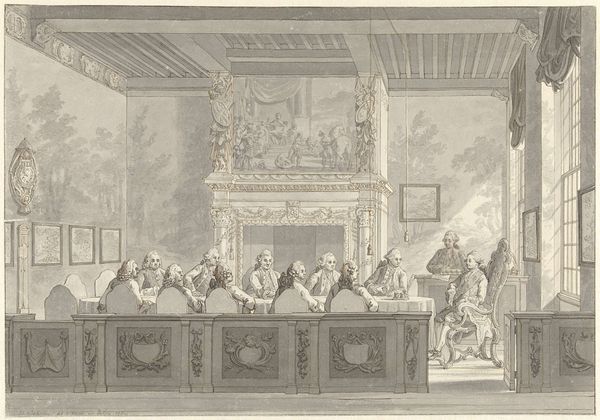
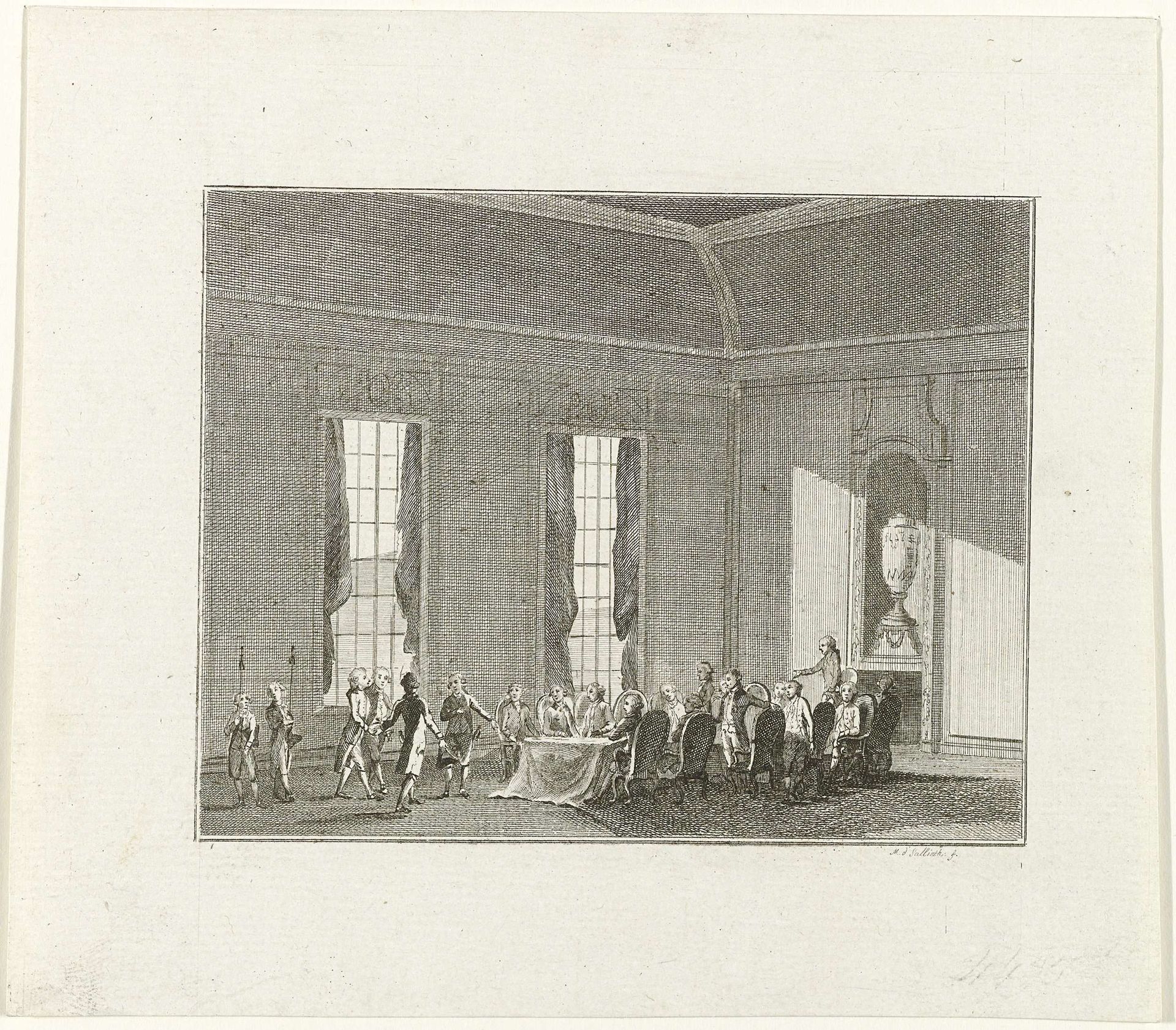
Mathias de Sallieth made this print titled 'Joan Derk van der Capellen Appears at the Meeting of the Knighthood and Cities of Overijssel' in 1782. It captures a pivotal moment in Dutch history, reflecting the rising tensions between republican ideals and the established aristocratic order. Here we see van der Capellen, a staunch advocate for democratic reforms, entering a meeting of the Overijssel assembly. The setting is a formal chamber, symbolizing the power of the ruling elite. Van der Capellen’s arrival disrupts this scene, suggesting the intrusion of popular will into the realm of aristocratic privilege. This image speaks to the broader social and political context of the Dutch Republic in the late 18th century. Influenced by Enlightenment ideals and the American Revolution, patriots like van der Capellen challenged the authority of the Stadtholder and the regenten class. Prints like these played a crucial role in disseminating revolutionary ideas and mobilizing public opinion. By studying archival sources, political pamphlets, and visual culture, we can better understand the complex interplay of social forces that shaped this pivotal moment in Dutch history.
Joan Derk van der Capellen verschijnt in de vergadering van Ridderschap en Steden te Overijssel, 1782
1787

Mathias de Sallieth
1749 - 1791Location
RijksmuseumArtwork details
- Medium
- drawing, print, etching, engraving, architecture
- Dimensions
- height 155 mm, width 178 mm
- Location
- Rijksmuseum
- Copyright
- Rijks Museum: Open Domain
Tags
drawing
etching
etching
geometric
history-painting
engraving
architecture
Comments
Be the first to share your thoughts about this work.
About this artwork
Mathias de Sallieth made this print titled 'Joan Derk van der Capellen Appears at the Meeting of the Knighthood and Cities of Overijssel' in 1782. It captures a pivotal moment in Dutch history, reflecting the rising tensions between republican ideals and the established aristocratic order. Here we see van der Capellen, a staunch advocate for democratic reforms, entering a meeting of the Overijssel assembly. The setting is a formal chamber, symbolizing the power of the ruling elite. Van der Capellen’s arrival disrupts this scene, suggesting the intrusion of popular will into the realm of aristocratic privilege. This image speaks to the broader social and political context of the Dutch Republic in the late 18th century. Influenced by Enlightenment ideals and the American Revolution, patriots like van der Capellen challenged the authority of the Stadtholder and the regenten class. Prints like these played a crucial role in disseminating revolutionary ideas and mobilizing public opinion. By studying archival sources, political pamphlets, and visual culture, we can better understand the complex interplay of social forces that shaped this pivotal moment in Dutch history.
Comments
Be the first to share your thoughts about this work.