About this artwork
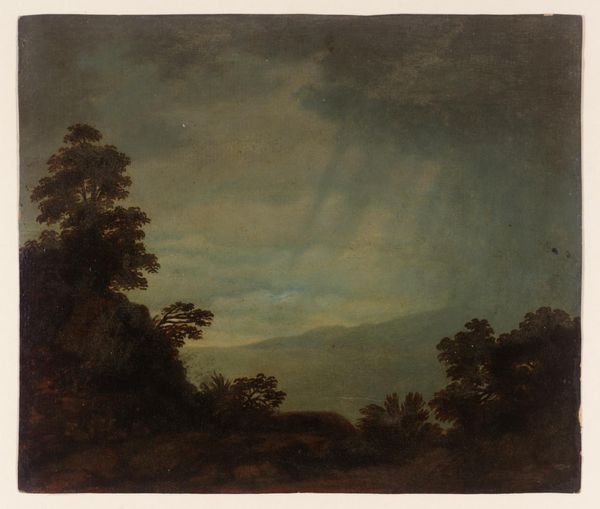
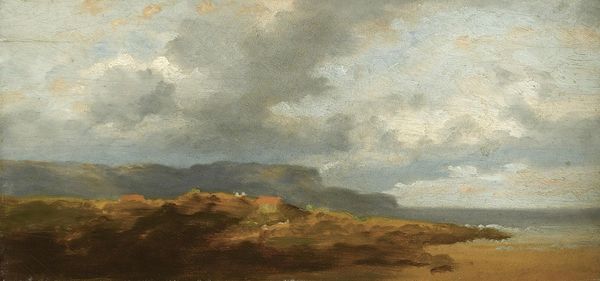
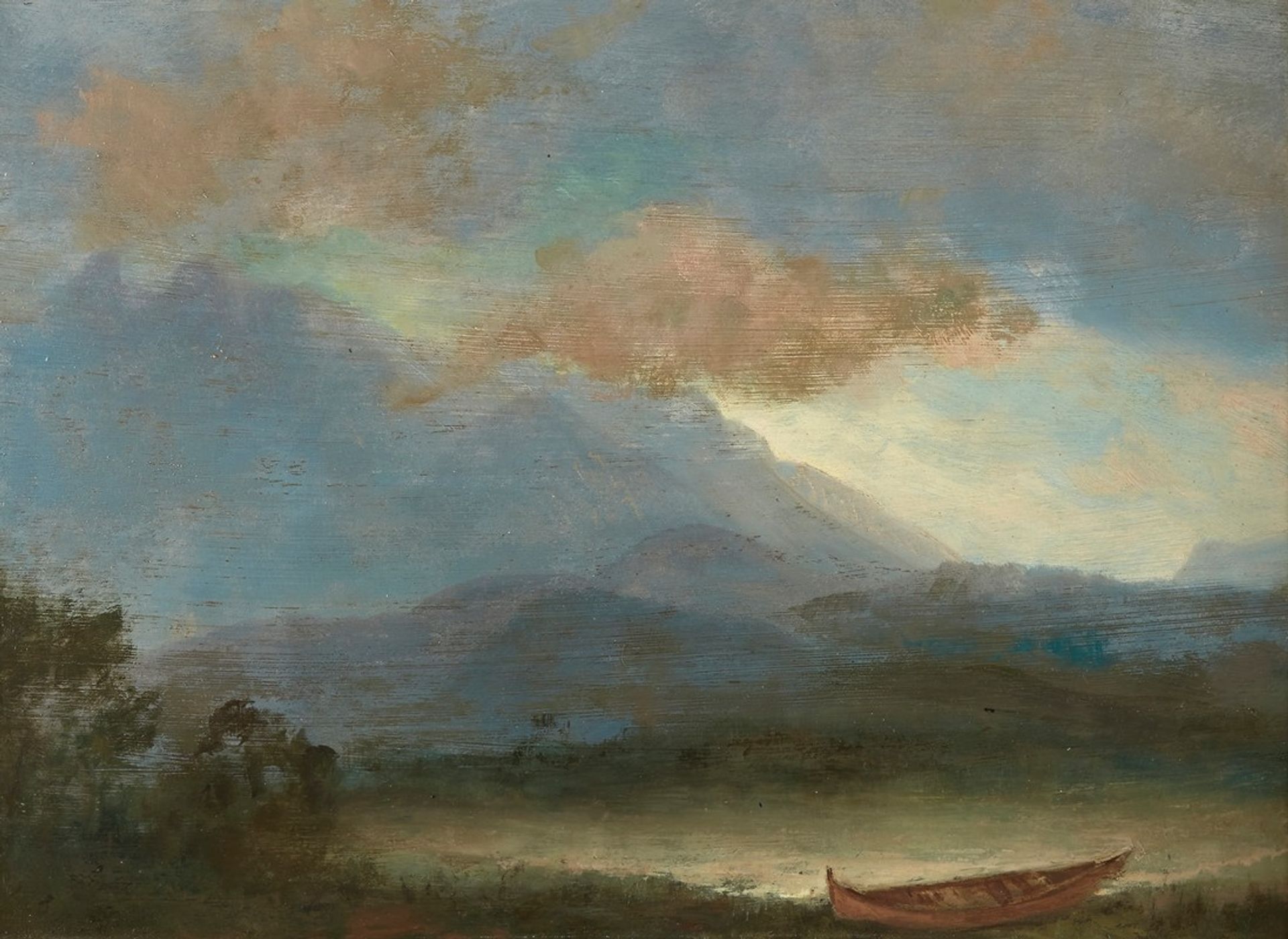
Albert Bierstadt’s oil painting, "Indian Canoe at Lakeside," presents us with a landscape dominated by soft, muted tones and diffused light, creating a contemplative mood. The misty mountains and expansive sky are rendered with broad brushstrokes. The canoe rests on the shore, becoming a focal point within this vastness. The composition’s effect on our perception of space is intriguing. The subdued palette and hazy atmosphere collapse the distance between foreground and background. Bierstadt uses the canoe as a signifier, a bridge between the viewer and the scene, inviting reflection on humanity’s place within the natural world. Note how the artist’s brushstrokes soften the transition between water, land, and sky, obscuring defined boundaries. This ambiguity challenges fixed meanings and celebrates the sublime, reminding us that art is not just about representation but about evoking experiences and opening new avenues of thought.

Artwork details
- Medium
- plein-air, oil-paint
- Copyright
- Public Domain: Artvee
Tags
plein-air
oil-paint
landscape
oil painting
romanticism
Comments
No comments
About this artwork
Albert Bierstadt’s oil painting, "Indian Canoe at Lakeside," presents us with a landscape dominated by soft, muted tones and diffused light, creating a contemplative mood. The misty mountains and expansive sky are rendered with broad brushstrokes. The canoe rests on the shore, becoming a focal point within this vastness. The composition’s effect on our perception of space is intriguing. The subdued palette and hazy atmosphere collapse the distance between foreground and background. Bierstadt uses the canoe as a signifier, a bridge between the viewer and the scene, inviting reflection on humanity’s place within the natural world. Note how the artist’s brushstrokes soften the transition between water, land, and sky, obscuring defined boundaries. This ambiguity challenges fixed meanings and celebrates the sublime, reminding us that art is not just about representation but about evoking experiences and opening new avenues of thought.
Comments
No comments