Possibly 1616 - 1617
Aan de lezer, pagina 2 van 4

Listen to curator's interpretation
Curatorial notes
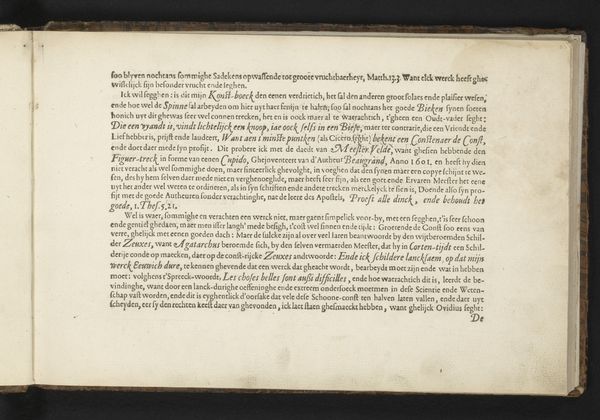
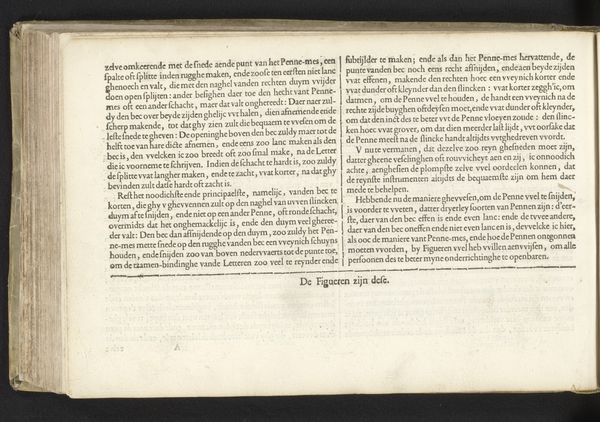
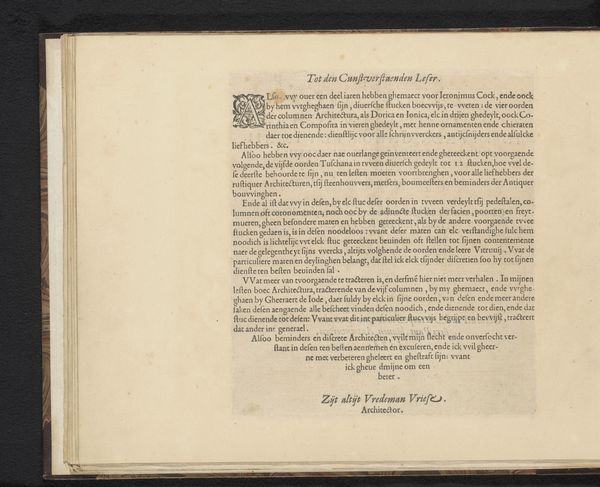
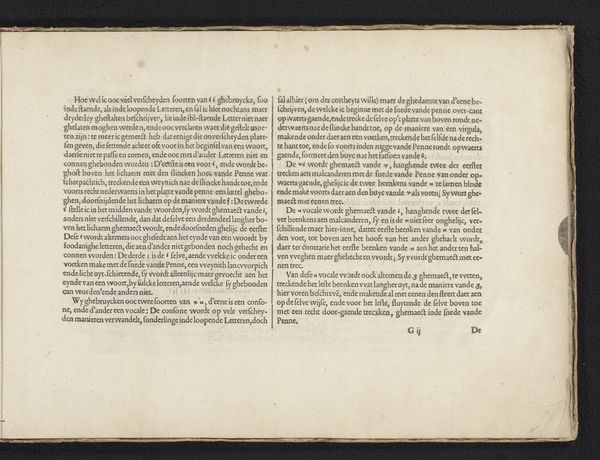
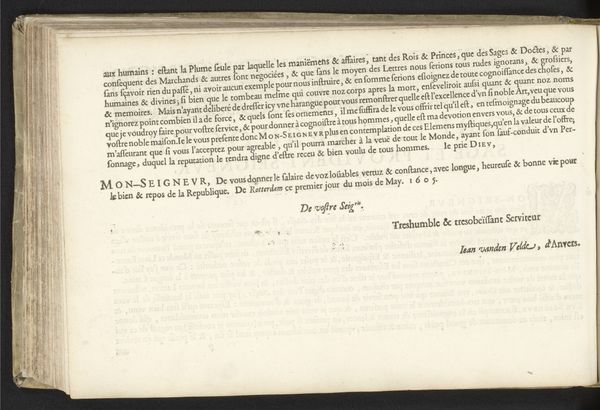
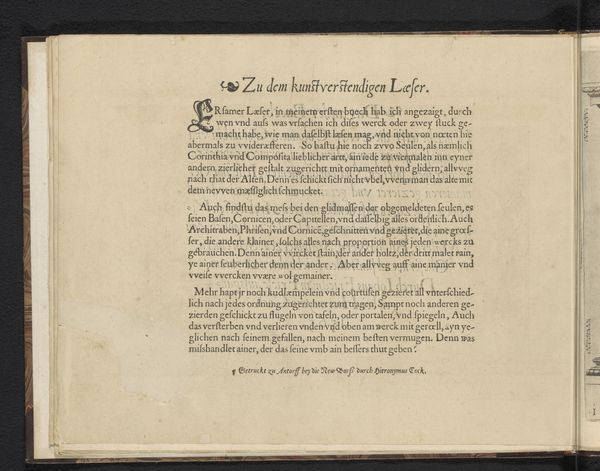
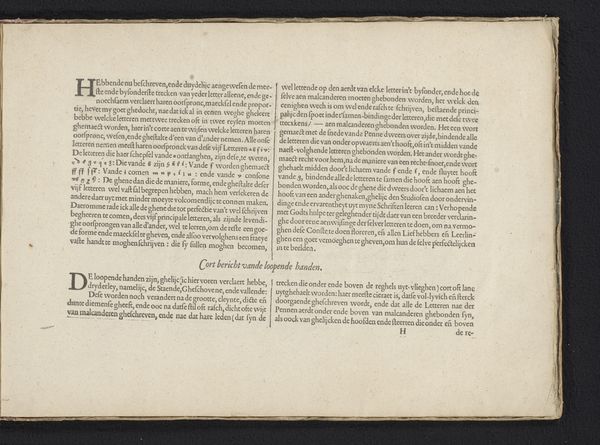
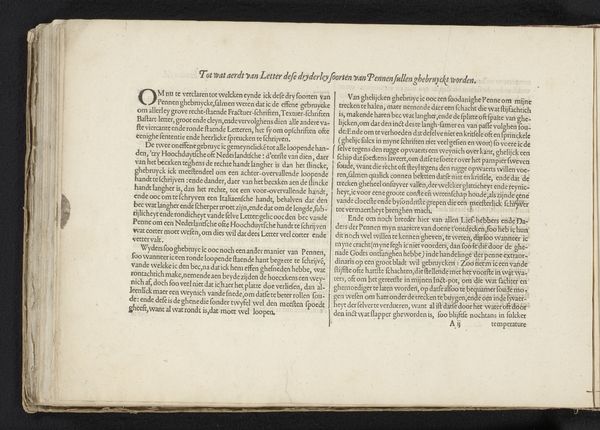
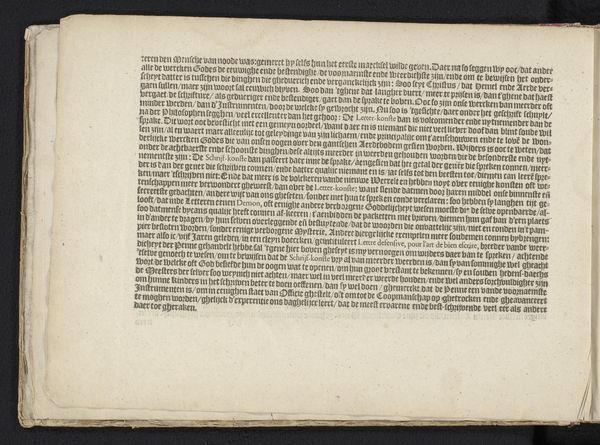
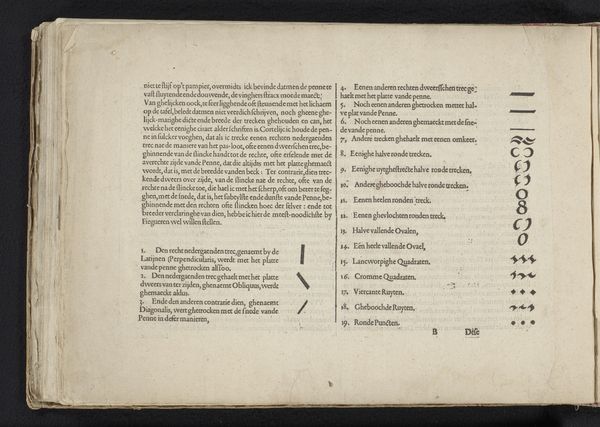
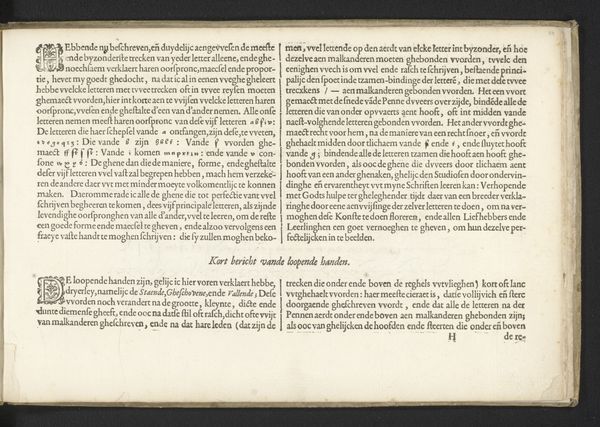
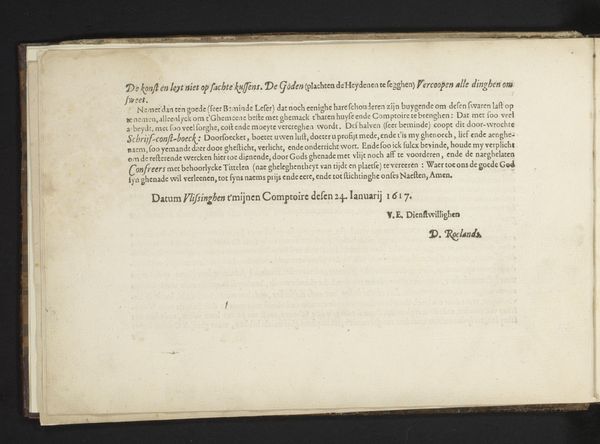
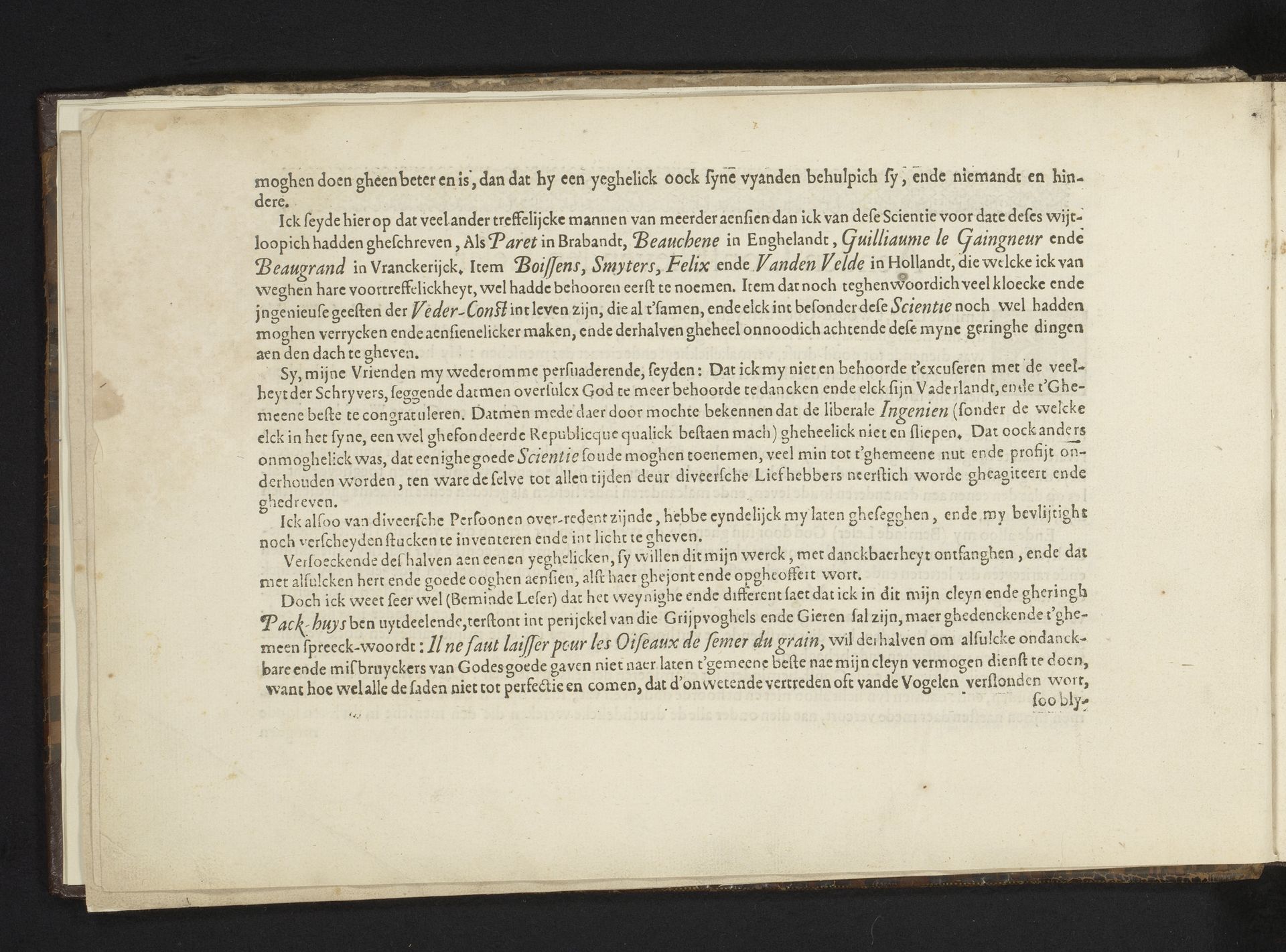
Curator: This image shows a page from a book, "Aan de lezer," possibly from 1616 or 1617, created by David Roelands. The book's medium includes paper and typography. What are your initial thoughts on it? Editor: It looks very academic, dense even. All that tightly packed text! It feels like a serious proclamation. I wonder, what cultural stories or meanings are embedded within this old book? Curator: The act of printing itself carries enormous symbolic weight. Consider the implications: democratization of knowledge, challenging authority. This page represents not just words, but the dawn of a new way of thinking and sharing ideas. Do you see how the words are laid out in relation to each other? Editor: You mean the blocks of text? It feels very ordered, logical. Curator: Indeed! Think of typography as a form of visual architecture. Each letter, word, and line contributes to the overall structure and the meaning conveyed. The evenness, the careful alignment... it suggests a desire for clarity and control in disseminating information. And who would have been reading this? Editor: Educated people, I guess. Scholars, maybe? Was reading more of a public event back then, something done aloud? Curator: Precisely! Reading wasn't always a solitary activity. Texts were often shared and interpreted communally. So, what do you think about the long and elaborate sentences on the page? Editor: I would have stumbled over them. I guess reading aloud allowed for a different type of understanding. It's fascinating to consider how different the reading experience would have been. This work reminds me that books are not just containers for information; they’re artifacts steeped in cultural practice. Curator: Exactly! Now consider the choice of language. Was it the common tongue, or reserved for a certain elite? The selection, display, and intent tell of cultural memory we might be quick to overlook.