painting, oil-paint
#
portrait
#
painting
#
oil-paint
#
oil painting
#
cityscape
#
modernism
#
realism
Copyright: Sandor Bortnyik,Fair Use
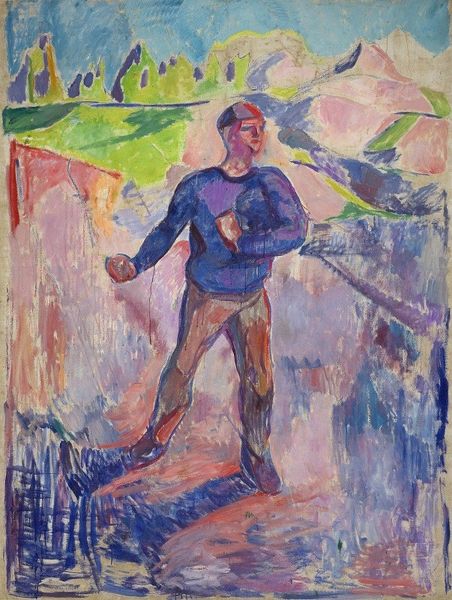
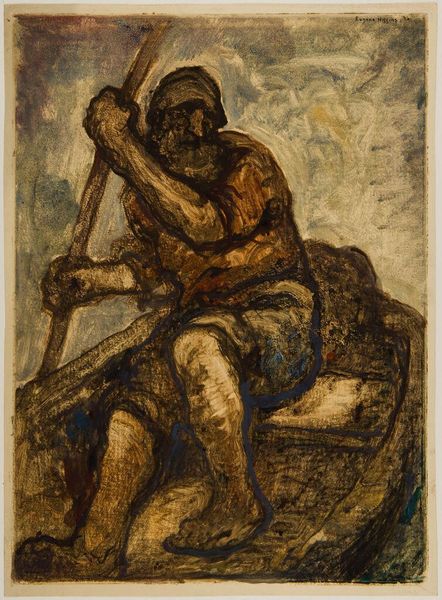
Sándor Bortnyik painted "Építő Munkás" or "Building Worker" in 1941. The social-realist painting presents us with a figure symbolic of the worker during a time of significant political upheaval. Bortnyik, originally associated with the avant-garde, had returned to Hungary from exile in 1939, just before the start of World War II. His move towards social realism can be seen as a reaction to the political climate, reflecting a need to engage with the pressing social issues of his time, and his own position in society. The choice of subject matter – a construction worker – speaks volumes. During the rise of socialist ideologies, the worker was often idealized as the backbone of society. Yet, the somewhat somber tone and the worker’s gaze directed away from the viewer might suggest a more complex relationship to the socialist ideal. How do we reconcile the artist's earlier avant-garde work with this more grounded representation? What does this shift tell us about the changing role of the artist during times of political change?
Comments
No comments
Be the first to comment and join the conversation on the ultimate creative platform.
 Collect
 React
React Comment
More like this