About this artwork
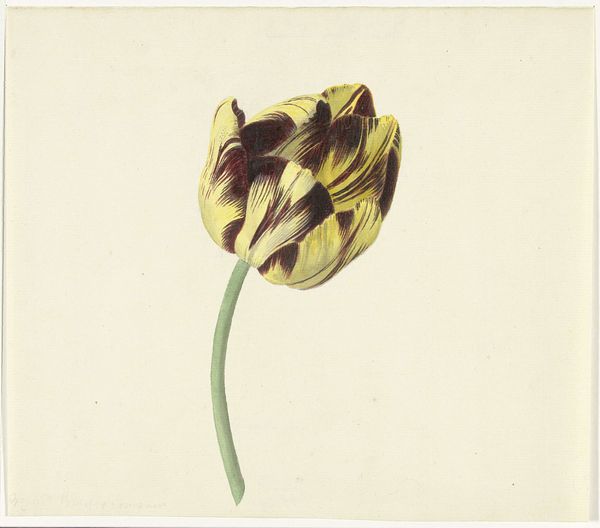
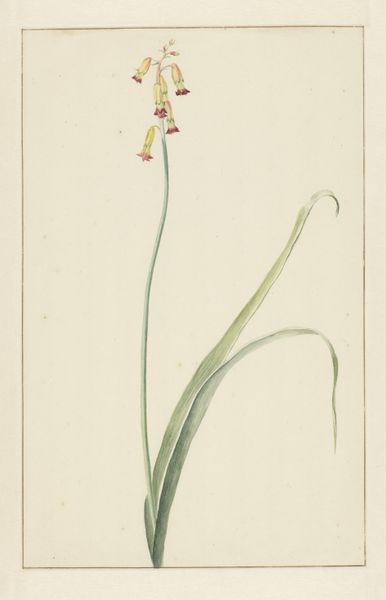
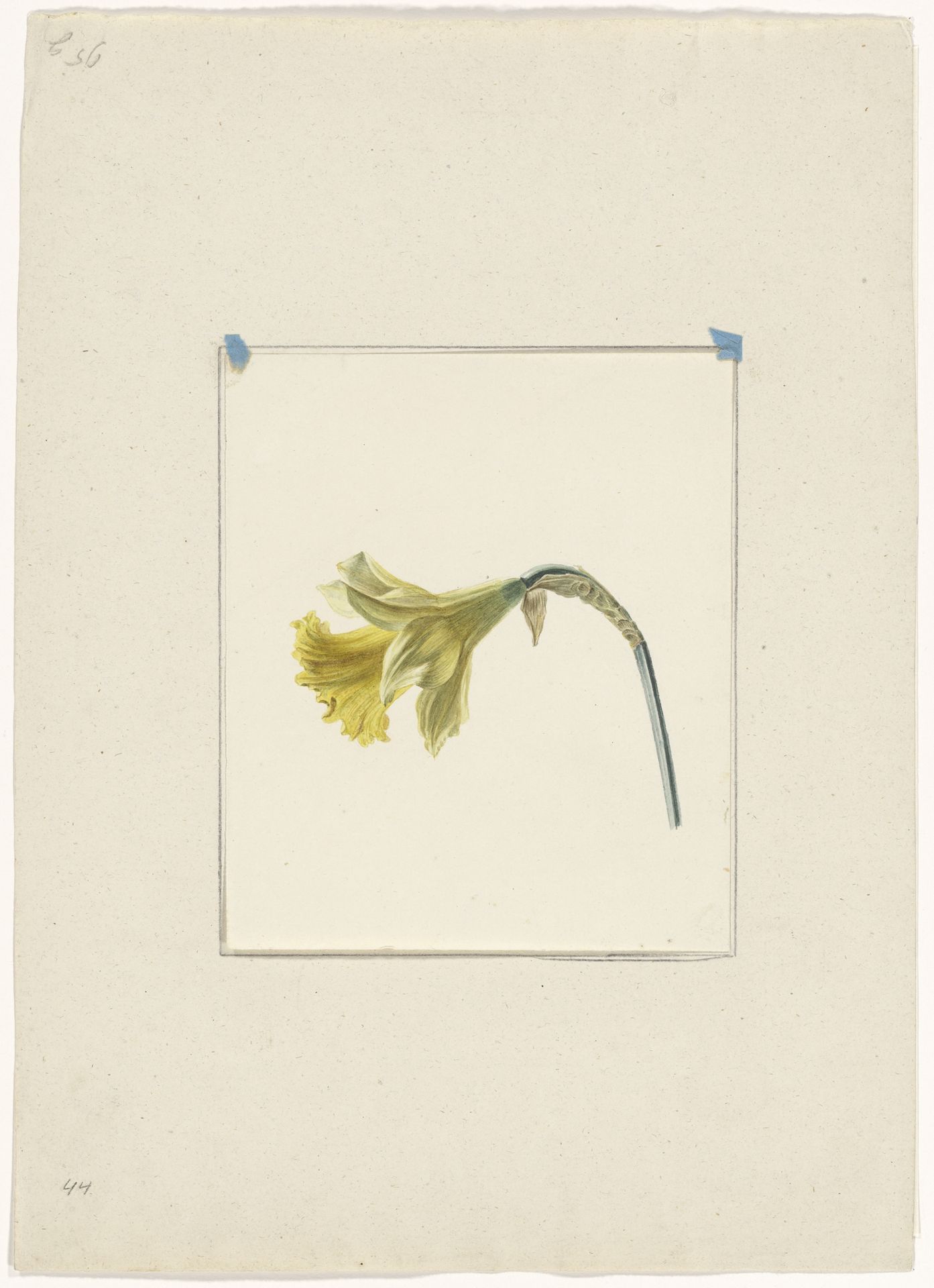
Eelke Jelles Eelkema made this watercolor of a Narcis, also known as a daffodil, sometime in the early 19th century. Flower painting, which was often practiced by women, was a popular genre across Europe at the time. Botanical drawing was a scientific practice, and also a mark of middle-class accomplishment, an expression of social status and refinement. But Eelkema was interested in more radical ideas. He was a Quaker, a religious movement that challenged social hierarchies. It's interesting to consider whether Eelkema might have had a subversive attitude towards the conventions of flower painting. This Narcis is painted with a subdued realism, its drooping head suggesting melancholy rather than pride. It appears isolated and vulnerable. To understand this image better, you might consult books on the history of flower painting, as well as sources relating to the Quaker movement in the Netherlands. By studying the social and institutional context, we can arrive at a richer understanding of its meaning.

Artwork details
- Medium
- drawing, watercolor
- Dimensions
- height 176 mm, width 148 mm
- Copyright
- Rijks Museum: Open Domain
Tags
drawing
watercolor
romanticism
watercolour illustration
watercolor
Comments
No comments
About this artwork
Eelke Jelles Eelkema made this watercolor of a Narcis, also known as a daffodil, sometime in the early 19th century. Flower painting, which was often practiced by women, was a popular genre across Europe at the time. Botanical drawing was a scientific practice, and also a mark of middle-class accomplishment, an expression of social status and refinement. But Eelkema was interested in more radical ideas. He was a Quaker, a religious movement that challenged social hierarchies. It's interesting to consider whether Eelkema might have had a subversive attitude towards the conventions of flower painting. This Narcis is painted with a subdued realism, its drooping head suggesting melancholy rather than pride. It appears isolated and vulnerable. To understand this image better, you might consult books on the history of flower painting, as well as sources relating to the Quaker movement in the Netherlands. By studying the social and institutional context, we can arrive at a richer understanding of its meaning.
Comments
No comments