tempera, painting, print, plein-air, watercolor, engraving
portrait
tempera
painting
plein-air
old engraving style
landscape
bird
figuration
watercolor
plant
romanticism
watercolour illustration
botany
naturalism
engraving
botanical art
Copyright: Public domain
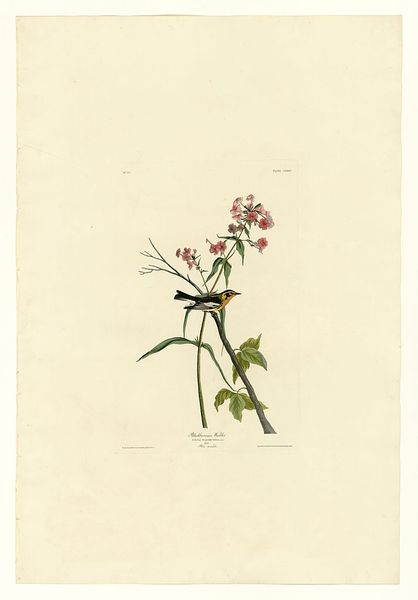
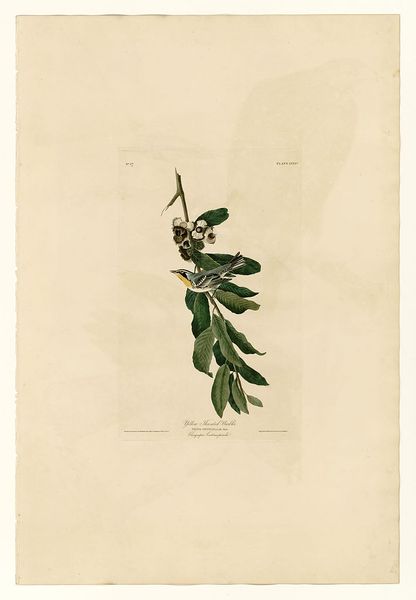
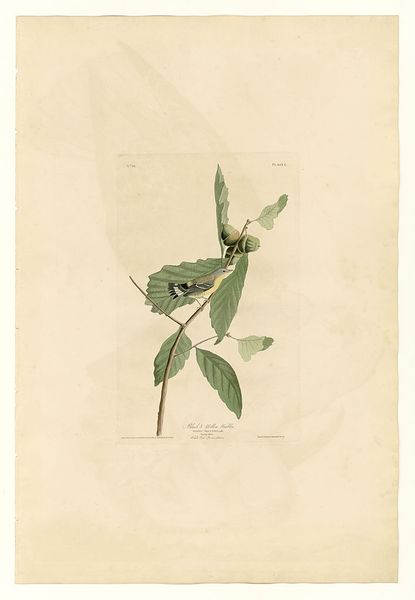
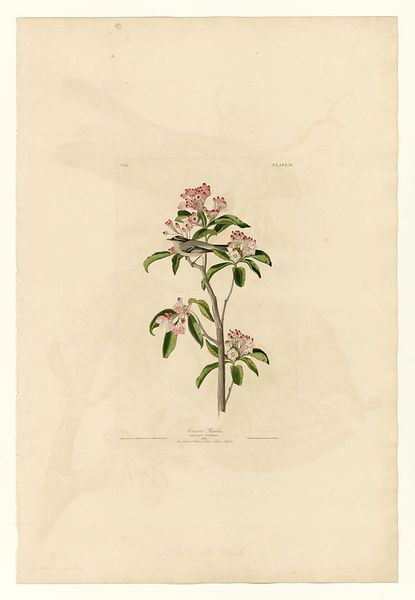
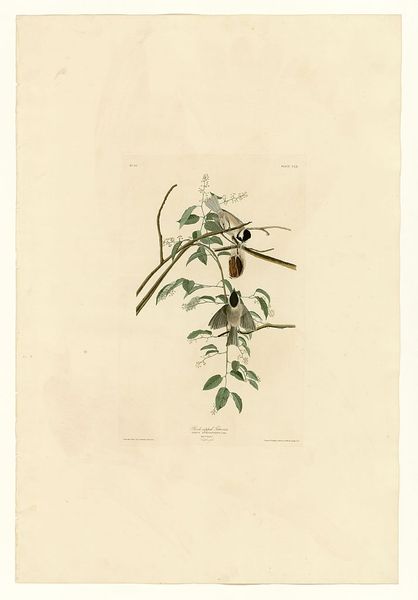
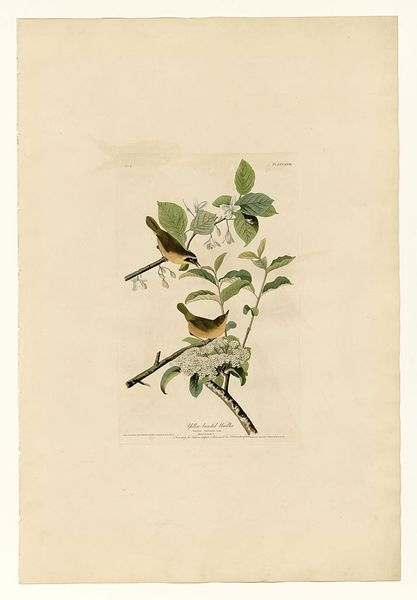
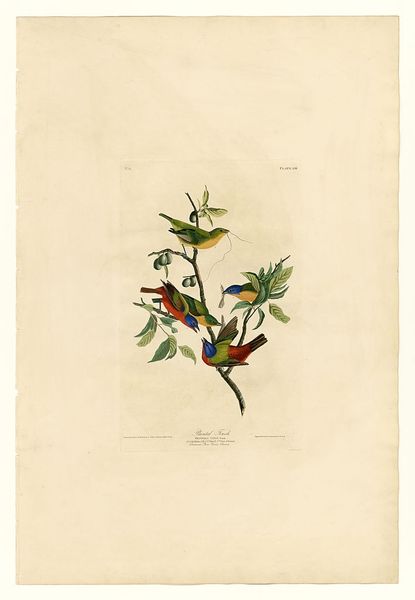
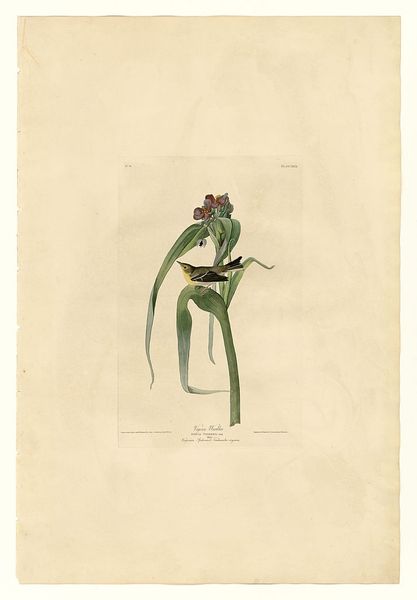
Editor: Here we have Audubon's "Plate 35. Children's Warbler", likely a print, tempera, or watercolor work. There’s a very clear naturalism to it, almost scientific in its precision. How do you read this image? Curator: It’s interesting to consider this piece not just as a depiction of nature but as a product of very specific labor. Think about Audubon's process: observing, hunting, positioning the subjects, meticulously painting... Editor: It definitely speaks to the scientific method! Curator: Exactly, and then consider the engravers and printers who reproduced this image. How does the division of labor affect the final product and its accessibility? We must examine not just *what* is depicted, but *how* it came to be and who had access to it. Editor: That’s fascinating. So you're saying the *means* of production change our understanding? Curator: Precisely. Was it meant for scientific study, or decorative purposes? Was it for the elite? Who *couldn't* access the original ornithological knowledge but *could* have a mass-produced print? What social forces shaped that access and use? Editor: I never thought about it like that, seeing it less as a direct mirror of nature and more of an artifact of nineteenth-century labor and access to scientific information. Thank you. Curator: My pleasure. The more we delve into these works as social products, the more they tell us.
Comments
No comments
Be the first to comment and join the conversation on the ultimate creative platform.
 Collect
 React
React Comment
More like this