About this artwork
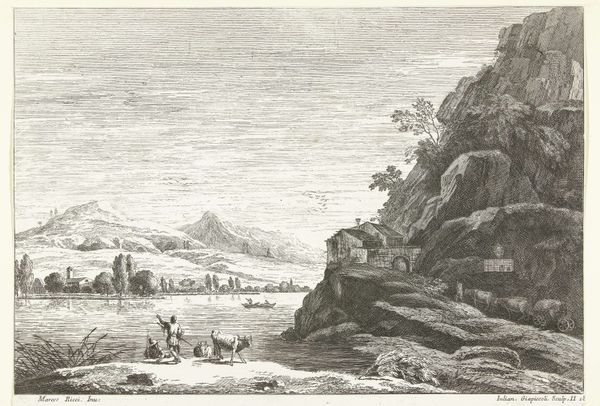
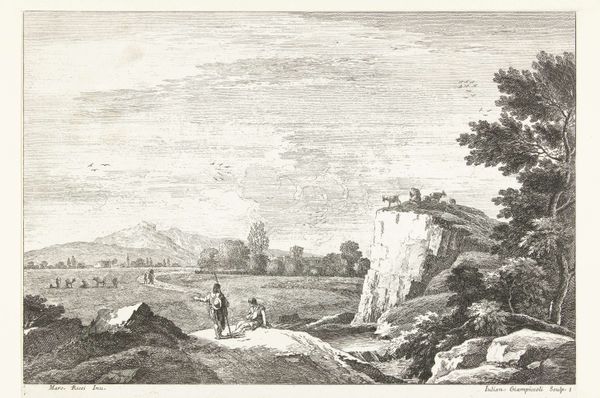
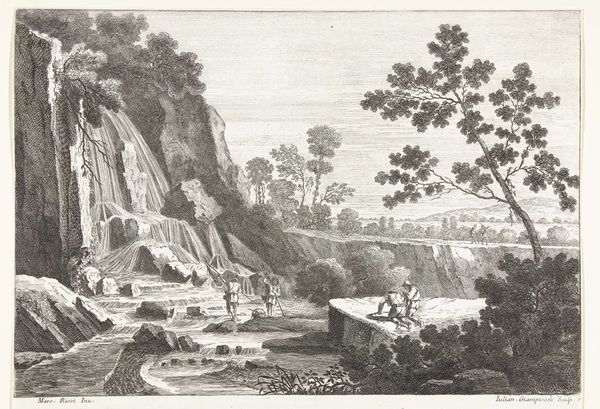
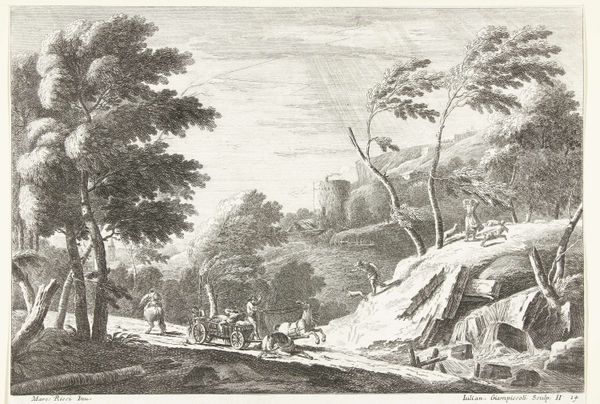
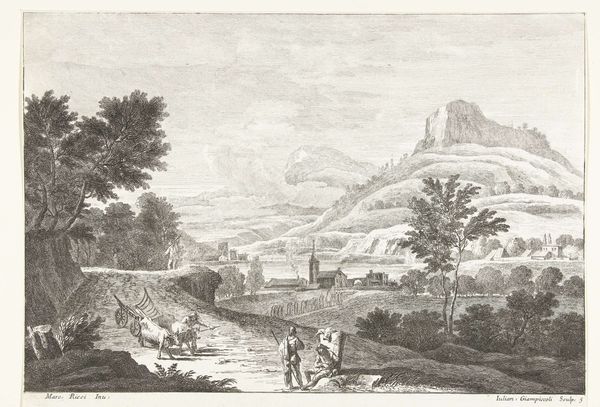
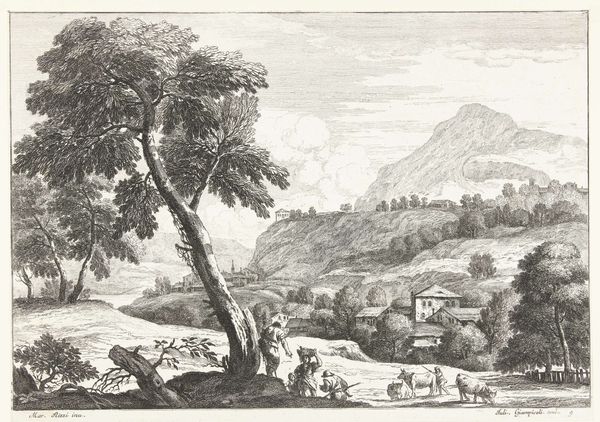
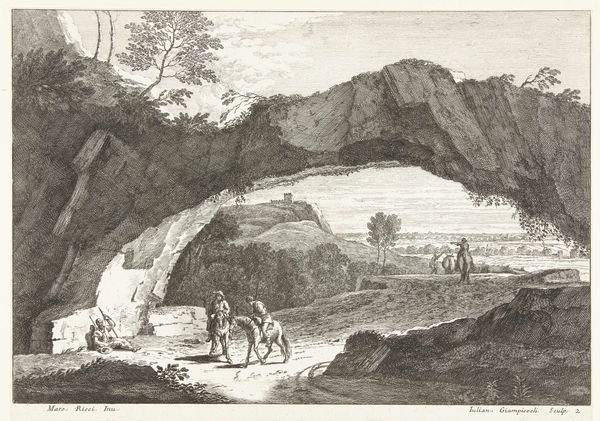
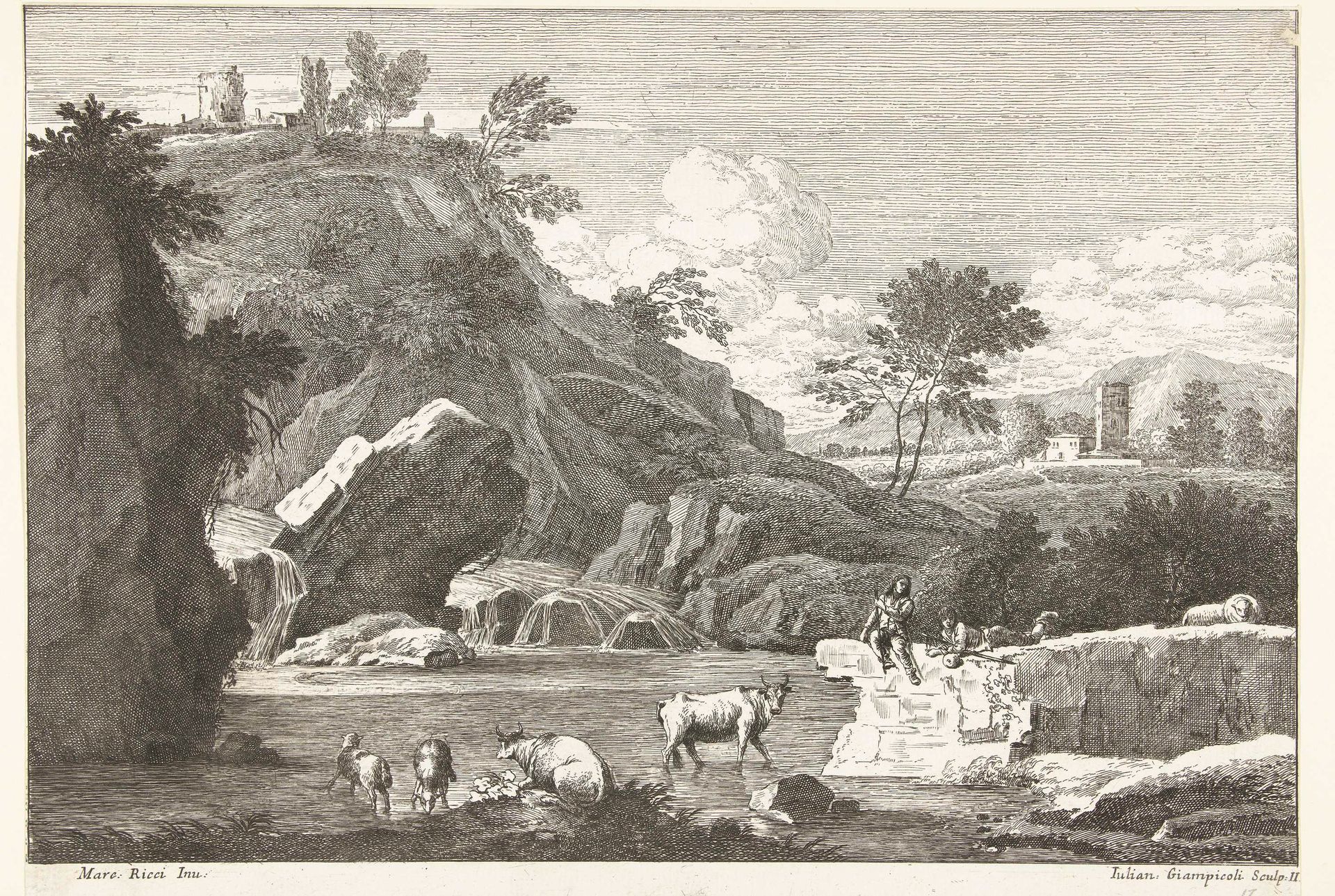
Giuliano Giampiccoli made this print – *Landschap met twee herders en vee bij water* – using etching and engraving. These are intaglio techniques, meaning the lines you see were cut into a metal plate, which was then inked and printed. The real skill here lies in the artist’s control of the burin, the tool used for engraving. Notice how Giampiccoli varies the depth and thickness of the lines to create a sense of light and shadow, and to describe the textures of the landscape. He creates the illusion of depth through carefully placed lines, and varying the pressure on the tool. The contrast between the crisp, precise lines of the engraving and the more fluid lines of the etching creates a dynamic and engaging composition, depicting a pastoral scene with shepherds and cattle. This kind of printmaking was labor-intensive, demanding both artistic skill and technical expertise. By appreciating the craft involved, we gain a deeper understanding of the image itself, and the cultural values embedded in its production.
Landschap met twee herders en vee bij water
1739 - 1740

Giuliano Giampiccoli
1703 - 1759Location
RijksmuseumArtwork details
- Medium
- print, etching, engraving
- Dimensions
- height 248 mm, width 352 mm
- Location
- Rijksmuseum
- Copyright
- Rijks Museum: Open Domain
Tags
Comments
Share your thoughts
About this artwork
Giuliano Giampiccoli made this print – *Landschap met twee herders en vee bij water* – using etching and engraving. These are intaglio techniques, meaning the lines you see were cut into a metal plate, which was then inked and printed. The real skill here lies in the artist’s control of the burin, the tool used for engraving. Notice how Giampiccoli varies the depth and thickness of the lines to create a sense of light and shadow, and to describe the textures of the landscape. He creates the illusion of depth through carefully placed lines, and varying the pressure on the tool. The contrast between the crisp, precise lines of the engraving and the more fluid lines of the etching creates a dynamic and engaging composition, depicting a pastoral scene with shepherds and cattle. This kind of printmaking was labor-intensive, demanding both artistic skill and technical expertise. By appreciating the craft involved, we gain a deeper understanding of the image itself, and the cultural values embedded in its production.
Comments
Share your thoughts