1861
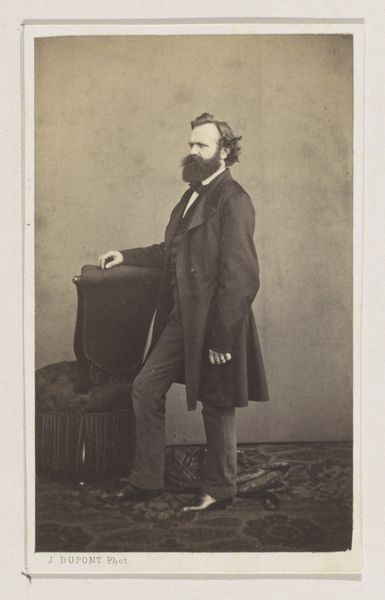
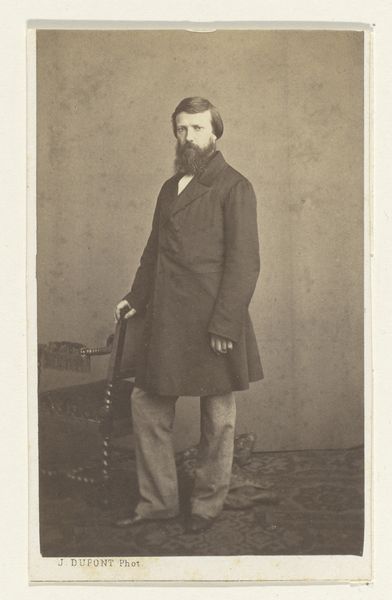
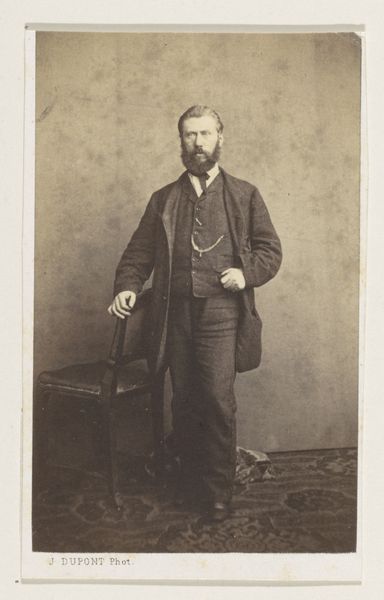
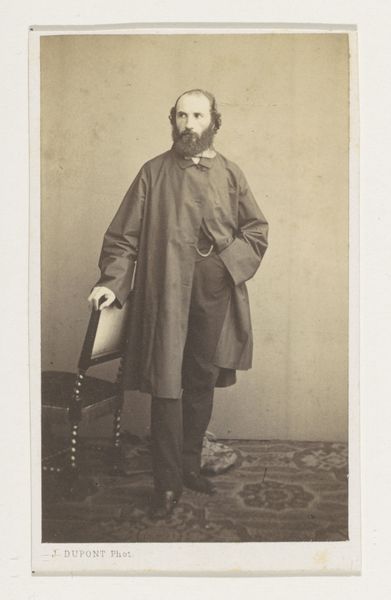
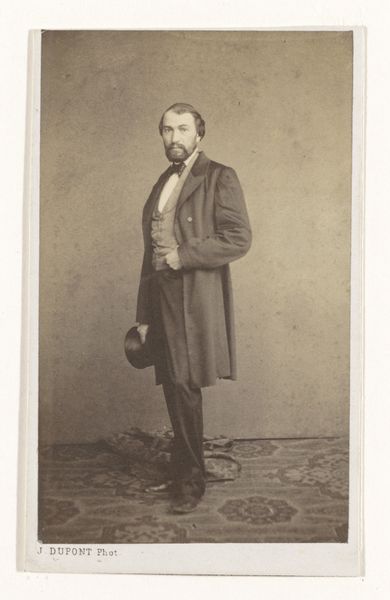
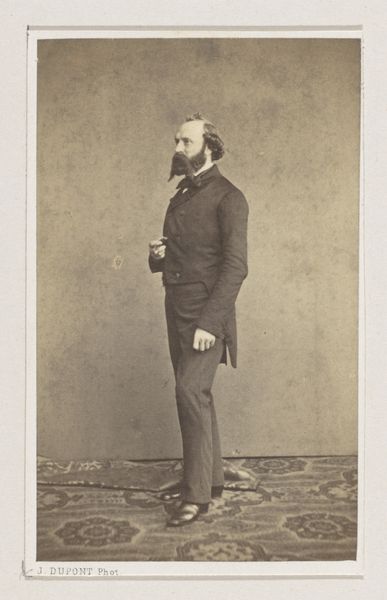
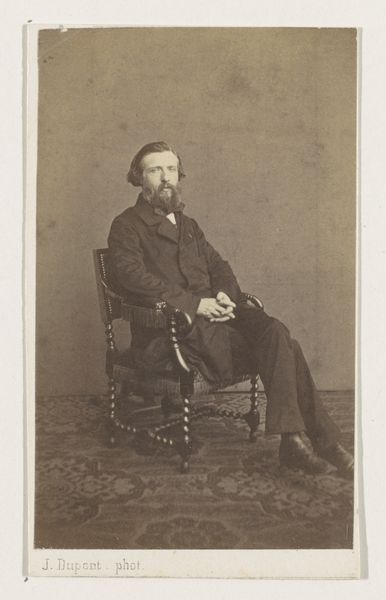
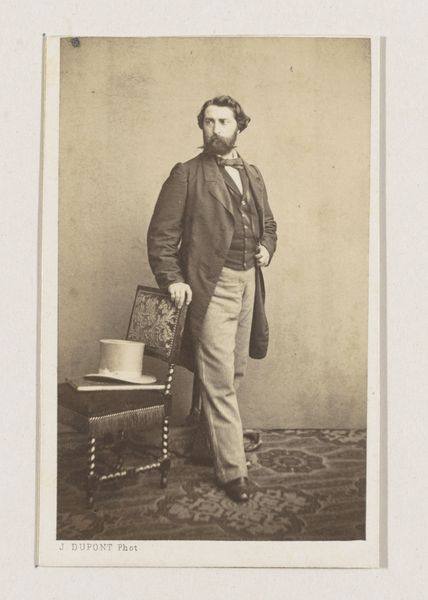
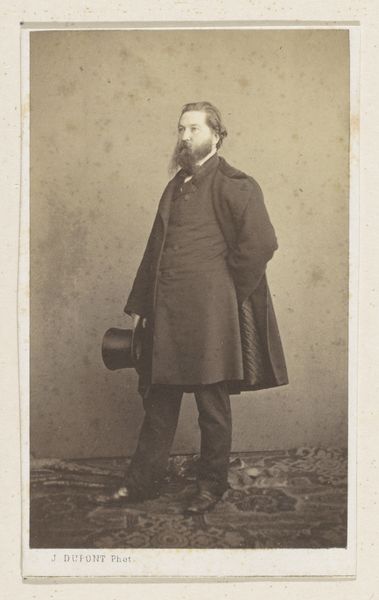
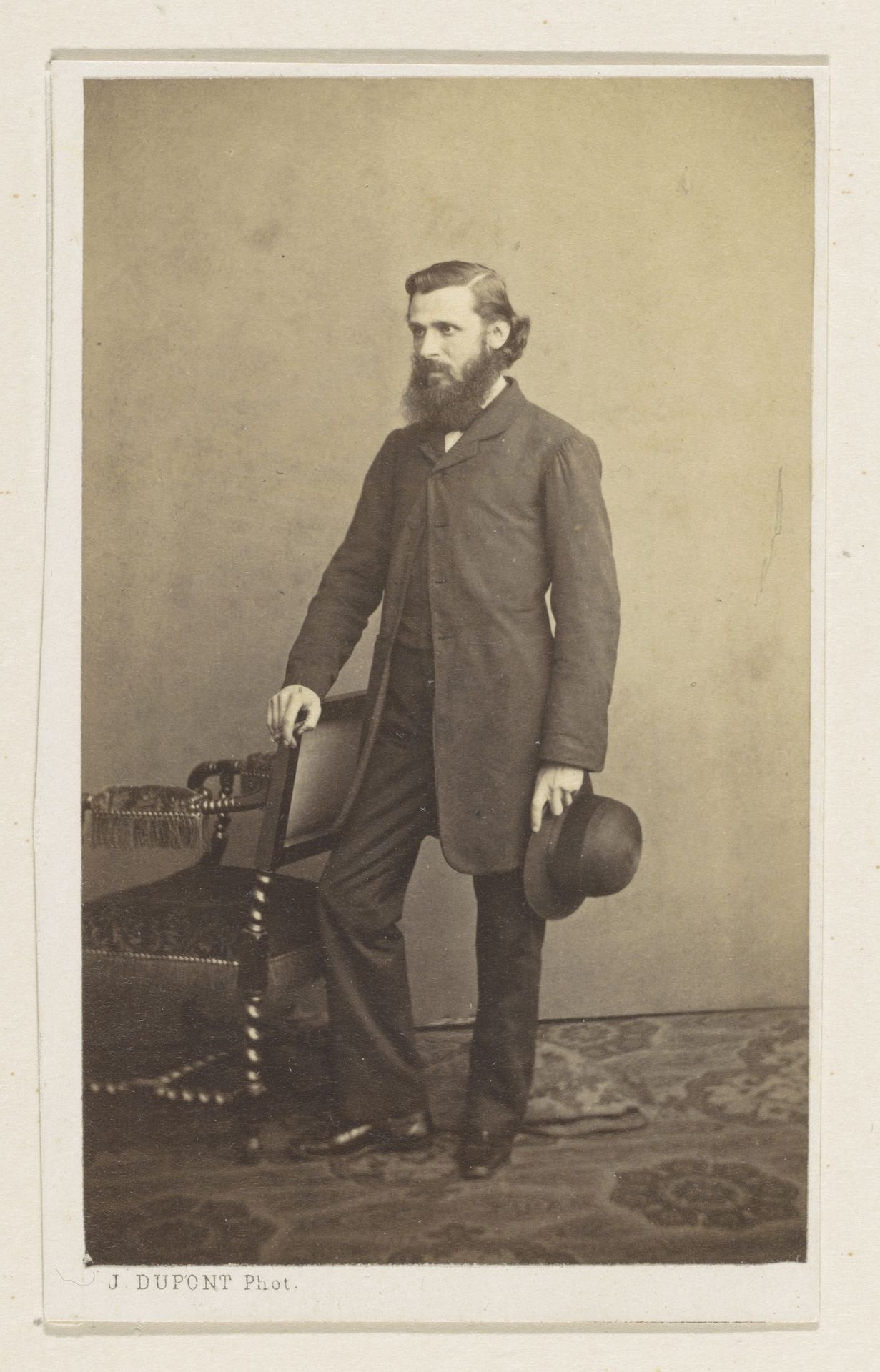
Portret van de schilder Frans Kaspar Huibrecht Vinck, ten voeten uit

Listen to curator's interpretation
Curatorial notes
Curator: Look at this striking daguerreotype from 1861. It’s a full portrait of the painter Frans Kaspar Huibrecht Vinck by Joseph Dupont. Isn’t there something almost ghostly about it? Editor: It’s the sepia tones, certainly. And that resolute gaze. He appears like a man firmly rooted, yet he’s just a wisp in time. Is it me, or is the image also oddly romantic for its age? The texture of the light itself feels palpable. Curator: That’s the beauty of early photography; it feels closer to alchemy than craft. Notice the details in his coat and that carpet. And think about the material process. We’re not just looking at an image, but a chemical reaction rendered on a silvered copper plate. It captures light, labor, and a very specific historical moment. Editor: Indeed. And consider the performative aspect – sitting still for extended periods! His stillness makes me wonder if he ever imagined his portrait might be appreciated like this, decades, centuries, into the future? He looks a bit stoic...I imagine an intense inner life, simmering away beneath the surface. Curator: Maybe all those long studio sittings gave people time to reflect on just that question! Think, also, of what Dupont must have charged. To commission an image like this was a significant financial transaction—a direct parallel to traditional patronage of painting, but at a significantly cheaper rate due to mechanical reproduction techniques and the material properties of the technology, democratizing image production in a way not seen before. Editor: So, there’s something to the access the medium enables! The hat held casually suggests that. It whispers of subtle rebellion. Less pomp and circumstance. Even though he’s clearly a man of means, there’s a comfortable ease about him. Curator: It's like holding a miniature echo of a man and the era in which he lived. A captured breath. Editor: And a chance to glimpse both an individual and the shift towards more accessible art forms in one small frame. I see beauty in his thoughtful expression and in the physical reality that makes it present here at all.